Why Does Robot Architecture Matter More Than Entry Cost?
Unitree’s expansion across humanoid hardware categories has brought greater attention to the economics of robotics research.
Ars Technica reported in September 2026 that Unitree’s emphasis on structural engineering and component-level cost management has influenced its approach to manufacturing affordable walking robots. The reporting also raised questions about manufacturing quality and the broader commercial maturity of humanoid robotics, illustrating why initial hardware cost alone cannot establish research value.
For a lab director, the procurement calculation should start with the experimental program.
A locomotion research project may require repeated walking trials, motion-state access, and recovery testing. A manipulation project introduces different requirements, including appropriate hands, object interaction, perception, and the ability to record synchronized movement data.
A larger humanoid may be essential when the research depends on human-scale geometry. For other projects, additional size can introduce facility and safety requirements without improving the experiment.
The objective is to fund a platform that enables meaningful research while preserving resources for engineering, infrastructure, and repeated testing.
How Do R1, G1, and H2 Differ Physically?
The three platforms support different experimental scales.
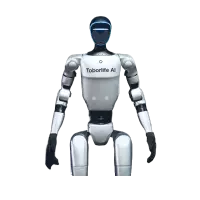
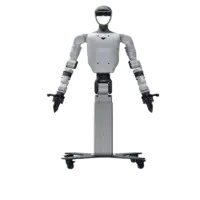
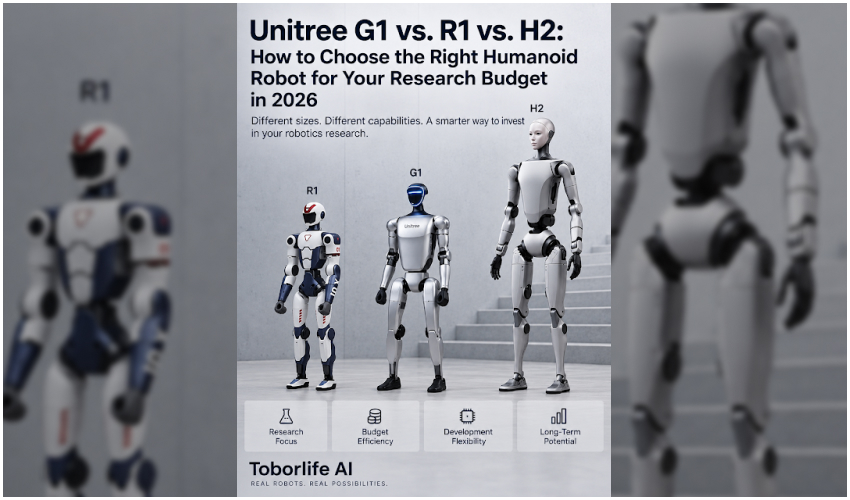
Unitree’s R1 family provides a compact humanoid architecture. Toborlife’s R1 Edu Smart is approximately 121 cm tall and weighs about 25 kg, creating a smaller physical platform for supervised research and educational environments.
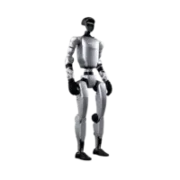
The G1 occupies an intermediate category. Toborlife’s G1 Edu Pro F measures 127 cm tall and weighs approximately 35 kg with its battery. Its documented configuration includes 35 joint degrees of freedom, with six in each leg, five in each arm, and one at the waist.
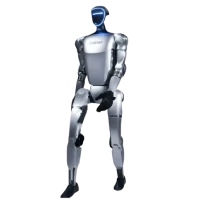
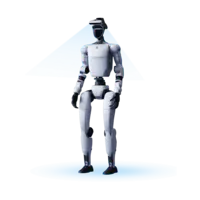
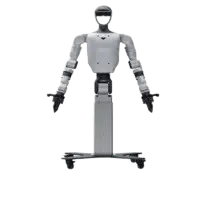
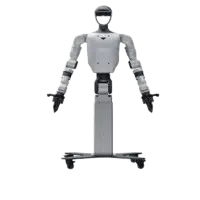
The H2 is a substantially larger humanoid, measuring approximately 182 cm tall and weighing about 70 kg with its battery. Its physical scale is relevant when experiments depend on adult-height workspaces, human-scale reach, or whole-body motion.
These differences affect the experimental environment as much as the robot itself.
A larger machine requires more attention to fall protection, recovery procedures, transportation, and the separation of personnel from uncontrolled movement.
A compact robot still requires appropriate supervision and safety controls, but researchers can design experiments around a different physical operating envelope.
When Does G1 Justify a More Specialized Research Configuration?
The humanoid robot g1 becomes particularly relevant when a research program requires a combination of bipedal locomotion, upper-body articulation, and configurable manipulation hardware.
The G1 Edu Pro F is equipped with NVIDIA Jetson Orin computing and two BrainCo Revo 2 Touch five-finger dexterous hands in its documented Toborlife configuration.
The hands incorporate tactile sensing, making the configuration relevant to research involving physical contact and grasping. The development team must still establish the available sensor outputs, software interfaces, control methods, and data-recording capabilities for its intended experiments.
A tactile hand does not independently establish reliable autonomous manipulation. Object recognition, grasp planning, force control, and recovery remain separate engineering challenges.
For researchers studying these problems, however, the hardware configuration can materially change the types of experiments they can design.
A locomotion-focused lab may have little reason to allocate substantial resources to dexterous hands. A manipulation laboratory may find that a robot without the required end effectors cannot produce the physical interaction data its research depends on.
The relevant investment is therefore the complete research configuration, including the tools required to control it and collect useful experimental data.
Which Platform Supports Your Research Objectives?
Research teams should evaluate the three platforms against the experiments they plan to conduct.
R1: Compact humanoid experimentation
R1 is relevant to programs investigating compact humanoid locomotion, perception, control, and educational robotics. Teams should select the specific Edu configuration according to the development access and computing capabilities their work requires.
G1: Integrated locomotion and manipulation research
For teams studying coordinated movement and object interaction, g1 robots provide a different research architecture. The Edu Pro F combines articulated humanoid hardware with tactile five-finger hands and onboard computing.
That configuration can support experiments investigating how locomotion, perception, and manipulation interact, subject to the control and software interfaces available to the research team.
H2: Human-scale embodied research
H2 becomes relevant when the research question depends on larger physical dimensions, human-scale reach, or full-body dynamics.
Its additional scale also changes experimental planning. Researchers must establish whether their facilities, safety procedures, and supporting equipment can accommodate the platform.
Across all three categories, buyers should distinguish documented hardware capabilities from experimental functions they must develop independently.
How Does the Research Budget Extend Beyond Hardware?
A successful humanoid robotics program requires more than purchasing a capable machine.
Laboratories should account for computing infrastructure, software development, safety equipment, maintenance, spare components, operator training, and experiment preparation.
For manipulation research, the budget may also need to cover objects and fixtures, motion capture, data storage, and the engineering work required to produce repeatable experimental conditions.
The g1 humanoid robot should therefore be evaluated as part of a complete research system rather than as an isolated hardware purchase.
A lab seeking to investigate tactile grasping may allocate resources differently from one studying dynamic walking. Similarly, an institution working with human-scale industrial environments may require the larger physical architecture of H2, even when a smaller robot offers sufficient computing capability.
Before finalizing procurement, research leaders should identify the experimental requirements their selected platform must satisfy, then document the additional resources needed to support those experiments.
Where Should U.S. Labs Begin Their Product Evaluation?
The G1 Edu Pro F provides a defined configuration for laboratories whose research requires humanoid locomotion, articulated manipulation, tactile sensing, and onboard computing.
For teams with different experimental objectives, R1 and H2 offer alternative physical architectures within Unitree’s humanoid family.
The practical purchasing decision depends on the research program, the exact hardware configuration, and the resources needed to operate it safely and productively.
For university laboratories and physical AI teams evaluating manipulation-focused research hardware, explore the G1 Edu Pro F at Toborlife AI . Review its documented specifications and available configuration against your experimental requirements before allocating the remainder of your research budget.


Comments are closed for this post.