When should a buyer move beyond the Basic configuration?
Software access should drive the upgrade.
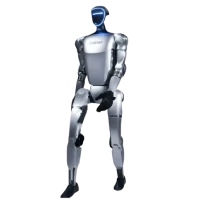
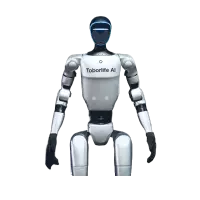
G1 Basic carries 23 degrees of freedom and does not include the secondary development layer available on the EDU configurations. Current Toborlife G1 EDU tiers add 100 TOPS AI compute and progressively richer articulation and hand options.
Once a program requires custom perception, teleoperation, manipulation, learned policies, or proprietary data capture, the developer stack becomes part of the core product rather than an accessory.
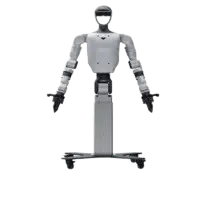
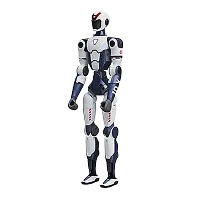
G1 Edu Pro F addresses advanced manipulation work with 35 degrees of freedom, tactile BrainCo five finger hands, 100 TOPS compute, and secondary development access, giving research teams a richer control surface without forcing the facility burden of a larger humanoid platform.
Configuration specification:
https://toborlife.ai/g1-edu-pro-f/
This is where the comparison gets interesting. Paying more is rational when the added configuration compresses engineering time. Paying more for unused articulation or compute simply increases TCO.
Which buyers get the strongest return from G1?
The strongest fit sits with organizations that need access and iteration more than immediate labor substitution.
1. Universities gain a real bipedal platform for controls, perception, locomotion, teleoperation, reinforcement learning, and human robot interaction.
2. Robotics startups can pressure test software and control architecture before committing capital to proprietary hardware.
3. Enterprise innovation teams can validate use cases, safety procedures, operator workflows, and physical datasets before entering pilot to production pipelines.
4. Demonstration teams can achieve credible humanoid presence without paying for a development stack they will never use.
The strongest use case is not always the flashiest one.
If a robot lets an engineering team invalidate a poor automation thesis in four weeks, it has protected more capital than a polished demonstration that produces no transferable insight.
What should procurement teams compare besides price?
The shortlist should be built around six operating questions.
- Development access must match the level of control the engineering team actually needs.
- Mechanical scale must match the workspace rather than a preference for visual presence.
- End effectors must match the objects, contact forces, and manipulation tasks under study.
- Battery architecture must sustain the planned experiment cadence.
- Safety and recovery procedures must reflect falls, contact, operator intervention, and floor conditions.
- Data infrastructure must convert experiments into reusable physical datasets.
These inputs define hardware software integration overhead.
They also expose whether the program is ready to scale or still needs a cheaper learning cycle.
Does humanoid robot g1 beat premium platforms?
For open research, university deployment, startup development, and enterprise evaluation, G1 has a structural advantage because buyers can procure the hardware, work directly with it, and expand capability as the program matures.
For production labor, premium engineering has to earn its cost through measurable operating performance.
That means sustained throughput, lower intervention rates, higher uptime, controlled recovery, validated safety, and stronger economics inside the specific task.
A premium humanoid wins when those attributes materially change production output. G1 wins when faster access, lower capital exposure, and development flexibility create more value than waiting for a larger platform or commercial program to become accessible.
Why does the U.S. distribution layer matter?
This is where Toborlife AI becomes relevant for U.S. buyers.
A humanoid procurement decision involves more than SKU selection. Compute tier, developer access, hand architecture, battery strategy, operating environment, expected wear, logistics, support exposure, and future expansion all need to line up before capital is committed.
Toborlife AI has already done that diligence across the Unitree portfolio.
The result is a cleaner path from technical evaluation to deployment because the buyer does not have to reverse engineer configuration logic, logistics, and implementation requirements after the robot arrives.
That is the role of a high value U.S. distributor in an emerging hardware category. Remove preventable friction before it consumes engineering time.
G1 portfolio:
https://toborlife.ai/all-g1-models/
Toborlife AI:
https://toborlife.ai/
U.S. technical procurement:
https://toborlife.ai/contact/


Comments are closed for this post.