Nvidia-Backed Platforms Push the High-End Standard
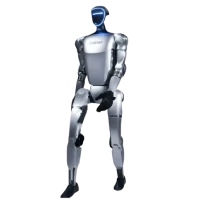
Nvidia’s robotics direction is important because it connects humanoid hardware with serious compute infrastructure.
Reuters reported that Nvidia plans to bring security features used in data centers into these robots, including secure boot and confidential computing, with software updates flowing through Nvidia’s chip for authenticity checks.
That matters for advanced research.
If a lab is working on embodied AI, secure robotics systems, large-scale simulation, or humanoid intelligence, Nvidia-backed platforms may become extremely valuable. They are designed for the upper tier of robotics research, where compute, security, data, and standardized development environments all matter.
But that also makes them more infrastructure-heavy.
Not every robotics program needs to start there.
R1 Fits the Hands-On Learning Gap
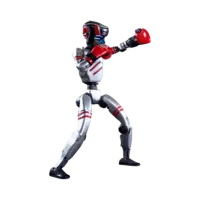
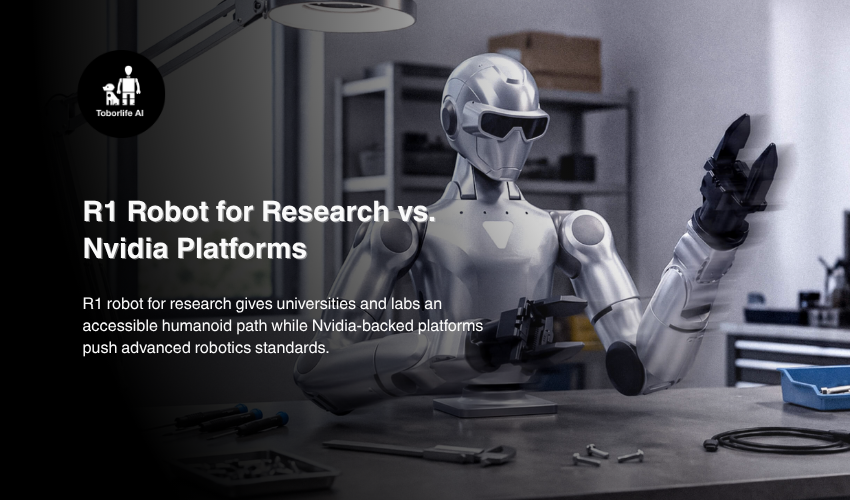
This is where Unitree R1 fits a different kind of need.
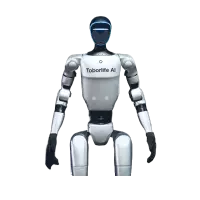
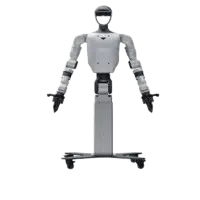
R1 is not trying to replace the most advanced research platforms. Its value is access. For schools, labs, and developer education programs, a humanoid robot only becomes useful when students can actually work with it.
That makes R1 robot for education especially relevant in 2026.
A university may not need every student to work on a high-end GPU-connected humanoid platform from day one. It may need a robot that helps students understand core robotics concepts first: motion, perception, balance, interaction, programming, and physical AI behavior.
That is where accessible humanoids can create real learning value.
What Universities Should Compare
The real comparison is not simply R1 vs a more powerful platform.
It is entry point vs infrastructure depth.
For universities, the buying decision usually comes down to:
1. Student access
Can more students interact with the robot, or is it reserved for a small advanced lab?
2. Teaching value
Does the robot support coding, motion testing, demos, and AI interaction?
3. Research runway
Can the platform support early experimentation before moving into heavier systems?
4. Budget realism
Can the department justify the cost without waiting for a large research grant?
5. Deployment simplicity
Can the robot fit into a classroom, lab, demo space, or outreach program?
That is why R1 robot for universities is a strong category. It gives institutions a way to begin humanoid learning without making the first step too heavy.
Toborlife AI Makes the R1 Path Clearer
If Nvidia-backed platforms represent the advanced research frontier, Toborlife AI helps buyers explore the more accessible side of humanoid robotics.
Through Toborlife AI, universities, labs, and STEM teams can explore R1 models such as R1 Basic, R1 Edu Smart, and R1 Edu Pro C. These platforms create a more practical way to introduce humanoid robotics into education and early research settings.
That matters because education is not only about the strongest machine.
It is about repeatable access: Students need to test and teachers need to demonstrate. Researchers need to experiment, and departments need to justify the investment.
A robot with broad, regular access may create more long-term value than a more advanced platform limited to a small group.
Our Verdict on This Research Robot Matchup
Nvidia-backed humanoid platforms are pushing the research ceiling higher. They matter for advanced labs, standardized robotics development, secure compute, and embodied AI at the frontier.
But R1 wins on approachability.
For many universities and labs, the smarter first step is not the most complex humanoid available. It is the robot that lets students and researchers start building intuition now.
That is where R1 becomes compelling.
It gives schools a way to enter humanoid robotics without depending on infrastructure-heavy systems to become broadly accessible. It supports the kind of hands-on learning that makes physical AI feel real.
If your institution is ready to explore humanoid robotics for education, lab work, or developer training, visit Toborlife AI to explore R1 models, or contact the team through the Toborlife AI contact page for guidance on the best platform for your program.



Comments are closed for this post.