G1 Focuses on Accessibility and Research Deployment
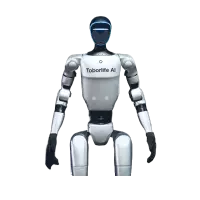
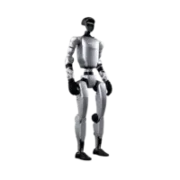
The Unitree G1 is gaining popularity because it lowers the barrier to humanoid robotics development. Its smaller form factor and lower pricing structure make it attractive for universities, robotics startups, and AI research teams that want a humanoid platform without enterprise-scale costs.
The robot maintains strong agility while remaining compact enough for controlled indoor environments.
Where the G1 Performs Best
- Educational robotics programs
- AI and reinforcement learning research
- Lightweight humanoid testing environments
The G1 also creates easier deployment opportunities for developers experimenting with motion learning, robotic interaction systems, and edge AI software stacks.
For many smaller robotics teams, accessibility is becoming just as important as raw capability.
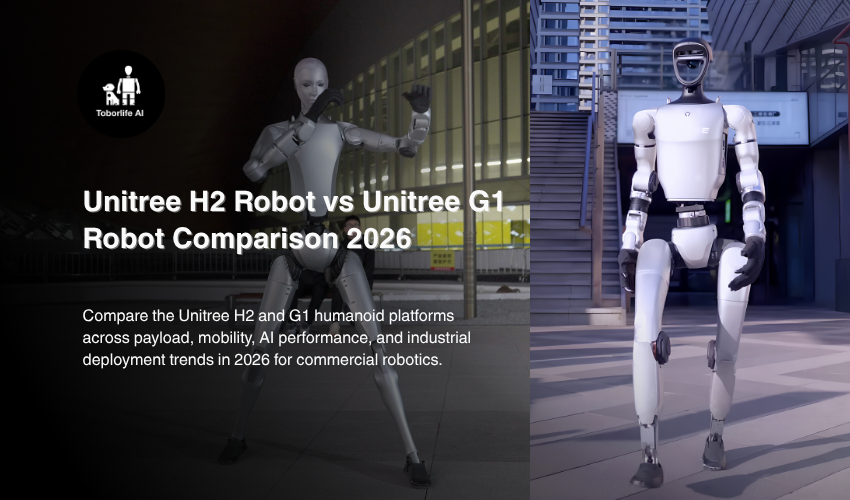
H2 Moves Closer to Industrial Humanoid Robotics
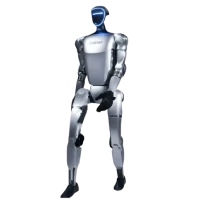
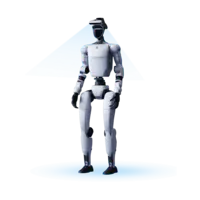
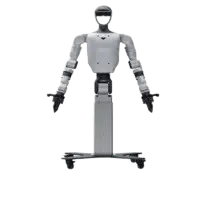
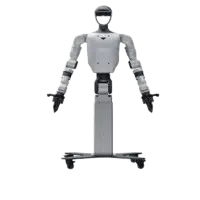
The unitree h2 takes a very different direction. This platform is significantly larger, more powerful, and designed for demanding operational environments that require higher payload performance and stronger physical interaction capabilities.
Compared to the G1, the H2 offers:
- Greater load-bearing capability
- Larger full-scale humanoid dimensions
- Stronger industrial task potential
- Expanded motion stability and balancing systems
The robot is clearly positioned closer to commercial automation and industrial robotics workflows rather than research-first experimentation.
This is one reason interest in the unitree h2 robot continues to grow across manufacturing and logistics sectors in 2026. Companies want humanoid systems capable of operating inside dynamic environments instead of controlled showcase conditions.
AI Processing and Motion Systems Are Scaling Fast
One of the biggest trends in humanoid robotics right now is the shift toward real-time embodied AI. Modern humanoids are expected to process motion planning, navigation, balance correction, and environmental awareness simultaneously.
The H2 platform, including the H2 Edu configuration, reflects this transition with more advanced motion architecture and stronger deployment potential for large-scale robotics environments. Meanwhile, the G1 Edu Plus continues gaining traction among universities, AI labs, and robotics developers focused on software experimentation, embodied AI research, and lightweight humanoid testing.
What robotics buyers now prioritize
- Real-world movement stability
- Scalable AI integration
- Payload performance
- Deployment flexibility
Discussions around unitree h2 cost and overall deployment budgets are also increasing as more businesses evaluate humanoids for operational environments instead of experimental use cases.
Toborlife AI Is Expanding Access to Next-Generation Humanoids
As humanoid robotics adoption accelerates, more businesses are exploring platforms that balance advanced AI mobility with practical deployment accessibility. Companies researching the latest humanoid systems can explore humanoid robots available at Toborlife AI, including advanced Unitree G1 and Unitree H2 robotics solutions.
Businesses evaluating the latest humanoid platforms can also review current availability, technical specifications, and evolving discussions around unitree h2 price trends by contacting the robotics specialists at Toborlife AI.


Comments are closed for this post.