What Actually Happened During That Single Day
The robot was shown how to perform a wide range of everyday actions. Grasping objects. Moving items. Placing tools. Adjusting orientation. Folding and stacking. Each task was demonstrated once.
After that single example, the robot could repeat the action reliably.
Traditional robots struggle here. They often need hundreds or thousands of attempts to learn one motion. This system was learned at scale. One task after another. All within 24 hours.
The key difference was not hardware alone. It was the learning approach.
The Learning System Behind The Breakthrough
Instead of treating each task as something new, the system broke actions into phases. Reach. Grip. Adjust. Place. Release. These phases appear again and again across tasks.
The robot reused prior knowledge. When it saw a new task, it did not start from zero. It recognized patterns from earlier actions and adapted them quickly.
This approach mirrors human learning. Once you learn how to pick up a cup, you can pick up many objects. The shape changes. The context changes. The core motion stays familiar.
The robot applied this logic at scale.
Why Real Hardware Changes Everything
Many AI breakthroughs happen in simulation. That helps research move fast. But real environments are messy. Objects slip. Sensors drift. Surfaces vary.
This robot learned on physical hardware.
That detail is critical. It shows the learning system can handle noise, friction, and small errors. These are the problems that stop robots from leaving the lab.
A system that learns on real hardware can move into homes, clinics, warehouses, and classrooms much faster.
Why Speed Of Learning Reshapes Robotics
Learning speed defines cost.
If a robot takes weeks to learn a task, deployment becomes expensive. Training needs experts. Downtime grows. Flexibility drops.
Learning 1,000 tasks in one day flips that equation.
It means a robot can arrive in a new environment and adapt quickly. It means updates can happen on site. It means one robot can handle many roles over time.
This is how robots become useful beyond factories.
What This Signals For Everyday AI
Everyday AI needs flexibility. Homes change. Tools change. Human behavior shifts.
Robots that rely on fixed programming fail here. Robots that learn quickly thrive.
This breakthrough suggests robots can soon handle daily tasks without deep customization. They can learn from short demonstrations. They can adapt to similar actions.
This is the direction everyday AI needs to move.
Where Research Platforms Come Into Focus
As learning systems improve, the hardware platform becomes even more important. Researchers need robots that support fast iteration. Developers need access to sensors, joints, and control layers.
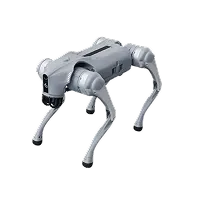
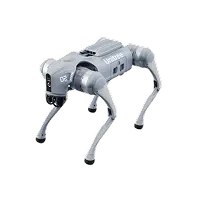
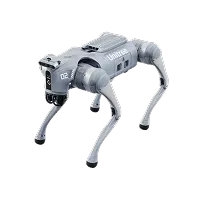
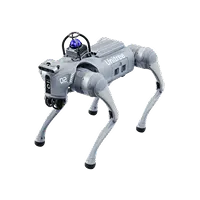
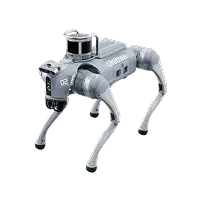
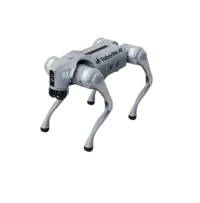
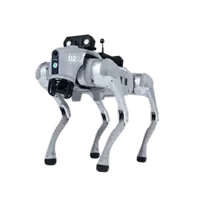
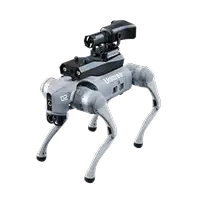
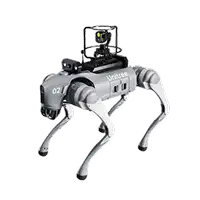
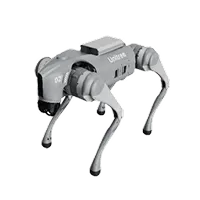
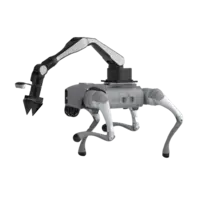
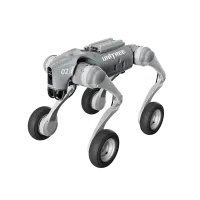
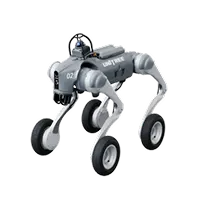
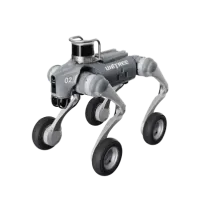
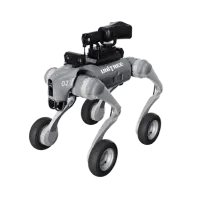
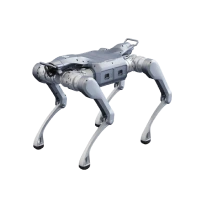
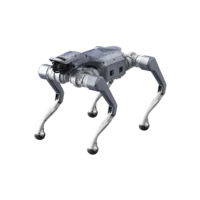
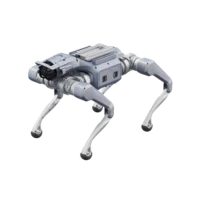
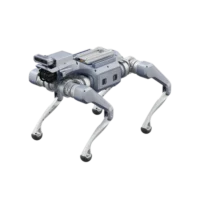
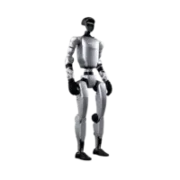
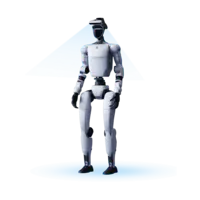
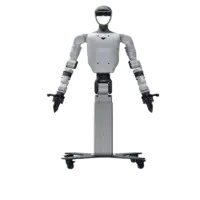
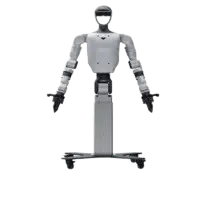
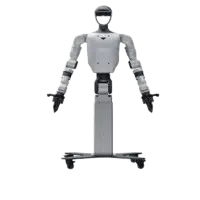
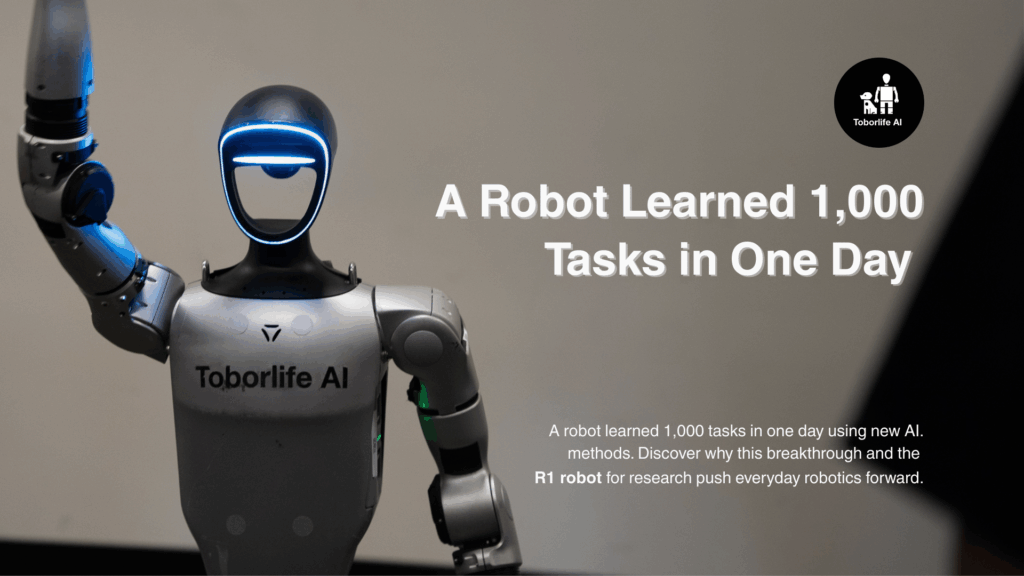
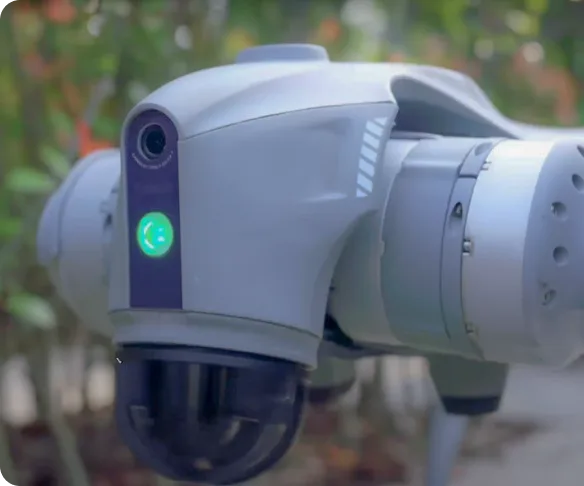
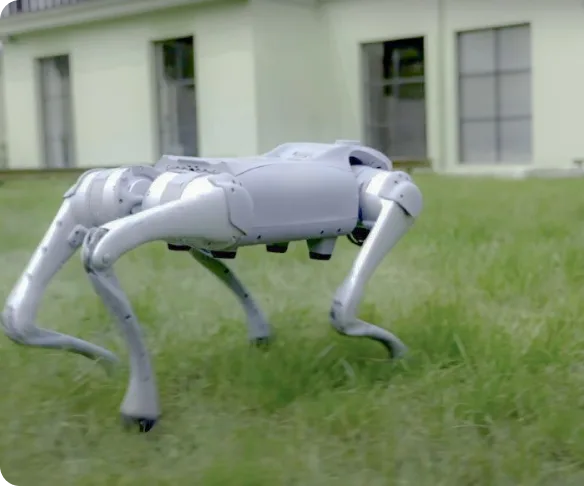
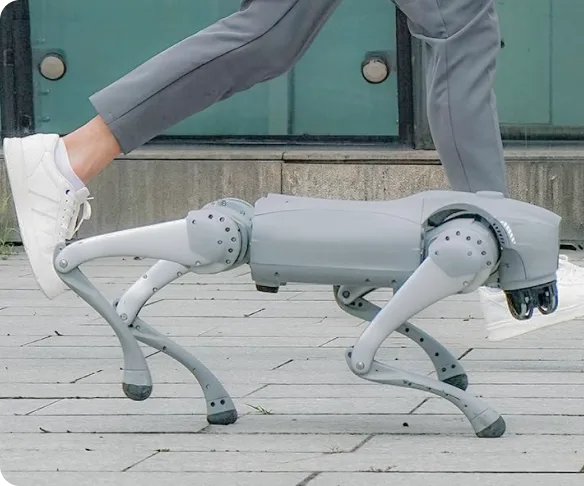
This is where the R1 robot for research fits naturally.
Research-focused robots allow teams to test learning systems on real hardware without custom builds. They provide consistent platforms for experimentation, comparison, and deployment planning.
The faster AI evolves, the more valuable these platforms become.
Why Toborlife AI Pays Close Attention To This Shift
At Toborlife AI, we track how learning systems reshape robot capability at the system level. Faster task learning changes how robots are evaluated, purchased, and deployed. It shifts focus from fixed automation to adaptable intelligence that improves through software updates.
This learning milestone highlights a future where robot value depends on how quickly new skills can be added after deployment. That outlook guides how we select and recommend R1 robot for research, which is designed to support rapid experimentation and learning-driven development.
Toborlife AI prioritizes robots that support this direction through:
Learning-centric system design
Hardware and control layers that support rapid policy updates and skill expansion.
Sensor rich architectures
Platforms equipped to capture detailed spatial and motion data for advanced learning models.
Developer friendly access
Open interfaces that allow researchers and engineers to test and refine learning workflows.
Long term software compatibility
Systems built to stay relevant as AI models and training methods evolve.
Robots suited for environments outside the lab, including education, testing spaces, and early field trials.
From Research Labs To Real Environments
When a robot can learn thousands of tasks quickly, the boundary between research and deployment gets thinner.
A robot trained in a lab can move into a pilot program. A system tested in education can scale into business use. Learning systems become portable.
This reduces risk for buyers. It increases confidence. It shortens the path from idea to use.
Why This Moment Changes Expectations
For years, robot learning felt slow. Promising but distant. Each breakthrough improved one piece at a time.
Learning 1,000 tasks in one day changes expectations.
It shows that generalized learning is achievable. It shows that real hardware can keep up. It shows that everyday AI is closer than many expected.
This does not mean robots replace people tomorrow. It means robots become more helpful sooner.
Choosing The Right Robot Platform Now
As learning systems improve, the choice of a robot platform becomes strategic. Buyers should look for:
- Open access to sensors and controls
- Support for learning-based workflows
- Strong documentation and transparency
- Long term upgrade potential
- Stable hardware for repeated training cycles
Toborlife AI helps customers evaluate these factors clearly. We focus on platforms that align with where robotics is going, not where it has been.
Research-focused systems like the R1 EDU Pro A reflect this approach by supporting hands-on experimentation and long-term learning development.
Explore Research-Ready Robots With Toborlife AI
Rapid learning systems are reshaping how robots are evaluated and deployed. Access to the right platform now determines how quickly teams can test, refine, and scale new ideas.
Toborlife AI connects researchers, educators, and developers with robots designed for real experimentation. Our lineup supports modern AI training pipelines, repeated testing, and long-term system growth.
If you are planning a new project or upgrading an existing setup, our specialists can help you assess technical requirements and platform fit.


Comments are closed for this post.