The Rise of Humanoid Robots in China
China’s robotics industry has been expanding at a breathtaking pace. According to Morgan Stanley, the market is expected to grow at an annual rate of 23 percent, reaching $108 billion by 2028. 2025 marks a milestone because several manufacturers finally entered mass production of humanoid robots. That means the prototypes we saw just a few years ago are now being produced in factories and sent into enterprises.
One big push has come from state-owned enterprises. The government is encouraging adoption across industries such as logistics, healthcare, and education. This creates demand at scale and helps manufacturers lower costs through volume.
The goal goes beyond cool features at conferences. Companies want these machines working in real environments where they can add value.
Boxing Robots Capture Global Attention
Still, nothing grabs headlines like a fight.
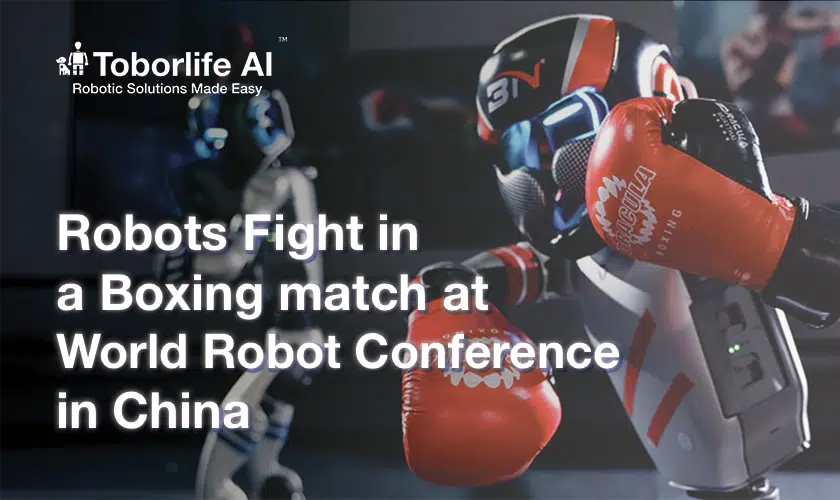
At the World Robot Conference, humanoid robots squared off in a boxing match, throwing punches, dodging, and showing levels of agility that surprised many observers. The demonstration was designed to highlight durability and speed. Unlike slow, stiff robots of the past, today’s humanoids are flexible, balanced, and capable of complex movements.
The unitree G1 was a star attraction. It showed off not only boxing moves but also tasks like running, jumping, and interacting in more natural ways. These performances are more than entertainment. They prove that robots are reaching a stage where they can handle unpredictable environments, which is a requirement for real-world work.
From Shows to Real Solutions
The boxing match stole the spotlight, but the real breakthroughs lie in practical features that will shape how robots work in everyday environments. These are the upgrades that make humanoid robots more than entertainment pieces. They are the capabilities that turn them into reliable tools for businesses and households.
Key features making a difference include:
- Self-swapping batteries that keep robots active without downtime
- Shift-ready performance for warehouses and factories running 24/7
- Customer service training to support hospitality and retail operations
- Healthcare assistance in hospitals and care facilities
- Companionship functions for elder care and home use
- Improved precision and efficiency in movement and decision-making
These developments matter because they define the long-term value of humanoid robots. The ability to perform useful, consistent tasks is what moves the industry from demonstrations to mass adoption.
2025 Marks the Shift to Real-World Adoption
Every tech conference showcases shiny prototypes, but 2025 feels different. The shift is from “what could be possible” to “what is already happening.”
With manufacturers starting large-scale production, costs are set to drop. That means businesses outside of government-backed projects can begin to explore adoption.
China’s strong supply chain gives it another advantage. With component manufacturing concentrated locally, companies can iterate quickly and scale up faster than competitors elsewhere. This could set the stage for China to dominate not just production but also global exports in the robotics space.
Toborlife AI’s Role in the Robotics Future
At Toborlife AI, we see these trends as proof that robotics is ready for practical adoption. The excitement around boxing robots and humanoid performances is a sign of progress, but what matters most is how these machines can help in daily life and work.
Our focus is on building robots that deliver real-world value. That means stability, durability, and agility you can count on. The same features shown on stage which are balance, precise movement, and autonomous operation are built into Toborlife’s product lineup. We are committed to making these technologies accessible, not just for large enterprises but also for smaller businesses that want to stay ahead.
If you’re considering robotics for your operations, this is the time to explore options. Visit toborlife.ai to see how our products compare and learn how they can help streamline tasks in logistics, hospitality, or care.
What Makes Robots Conference-Ready Also Makes Them Business-Ready
The boxing match may seem like a publicity stunt, but it demonstrates core capabilities: reaction speed, balance, endurance, and flexibility. These same traits are exactly what businesses need when deploying robots in real environments. If a robot can dodge punches, it can also avoid obstacles in a warehouse. If it can handle fast sequences of moves, it can likely work smoothly on a production line.
That’s why demonstrations matter.
They compress years of engineering into an exciting display that anyone can understand. Behind the scenes, though, they represent highly technical advances in actuators, sensors, and AI training models.
Next Steps in the Robotics Revolution
The future of humanoid robotics is not just about entertainment. By 2028, robots are projected to be part of mainstream industries in China and beyond. We will see them moving goods, assisting doctors, and even providing companionship in homes. Mass production is the breakthrough step that makes this possible.
For companies outside China, this is both a challenge and an opportunity. Competing on cost may be hard, but focusing on software integration, specific use cases, and global partnerships could open new doors.
For buyers, the choice will be broader than ever, with models optimized for everything from heavy industry to home service.
Final Thoughts
The 2025 World Robot Conference made headlines for boxing robots, the unitree G1, and humanoids swapping their own batteries. But the bigger story is clear: robots are now entering mass production, and industries are getting ready to put them to work.
If your business is exploring robotics, now is the perfect time to act. Instead of waiting for the future, you can bring it into your operations today.
Visit toborlife.ai to see how Toborlife AI products deliver the agility, stability, and real-world usefulness that set them apart.


Comments are closed for this post.