The Patent Gap That Silicon Valley Is Starting To Notice
Morgan Stanley’s Robot Almanac, Volume 3: Humanoids & Industrial Robots breaks down the numbers clearly.
China recorded 7,705 humanoid robot patents over the past five years. The United States followed far behind with 1,561 patents. Japan came next with 1,102, while filings through the World Intellectual Property Organization reached 1,100.
Patents are not just paperwork. They represent control over motion systems, balance algorithms, actuators, joint design, perception stacks, and real-world deployment methods. When one country owns this much IP, it influences cost, speed, and access for everyone else.
In Silicon Valley terms, China is not just shipping faster. It is owning the roadmap.
Why Humanoid Robots Are Suddenly The Center Of Gravity
The humanoid form factor is winning attention for one reason. It fits into human environments without redesigning the world.
Warehouses, factories, hospitals, and homes are already built for people. A robot that walks, lifts, and manipulates like a human can plug into existing workflows with far less friction.
Recent breakthroughs in AI perception, reinforcement learning, and real-time control systems have pushed humanoids from research demos into early commercial pilots. Tasks like object handling, inspection, and repetitive logistics are now realistic use cases.
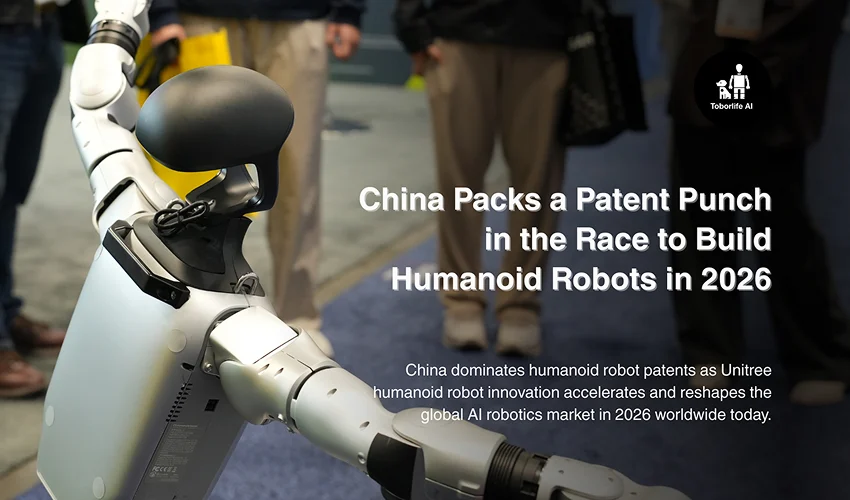
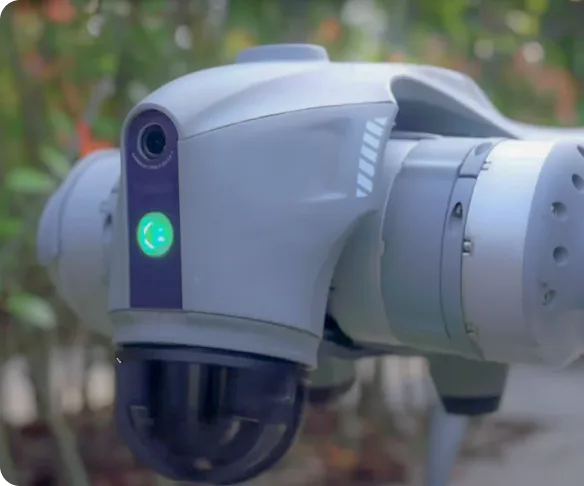
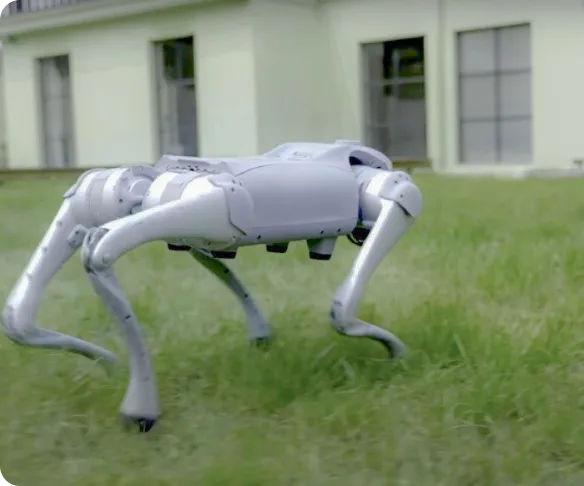
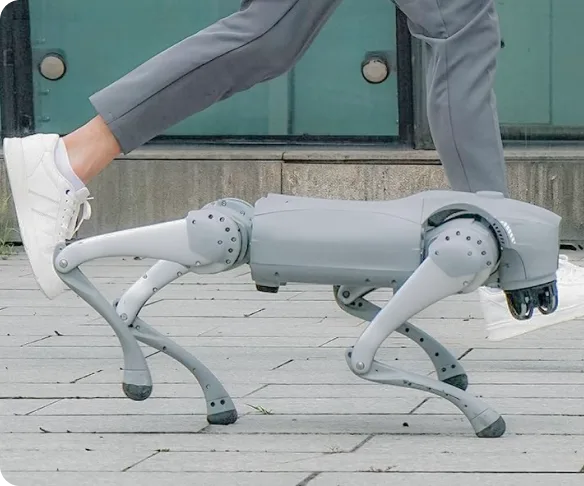
That is why platforms such as the humanoid robot g1 are gaining traction across research labs, startups, and enterprise testing programs.
What China Is Patenting That Others Are Not
The patent surge is not limited to one narrow area. Chinese filings cover the full humanoid stack.
This includes joint actuation systems that reduce energy loss, balance control algorithms for uneven terrain, and multi-sensor fusion models that combine vision, force feedback, and motion planning.
Another key area is manufacturing efficiency. Many patents focus on modular components, standardized joints, and scalable assembly processes. This lowers cost and speeds iteration cycles.
In short, China is patenting not just how humanoids move, but how they get built at scale.
That scale advantage is already visible in platforms like g1 robots, which balance performance with cost efficiency in ways that resonate with both researchers and commercial buyers.
The Shift From Research Toys To Deployable Machines
For years, humanoid robots were mostly lab experiments. They were expensive, fragile, and difficult to maintain.
That era is ending.
Modern humanoids now ship with open software frameworks, cloud connectivity, and hardware designed for daily operation. They can be trained faster and updated remotely.
This is where hardware meets AI infrastructure. And this is also where companies like Toborlife AI are positioning themselves.
Instead of treating humanoids as one-off machines, Toborlife approaches them as evolving platforms. Hardware, control software, and deployment support are aligned for real world use, not just demos.

Comments are closed for this post.