A Quiet Shift Is Happening Inside Robotics Engineering
One interesting pattern emerging in 2026 is that robotics companies are no longer optimizing only for appearance or interaction.
The priorities are changing.
Before:
- Human-like presentation
- Voice interaction
- Demo choreography
- Controlled movement
Now:
- Speed
- Endurance
- Recovery stability
- Autonomous adaptation
- Long-duration operation
This shift is influencing the entire humanoid ecosystem.
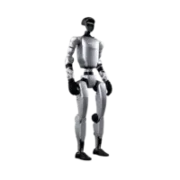
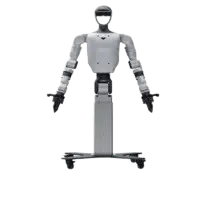
Discussions around systems connected to Unitree Robotics are increasingly centered on movement architecture and operational mobility instead of presentation design alone.
That explains why searches tied to unitree robotics h2 and advanced mobility humanoids are expanding so quickly across robotics communities.
The Beijing Event Also Exposed How Fast the Learning Curve Is Moving
The most difficult thing to ignore was the speed of progress.
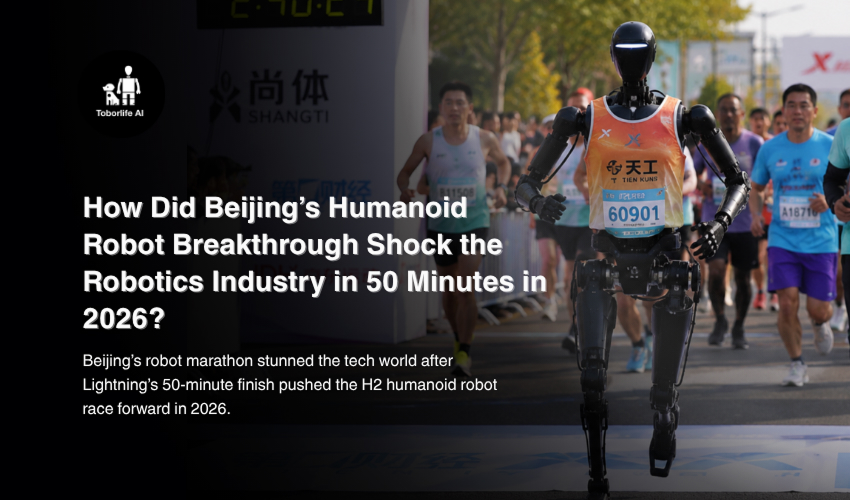
A two-hour improvement within one year suggests robotics learning cycles are accelerating rapidly.
Several factors are likely driving this:
1. Better Simulation Training
Modern robotics simulations allow faster movement optimization before physical testing.
2. More Real-World Data
Each deployment creates valuable movement feedback for future models.
3. Faster Hardware Iteration
Robotics companies are improving motors, balance systems, and structural efficiency more aggressively.
4. AI Coordination Improvements
Movement correction algorithms are becoming significantly more responsive.
5. Advanced Cooling Systems
Improved thermal management technologies are helping humanoid robots maintain stable performance during long-duration movement and high-speed operational tasks.
What the Marathon Says About the Next 5 Years
The marathon result itself was impressive.
But the implications are bigger than one race.
If humanoid robots continue improving movement capability at this pace, several industries may adopt robotics much sooner than expected.
The next five years could bring humanoids into:
- Transportation systems
- Warehousing
- Industrial maintenance
- Security operations
- Hospitality environments
- Public infrastructure
- Educational robotics programs
And unlike previous robotics cycles, this expansion may happen simultaneously across multiple sectors.
Toborlife AI Is Seeing Growing Attention Around Mobility-Focused Humanoids
The Beijing race has also accelerated curiosity around advanced humanoid mobility systems across the broader robotics market.
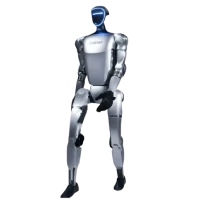
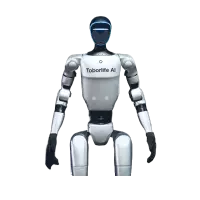
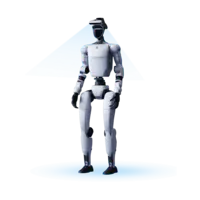
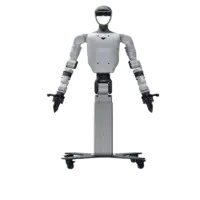
Toborlife AI is witnessing stronger interest in humanoid robots like Unitree H2 and Unitree G1 designed for movement research, robotics experimentation, AI mobility testing, and next-generation automation learning. Our growing robotics ecosystem and access to emerging humanoid technologies continue giving users more ways to explore the fast-moving robotics market in 2026.
Here’s how:
- Mobility Comparisons Are Becoming More Common: Users are increasingly comparing robotics systems through movement performance like unitree h2 vs unitree g1 as humanoid mobility rapidly improves.
- Humanoid Exploration Is Expanding: Interest is also growing around robotics systems like the Unitree G1 and next-generation humanoids designed for AI learning, robotics coding, and mobility experimentation.
- Robotics Communities Are Moving Faster: Universities, developers, robotics enthusiasts, and AI teams are exploring humanoid technologies much more aggressively as public robotics milestones continue accelerating.
Toborlife AI continues expanding access to next-generation humanoid systems while becoming a growing destination for users as a trusted unitree h2 robot distributor in the rapidly evolving robotics market.
Final Thoughts: Beijing’s Robot Marathon May Be Remembered as a Turning Point for Humanoid AI
The biggest surprise from Beijing was not just the speed.
It was how quickly humanoid robots are closing the gap between experimental engineering and real-world performance. A nearly two-hour improvement in one year signals that robotics development is entering a much faster phase.
The race also showed how mobility, endurance, and autonomous coordination are becoming the new benchmarks shaping the future of humanoid AI.
If you want to explore where next-generation humanoid robotics is heading next, you can also talk with the team at Toborlife AI to discover the latest robotics technologies gaining momentum in 2026.


Comments are closed for this post.