Why TIME’s Recognition Signals a Change in the Industry
TIME Magazine does not select inventions lightly. Its list reflects technology that has clear impact or future potential. The appearance of two humanoids in the same year is unusual. It signals a shift in how the public and the tech community understand this category.
Both the R1 and Figure 03 represent different philosophies. The R1 targets wide access. It delivers advanced movement in a lower cost frame. The Figure 03 targets broad general-purpose goals with a more ambitious hardware range.
Their presence on the list also changes public perception. Many people now view humanoids as real tools rather than distant experiments.
The Rise of the R1 and Its Impact on Research
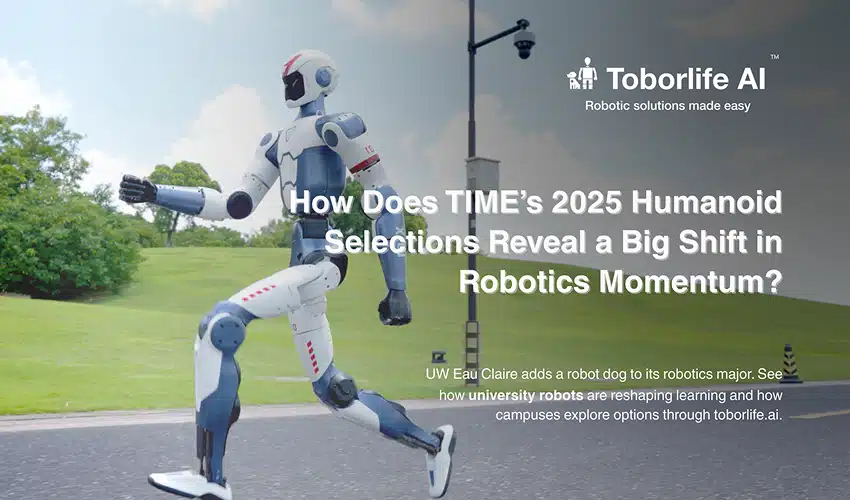
The R1 gained attention because of its pricing and technical range. The robot holds a twenty five kilogram frame and supports twenty six movement joints. It also performs dynamic moves such as cartwheels and postural shifts.
For research teams, these traits open new experiment paths. Many labs can now run humanoid trials without large budgets. This increases collaboration and speeds up learning cycles. It also encourages early-stage researchers to run more tests because each test is less costly to plan.
This is why interest in the R1 robot for research continues to grow. Researchers want a platform that lets them explore movement, perception, and interaction in real time.
Why Figure 03 Also Earned a Spot
The Figure 03 is positioned differently in the humanoid landscape. It focuses on long-term commercial general-purpose design. The platform aims at broader work functions and deeper task coverage. It highlights the future ambition of humanoids that perform real work in homes, offices, and controlled environments.
Its inclusion demonstrates the second major trend in robotics. High-end humanoids aim for deep capability. They will take longer to reach large-scale deployment, but they show where broad robotics might go.
Together, the R1 and the Figure 03 show an industry that is evolving on two paths at once.
Two Different Trends Shaping One Industry
These two platforms highlight the dual direction shaping the 2025 humanoid field:
1.The push for accessible humanoid platforms
Smaller units with lower cost and usable movement patterns.
They are ideal for:
- Research labs
- Education centers
- Startup experimentation
- Training programs
- Early robotics development
2.The push for full-scale general-purpose humanoids
Larger platforms designed for long-term physical tasks.
They focus on:
- High reach
- Complex manipulation
- Large task sets
- Multi-environment capability
Why the R1’s Accessibility Updates the Research Pipeline
Humanoid projects were once limited to well-funded groups or tech giants. The R1 changes that pattern. Because it is affordable, lightweight, and easy to position, more teams can begin exploring humanoid movement in earlier stages.
As more programs begin exploring real humanoids, the overall speed of discovery grows.
This changes research in three major ways.
- Research Becomes More Hands-On
Teams do not rely solely on simulation tools. They can test movement and perception directly.
- Experiment Cycles Become Shorter
More groups can run tests without long setup requirements.
- More Students Enter Humanoid Research
Learning environments gain simple access to advanced platforms.
Motion Capabilities That Strengthen Public Interest
The R1 gained public attention for its movement range. It performs athletic tasks that show strong engineering progress. These abilities serve more than just entertainment. They show how fast joint coordination and center-of-mass design are improving.
These movements reflect the robot’s mechanical timing and balance systems. They also help the public understand humanoid progress in a simple and direct way.
Key motion examples include:
- Full cartwheels
- Dynamic posture changes
- Balanced single-leg positioning
- Rotational control
- Gesture-following responses
- Quick arm extension sequences
Why Recognition Helps New Buyers Understand Value
When TIME names two humanoids as top inventions, buyers start looking for clear ways to compare platforms. They want guidance on what to choose, how to plan tests, and how to align budgets with long-term goals.
This is where platforms like toborlife.ai support the process.
Many visitors arrive to:
- Compare features
- Explore movement capability
- Review price tiers
- Understand teaching or research potential
- View updates
- Check distribution details
What the R1 Symbolizes for the Next Wave of Accessible Robotics
The R1, priced far below traditional humanoids, brings more people into the field. It represents a new phase where cost no longer blocks progress.
The R1 lifts the entire field by giving people direct access to a platform that delivers real movement and real interaction at a reasonable price.
This change has effects across the ecosystem:
- More labs test humanoids
- More classrooms add hands-on training
- More startups explore humanoid functions
- More students see robotics as achievable
- More institutions consider robotics integration
Why Toborlife AI Helps Keep the Momentum Strong
When new users look for a guide, they often search for places that organize information across models and features. Toborlife AI supports buyers by presenting humanoids with clear comparisons and easy navigation.
Visitors find the information they need to choose the right path, including:
- Workflows for early research
- Performance charts
- Motion details
- Pricing paths
- Teaching use cases
- Compatibility notes
This helps first-time buyers or new researchers make confident decisions. It also ensures that teams can plan ahead and understand what each unit offers.
Many users exploring the R1 robot for research rely on our listings to help them compare the platform with other models.
The Broader Shift These Two Robots Represent
TIME’s recognition marks a new moment in robotics. Seeing two humanoids on the list shows that the field is entering a more active phase. The public now understands that humanoids have real direction. Some platforms are ready for classrooms and labs. Others prepare for long-term commercial work.
This dual growth pushes innovation in all directions. It encourages more groups to experiment, learn, and develop new solutions.
The New Chapter This Recognition Sets in Motion
The inclusion of the R1 and the Figure 03 on TIME’s list sends a clear message. Humanoid robotics is accelerating. It is expanding. It is entering environments that once seemed too early for this type of technology. The R1 gives researchers and training programs a real platform to work with. The Figure 03 shows the long-term ambition of the industry.
As more teams explore these trends, platforms like toborlife.ai help buyers navigate options with clarity and confidence.
If you want to explore humanoid features, compare capabilities, or plan your first purchase, visit toborlife.ai and start exploring the next chapter of robotics.

Comments are closed for this post.