Unitree R1 Basic: The Entry Tier
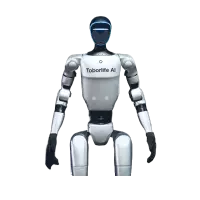
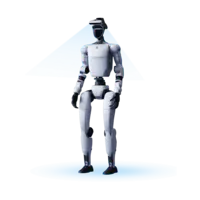
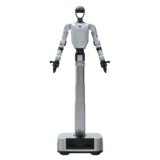
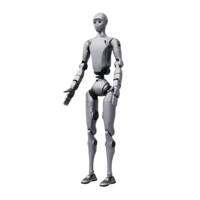
The Unitree R1 Basic is the starting point for the R1 line, built for teams that want the platform without secondary development support.
R1 Basic: $8,990. 24 degrees of freedom, an 8-month warranty, still no secondary development.
This base unit does not support custom software development on the robot itself, which is the main differentiator between the R1 Basic and the Edu line below.
R1 Edu: Built for Secondary Development
If your project involves writing software for the robot, not just operating it out of the box, the R1 Edu tier is where the R1 humanoid robot actually opens up for development. Every Edu configuration includes a 12-month warranty on the entire unit and support for secondary development, from policy training and imitation learning research to simulation testing in environments like Isaac Sim.
1. R1 Edu Standard: $15,950. 26 degrees of freedom, an 8-core CPU, and full secondary development support.
2. R1 Edu Smart: $18,900. Same core specs, upgraded to a 100 TOPS onboard compute module. This is also the base configuration the Pro hand options below are built on.
R1 Edu Pro: Adding Dexterous Hands
The R1 Edu Pro configurations start from the R1 Edu Smart specs and add a pair of dexterous hands, which is where most of the price range in the R1 lineup comes from. Currently available hand configurations are Pro A through Pro D:
1. Pro A — Dex3-1 three-finger hands (non-tactile): $30,900. A force-controlled three-finger hand with a wrist RGB camera, built for general grasping tasks where you don’t need pressure feedback.
2. Pro B — Dex3-1 three-finger hands (tactile): $32,900. The same hand with 33 tactile sensors added, worth the upgrade if your project depends on grip-force or contact feedback rather than just picking things up.
3. Pro C — BrainCo Revo 2 Basic hands: $28,900. A five-finger hand for more human-like grasping and dexterity work, without tactile sensing.
4. Pro D — BrainCo Revo 2 tactile hands: $32,900. The five-finger Revo 2 hand with pressure, friction, direction, and proximity sensing built in.
Tactile sensing typically costs more than the non-tactile version of the same hand, which is worth budgeting for early if your project depends on force or pressure feedback. Between the two hand families, Dex3-1 (Pro A/B) is a three-finger force-controlled design, while the BrainCo Revo 2 (Pro C/D) is a five-finger hand suited to tasks that benefit from more human-like grip and finger independence.
What Actually Drives Up the Price
Three things add the most value for an R1: secondary development support (the jump from Basic to Edu), upgraded onboard compute (Edu Standard to Edu Smart), and hand selection (Edu Pro’s biggest cost driver by far).
If your project doesn’t need custom software on the robot, the Basic tier covers it. If it does, consider the Edu Standard line and add the compute and hand configuration your research or development plan actually calls for, and check out the Unitree R1 for sale.
Buy R1 Robot Through Toborlife AI
Working with an R1 robot distributor in the U.S. means more than a different shipping location. Toborlife AI stocks R1 humanoid robot hardware domestically, offers financing to help teams structure a purchase against their budget, and gives every customer direct access to Unitree-certified support engineers for setup and configuration questions. You can see full specs and current configuration options on the Unitree R1 product page.
Frequently Asked Questions
Where can I buy an R1 robot in the USA? Toborlife AI is an authorized Unitree distributor with R1 hardware available domestically, so you’re not routing an order through overseas freight and customs.
Can I finance an R1 purchase? Yes. Toborlife AI accepts PO purchases and offers financing through Affirm to help teams bring R1 hardware into their projects in a way that fits their procurement process.
What’s the difference between R1 Basic and R1 Edu? R1 Basic doesn’t support secondary development. R1 Edu configurations do, along with Isaac Sim compatibility and a longer warranty.
Which hand should I choose for my project? Pro A/B (Dex3-1) suits general grasping tasks, with Pro B adding tactile feedback for force-sensitive work. Pro C/D (BrainCo Revo 2) offers five-finger dexterity for more human-like manipulation, with Pro D adding tactile sensing. Talk to our team if you’re not sure which fits your research or development goals.
Ready to talk through your Unitree R1 configuration? Talk to a Robotics Expert →





Comments are closed for this post.