More Than Remote Control
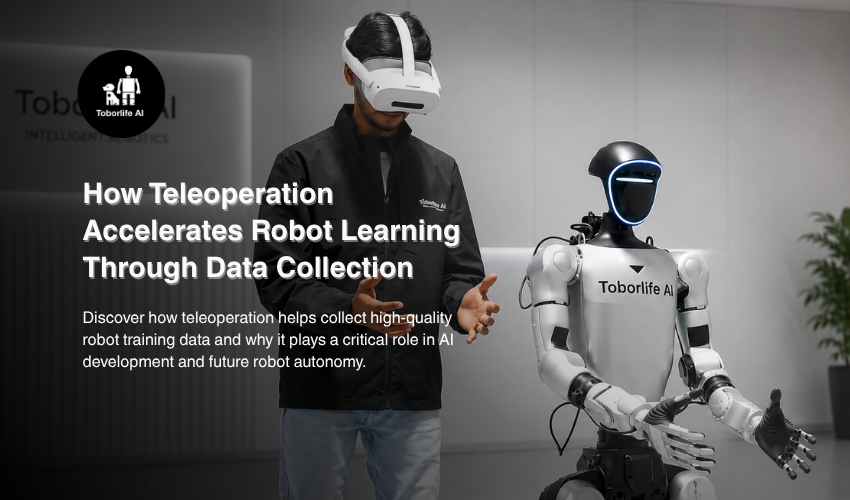
Teleoperation is often thought of as simply operating a robot from a distance. That’s part of it—but every completed task under human guidance also generates valuable training data.
During teleoperation, a robot can record camera feeds, joint positions, hand movements, and sensor data alongside the operator’s actions, creating a synchronized dataset that captures how a task was completed. Developers can demonstrate a task once or hundreds of times and use those demonstrations to train AI models through imitation learning—cutting development time and teaching robots behaviors that are hard to define through traditional programming.
Several control interfaces make this possible. Leader-follower setups pair a physical leader arm that an operator moves by hand with a follower robot that mirrors its motion, recording data directly in the robot’s own joint space. Other systems use VR controllers, handheld devices, or exoskeletons, each offering a different balance of precision, flexibility, and ease of deployment. Whatever the interface, the goal is the same: capture a clean, high-fidelity record of how a human solved the task so a model can learn from it later.
Turning Human Demonstrations Into AI Training Data
Human operators naturally adapt as they work: slowing down near an object, adjusting grip based on shape, or shifting path to avoid an obstacle. These small, situational decisions are difficult to hard-code, but teleoperation captures them automatically, giving AI models examples of flexible, real-world problem-solving to learn from.
As demonstrations accumulate, developers build datasets of successful manipulation, navigation, and decision-making. These datasets form the foundation for AI training, helping robots recognize patterns and gradually take on tasks with less human assistance. Teleoperation gives robots the examples they need to build toward greater autonomy.
High-quality demonstrations are especially valuable for:
- Imitation learning
- Dexterous manipulation
- Human-robot interaction
- Navigation in dynamic environments
- Industrial inspection and maintenance
- Warehouse and logistics automation
From Demonstrations to Deployed Models
This approach isn’t theoretical—it’s already how some of today’s most capable robot AI models learn. Vision-language-action models have been trained on large libraries of teleoperated episodes, in some cases spanning hundreds of thousands of demonstrations collected across open, multi-robot datasets.
Research has also shown that the diversity of teleoperated demonstrations—the range of tasks, objects, and environments represented—often has a greater impact on real-world performance than simply collecting more data. That’s why organizations building serious robotics programs invest in structured, repeatable teleoperation workflows rather than one-off demonstrations.
Where Teleoperation Is Making an Impact
Teleoperation’s role has expanded well beyond direct operation. Research labs use it to generate datasets for imitation learning and policy development. Manufacturers use it to test robotic workflows before automating them. Universities give students hands-on experience with advanced robotics platforms, and industrial teams use it to evaluate robots in environments that are difficult or dangerous for human workers.
Common applications include robotics research and development, university robotics programs, manufacturing and assembly, and remote operation in hazardous environments.
Across each of these settings, teleoperation gives organizations an efficient way to evaluate robot performance while generating the data that improves future autonomy.
This shift is visible at an industry level, too. Major robotics manufacturers have begun partnering with AI data companies to build dedicated imitation-learning systems, aiming to move robots from narrow, pre-programmed applications toward more general, AI-driven tasks. These partnerships reflect a broader trend: teleoperation is no longer viewed as a stopgap before full autonomy, but as an ongoing part of how robots keep improving even after deployment.
Why Toborlife AI
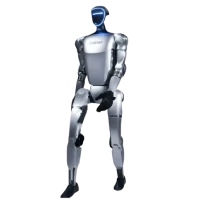
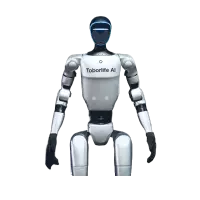
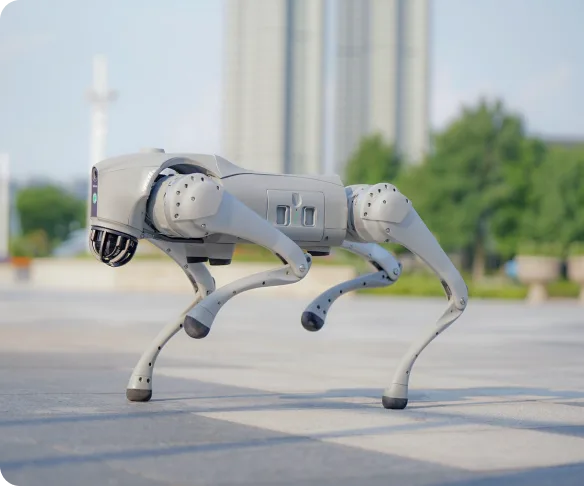
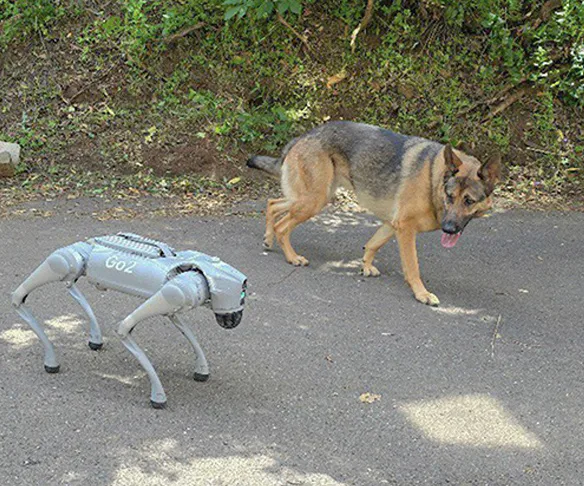
At Toborlife AI, we work with research organizations, universities, and industry partners exploring the next generation of humanoid and quadruped robotics. As teleoperation continues to play a larger role in AI development, we help teams identify the right hardware, software, and robotics platforms for their projects.
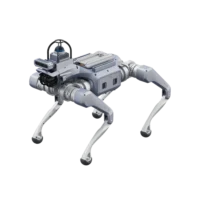
Whether you’re exploring Unitree remote control solutions or implementing Unitree XR teleoperation, we help teams build practical robotics workflows that support both today’s operations and tomorrow’s autonomous capabilities. Whether you’re beginning a research project or scaling an existing robotics program, we provide guidance and solutions that help teams move forward with confidence.
Final Thoughts
The future of robotics isn’t built on hardware alone—it’s built on data. Every task completed with a remote control robot adds another example that AI models can learn from, giving developers one of the most effective ways to capture real-world demonstrations and turn them into AI training data while bridging human expertise and autonomous robot behavior.
As more organizations formalize their approach to demonstration collection, the quality and diversity of that data will likely matter as much as the robots themselves. Teams that treat teleoperation as an ongoing data pipeline, rather than a one-time setup step, are better positioned to keep improving their models as new tasks and environments emerge.


Comments are closed for this post.