From Prototypes to Commercialization
China’s robotics industry is moving fast. The country produced 370,000 industrial robots and 8.82 million service robots in the first half of 2025 alone. These numbers reflect strong growth, with industrial robot output up by 35.6% year over year. For 12 consecutive years, China has held the title of the world’s largest industrial robot application market.
But what makes 2025 different is commercialization. Until recently, humanoid robots were limited to lab experiments or flashy demonstrations. Now, deals are being signed. Shanghai-based AgiBot secured a contract with Fulin Precision to deploy around 100 humanoid robots in its plants. Unitree and AgiBot also closed a 124 million yuan order from China Mobile, marking one of the largest humanoid robot transactions in the country.
These steps show how humanoids are leaving exhibition halls and entering production lines, hospitals, and homes.
Breakthrough Features on Display
The World Robot Conference 2025 showcased how far humanoid and service robots have come. The focus this year was on practical design, adaptability, and real-world use cases.
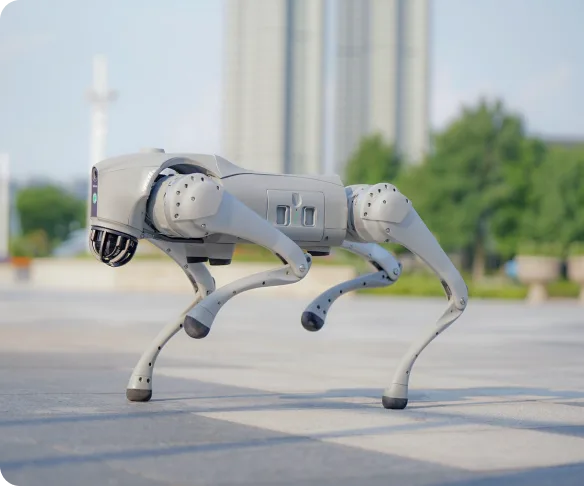
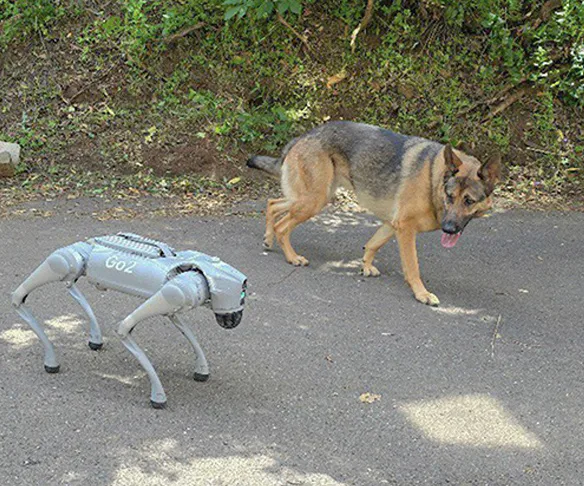
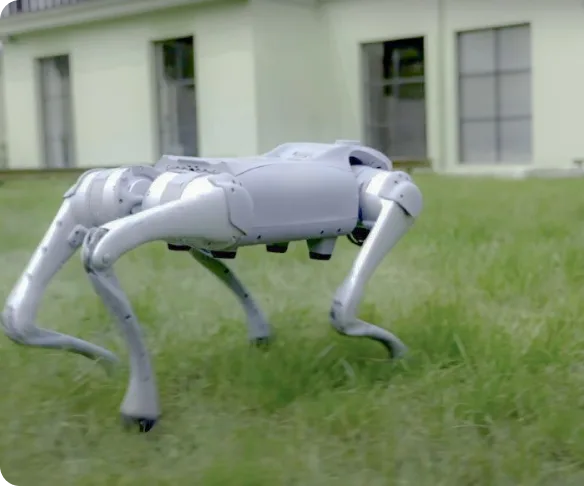
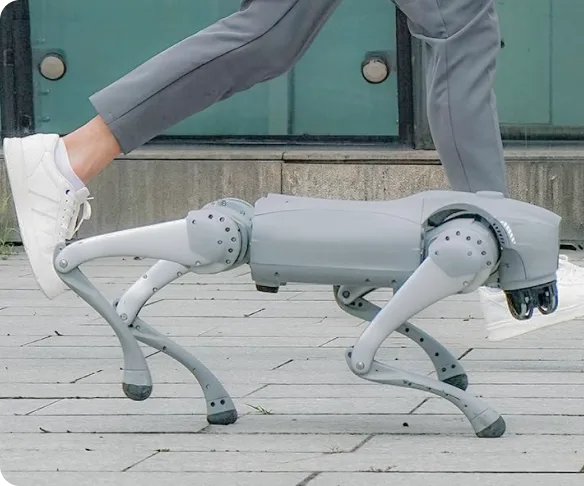
- Unitree Robotics presented new humanoid and quadruped robots, including models designed for industrial collaboration. They even staged a boxing match between upgraded G1 robots, drawing attention to durability and agility.
- Galaxea AI showcased the R1 Lite, which can tidy a disordered bedroom when asked. This is powered by a Vision-Language-Action (VLA) model, linking perception and action.
- UBTech revealed its Walker S2, the first humanoid able to autonomously swap its own battery.
- Fourier Robotics trained its GR-3 humanoid robot with Nvidia’s Isaac Lab, proving robots can learn to operate in complex, unstructured environments.
- Shanghai Jiao Tong University introduced a six-legged robotic guide dog, designed to assist visually impaired participants during the upcoming National Games.
The Technology Driving Progress
The shift is powered by three things:
- AI integration. Robots now use large models that connect vision, speech, and movement. This allows more human-like responses.
- Computational power. Platforms from Nvidia and Alibaba Cloud help train and deploy advanced robot models at scale.
- Hardware improvements. Costs are falling, sensors are getting smaller, and energy systems are improving.
Together, these advances mean robots are no longer single-purpose tools. They are adaptable systems that can learn new tasks.
Why Does China Have an Edge in Modern Robotics?
China has unique advantages in humanoid robotics. The result is a fast-growing industry valued at nearly 240 billion yuan in 2024, with expectations for even more growth by the end of 2025.
Why is this so? Because they have:
- Talent pipeline. Universities produce large numbers of AI and engineering graduates each year.
- Manufacturing scale. The country can build hardware quickly and cheaply
- Closed-loop development. Robots are deployed in the real world, data is collected, and systems are refined. This cycle accelerates progress.
Practical Applications of Robotics Emerging
Robots are already proving useful in multiple fields:
- Manufacturing: Humanoids sorting and handling parts.
- Healthcare: Orthopedic surgical robots cut operation time from hours to minutes.
- Accessibility: Exoskeletons allow paraplegic patients to walk again and help seniors climb stairs. Over 1,000 units are in use across 300 hospitals.
- Public Services: A six-legged robotic guide dog developed at Shanghai Jiao Tong University will assist visually impaired participants at the National Games.
- Agriculture and inspection: Robots monitor petrochemical sites, perform emergency response tasks, and support farm production.
This diversity shows that humanoid robots are not just lab experiments anymore—they are becoming part of everyday life.
What Does This Means for Consumers?
For businesses and households, the rise of humanoid robots opens new possibilities. Imagine reducing repetitive labor in factories, supporting medical staff during surgeries, or providing companionship and assistance for seniors at home. These are not far-off concepts. Contracts are being signed, pilots are underway, and prices are falling.
But not every company will deliver the same value. Many are focused on scale without addressing usability or cost. That’s where Toborlife AI stands apart.
Toborlife AI: Innovative Robots for Real Life
At Toborlife, we design robots with one clear goal: make them useful in real situations. While others focus on spectacle, we focus on function, safety, and affordability.
We are building the next wave of intelligent humanoids that can fit into your business or lifestyle today. Not years from now.
If you want to explore cutting-edge humanoid solutions, visit toborlife.ai and see how our products compare.
- Adaptive AI systems that learn from your environment.
- Human-centered design for ease of use and comfort.
- Flexible deployment in homes, offices, or industrial settings.
- Competitive pricing to make advanced robots accessible, not just experimental.
The Road Ahead
Experts forecast that shipments of humanoid robots will double each year for the next 2–3 years, reaching hundreds of thousands or even millions of units worldwide. The main challenges remain large-scale model training, lower-cost hardware, and stronger computing resources. With continued investment, these gaps are expected to close within 2–5 years.
As more real-world datasets become available, swarm intelligence, robots collaborating and sharing knowledge could also emerge as the next frontier.
Final Thoughts
Humanoid robots are crossing the line from imagination to reality. They can box, play music, and clean rooms, but more importantly, they are starting to work in factories, hospitals, and homes.
The G1 humanoid robot may symbolize the playful side of this revolution, but the bigger story is how robots are becoming valuable partners in human life.
China is leading this wave, but the opportunities are global. And with Toborlife AI’s commitment to practical, reliable, and affordable robotics, the future of humanoid assistance is closer than ever.
Check out Toborlife AI and experience what modern robotics can bring to your world!


Comments are closed for this post.