What Is the Unitree G1?
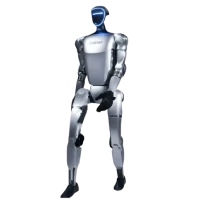
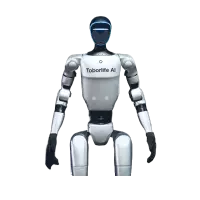
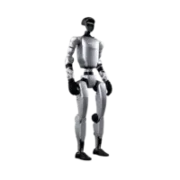
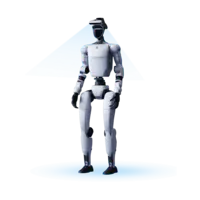
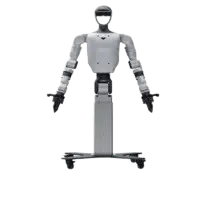
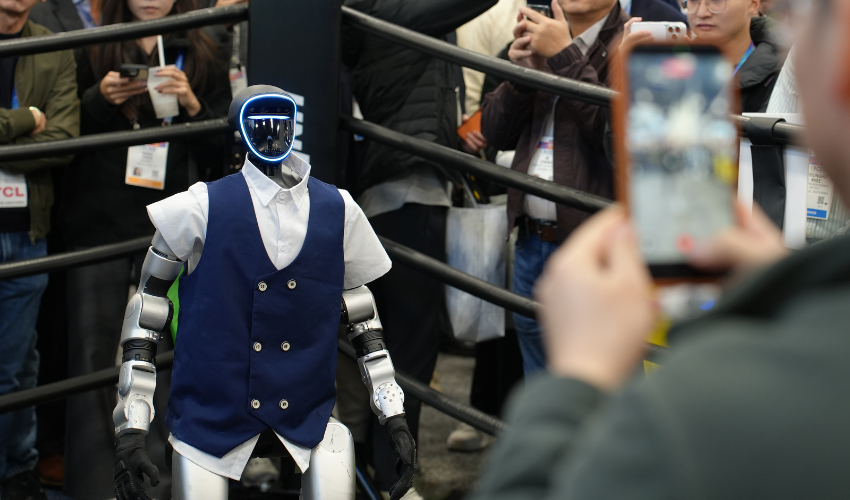
The Unitree G1 is a full-size humanoid robot built by Unitree Robotics, standing at 4 ft 3 in and weighing at 35kg, with a bipedal frame, two articulated arms, and dexterous hands. Its human-scale proportions let it move through doorways, stairs, and workspaces built for people.
Unitree sells the G1 in several configurations: Standard, Plus, Pro, and Ultimate. They share the same core body, but are upgradable with more joints, sensors, and computing power as you move up the line, which means dozens of degrees of freedom across the arms, hands, waist, and legs. Each configuration is built for researchers, educators, and developers who need a programmable humanoid to build software and behaviors on top of. Organizations use the G1 for robotics research, coursework and lab instruction, and early-stage product development. A reliable humanoid body lets teams spend their time on the software and behaviors they’re trying to build.
Key Capabilities
The G1’s value as a development platform comes down to three systems: how it moves, how it manipulates objects, and how it senses its surroundings.
Mobility & Balance
The G1 walks, turns, and traverses uneven or sloped terrain using an integrated balance-and-locomotion system. Its bipedal design lets it navigate stairs and stand from a range of postures, making it useful on factory floors and industrial spaces, not just on a flat test bench.
Manipulation
Two articulated arms and dexterous hands let the G1 reach, grasp, and handle objects of varying shapes and sizes. On the higher-end configurations, that includes support for tactile dexterous hands like the Dex3-1 and Revo 2 Touch, which pick up on grip pressure and contact, not just position. The manipulation capability is central to its use in research on grasping, object handling, and learning from human demonstration.
Perception
The G1 carries sensors, including depth and vision systems, that let it perceive obstacles, objects, and people around it. That perception feeds the balance and manipulation systems, so the robot responds to a changing environment instead of running a fixed, pre-programmed path.
Move, manipulate, perceive. Those three systems are what separate a Unitree G1 humanoid robot from a simpler mobile platform.
Why Organizations Choose the G1
Three things keep coming up when organizations explain why they picked the G1: the price makes it accessible outside well-funded corporate labs, the developer and research community around it is active, and it doesn’t require custom hardware to support a new project.
Research institutions use the G1 to study locomotion, manipulation, and human-robot interaction. Universities use the same platform for robotics coursework, giving students hands-on experience with a professional-grade humanoid instead of only simulation. The G1 Edu line was built specifically for this: a classroom-ready configuration that gives robotics programs a research platform without the cost or lead time of building one from scratch. Product teams, meanwhile, use the G1 to prototype behaviors and interactions before committing to custom-built hardware.
The G1’s applications extend well beyond the lab, too, from guest-facing demonstrations in hospitality to logistics support in healthcare and hands-on learning in classrooms. Our deep dive into interactive robots in hospitality, healthcare, and education covers those use cases in more detail.
The G1 and Teleoperation
Out of the box, the G1 is a capable but general-purpose robot. Its more advanced behaviors, especially dexterous manipulation, have to be taught. That’s where teleoperation comes in. A human operator controls the robot’s arms, hands, and whole-body movement directly, which lets you operate the G1 for demonstrations and inspections and generate the training data robot learning depends on.
At Toborlife AI, our Tobor Harness™ Teleoperation System pairs an XR headset and motion tracking hardware with whole-body control and dexterous hand tracking. An operator guides the G1’s full range of motion while the system captures synchronized demonstration data. If you already have a G1 and want to move from basic operation to full-body control and AI data collection, teleoperation is typically the next step.
Getting Started
Getting started with the G1 means choosing the right configuration for your use case: Standard, Plus, Pro, or Ultimate, depending on whether you need it for coursework, research, or product development. From there, most organizations pair the robot with software and tooling that extends its out-of-the-box capabilities, whether that’s a development framework, a simulation environment, or a teleoperation system for controlling and training the robot.
The order of operations matters here. Get the base robot running and calibrated first, then layer on the software your team actually needs. Trying to spec out a full stack before the hardware arrives usually just delays the project. Toborlife AI works with organizations at every stage of that process, from picking a G1 configuration to deploying a full teleoperation and data collection setup on top of it, including support during setup and ongoing operation.
See the Unitree G1 in Action
The G1 gives research teams, educators, and product developers a human-scale humanoid platform to build on. Add Tobor Harness™ teleoperation, and it becomes a full system for controlling, demonstrating, and training humanoid robot behaviors.
Curious whether the Unitree G1 is the right platform for your team? Talk to a Robotics Expert →


Comments are closed for this post.