A New Milestone in Humanoid Robotics
Surgical robotics has traditionally relied on highly specialized systems designed exclusively for operating rooms. These platforms are built for precision but are also expensive, complex, and limited to specific medical applications.
The UC San Diego research explored a different approach.
Instead of designing an entirely new surgical robot, researchers investigated whether commercially available humanoid robots could successfully perform delicate surgical tasks when controlled remotely by experienced surgeons.
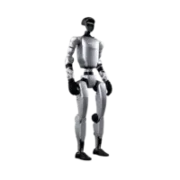
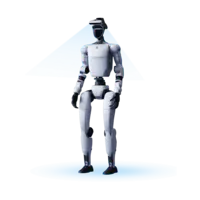
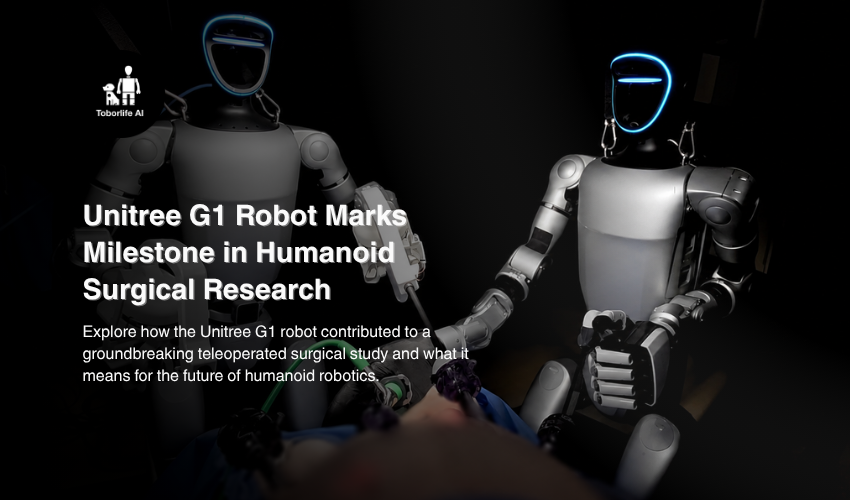
Using standard laparoscopic instruments, two Unitree G1 humanoid robots completed minimally invasive gallbladder removal procedures on live pigs through teleoperation. In one procedure, a humanoid robot worked alongside a human surgeon, while another demonstrated two humanoid robots collaborating during surgery.
Although these procedures were performed in a controlled research environment, they showed that general-purpose humanoid robots could execute complex, coordinated movements under human supervision.
Why Researchers Chose the Unitree G1
One of the most interesting aspects of the study was not the surgery itself, but the platform researchers selected.
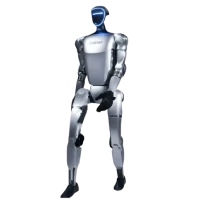
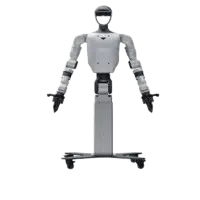
Rather than developing custom-built robotic hardware, the team chose the Unitree G1 robot, a commercially available humanoid platform designed for robotics research and development.
According to the researchers, the decision was largely based on the robot’s accessibility and availability. Because the platform is already used by universities and robotics laboratories, it allowed the team to focus on developing teleoperation techniques and evaluating humanoid capabilities instead of building an entirely new robotic system.
This highlights an important trend within robotics research. Increasingly, researchers are choosing flexible humanoid platforms that can support multiple applications, allowing software, AI models, and control methods to evolve without redesigning the hardware for every new project.
Why Teleoperation Made the Difference
The success of the study did not depend on autonomous decision-making.
Instead, experienced surgeons remotely controlled each robot throughout the procedures, directing every movement while the robots manipulated conventional surgical instruments.
This human-in-the-loop approach combines robotic precision with human expertise. Rather than replacing skilled professionals, teleoperation enables them to perform highly controlled tasks while remaining physically separated from the robot.
Beyond surgical research, this approach has broad implications for humanoid robotics. Teleoperation allows developers to evaluate complex manipulation tasks, improve robot coordination, and collect valuable data that can later support AI training and autonomous capabilities.
For many researchers, it also provides a safer and more practical way to test new robotic behaviors before introducing higher levels of autonomy.
What This Means for the Future of Humanoid Robotics
Although the study focused on surgery, its broader significance lies in demonstrating the adaptability of general-purpose humanoid robots.
Unlike robots built for a single application, humanoid platforms can be used to investigate a wide variety of tasks requiring mobility, dexterous manipulation, and close human interaction. The same hardware can support robotics research, embodied AI, teleoperation, human-robot interaction, and other emerging fields simply by changing the software, control methods, or attached tools.
This flexibility continues to make G1 robots attractive platforms for universities, research institutions, and AI developers exploring the next generation of robotics.
The study also reinforces an important shift occurring across the industry. Rather than viewing humanoid robots solely as future service machines, researchers increasingly see them as development platforms that accelerate innovation across multiple disciplines.
Challenges Before Clinical Adoption
Despite the achievement, researchers emphasize that humanoid robots are not ready to perform independent surgery on human patients.
Before any clinical adoption becomes possible, significant work remains in improving precision, force control, safety, sterilization, reliability, and regulatory compliance. Extensive validation and human clinical trials would also be required before similar systems could be considered for routine medical practice.
For now, the study should be viewed as a research milestone rather than a medical breakthrough ready for hospitals.
Looking Beyond the Operating Room
The importance of this research extends well beyond healthcare.
The successful use of a humanoid robot G1 in such a demanding environment demonstrates how flexible humanoid platforms are becoming. As teleoperation, AI, and robotic manipulation continue to improve, these systems may contribute to advances in manufacturing, scientific research, hazardous environment operations, education, and other industries where precise human-guided interaction is valuable.
While fully autonomous humanoid robots remain a long-term goal, studies like this illustrate the role teleoperation can play in bridging today’s technology with tomorrow’s capabilities.
Rather than replacing people, humanoid robots are increasingly becoming powerful research tools that help engineers, scientists, and developers explore what the next generation of intelligent robotics can achieve.



Comments are closed for this post.