Research and Development
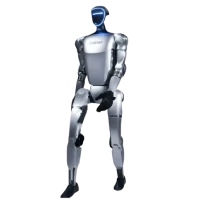
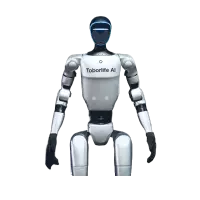
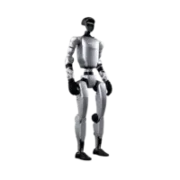
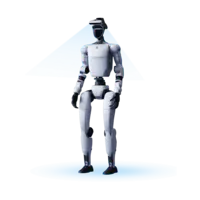
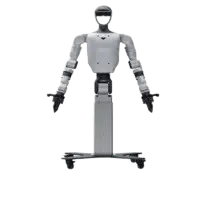
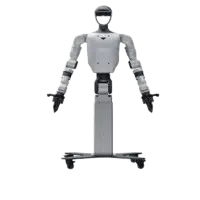
Universities and corporate labs remain the most immediate fit for a humanoid platform like the Unitree H2. Rather than testing exclusively in simulations, researchers use the platform’s 31 DOF and full-body articulation to study locomotion, balance, and human-robot interaction on hardware built to human proportions. The H2 unit supports up to 360 N·m of peak leg-joint torque and demonstrates stable movements, making it useful for teams studying balance recovery and full-body coordination.
The H2 Edu Smart, Plus Standard, and Plus Ultimate series configurations support secondary development, with additional computing board options including NVIDIA Jetson Thor, NVIDIA Jetson Orin NX, and Intel Core i7 boards. The wide range of options lets a research team select the option that best fits their needs.
Hand options also span from simple dummy hands up to tactile and vision-tactile hands with as many as 22 DOF, so teams can scope their manipulation research to the level of dexterity they need.
Construction
A human laborer gets tired, works a fixed shift, and faces real injury risks handling heavy loads on hazardous job sites. Those are the constraints an H2 humanoid robot can help to address.
Construction sites are built around human-scale reach, and that’s where a full-size humanoid has an edge over a wheeled or tracked platform. The H2’s 1.82 m frame and 7-DOF arms give it consistent reach across shelving, scaffolding, and equipment at a range of heights, without repositioning a ladder or lift between tasks. Its bipedal frame also takes up less floor space than a wheeled platform, which helps when navigating tighter site layouts and staging areas.
Lifting capacity is where the H2 stands apart. The Unitree G1’s arms are rated for approximately 3 kg. The H2 moves up to roughly 15 kg peak and 7 kg for sustained use, giving it real headroom for heavier construction loads. This higher payload is suited for tasks like staging tools, handling building materials, and moving components between work zones. A repeatable task, such as picking up a load, carrying it across a narrow hallway or aisle, and setting it down at the next work zone, plays directly to that lifting profile, without the fatigue or injury exposure a human doing the same task repeatedly would face.
With secondary development and task-specific software layered on top of the base platform, the H2 can perform tasks like these adequately. Although long-duration autonomous operation on an active job site remains an open research question, many companies are actively exploring robotics adoption for their operations. Crews running structured pilots now on a defined task, like material staging or repetitive handling, are the ones who’ll have tuned software and real operating data before broader automation on job sites becomes standard.
Warehouse Logistics
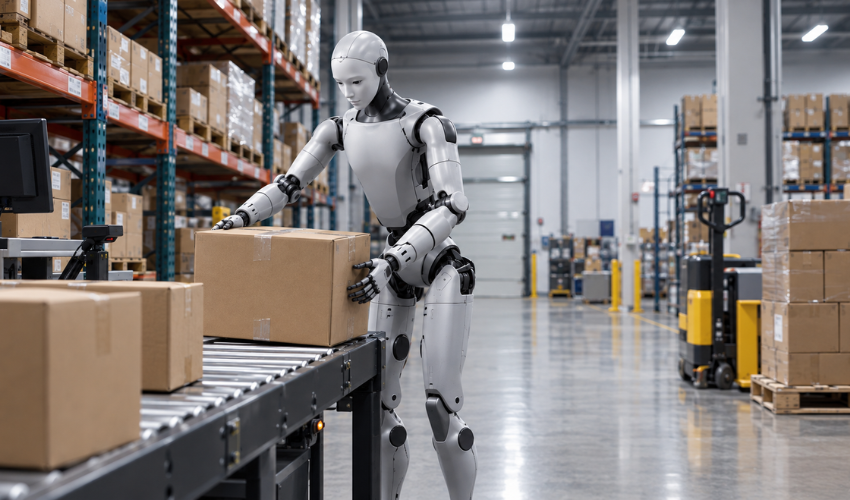
A warehouse’s real cost isn’t the big deliveries. It’s the constant small moves, a tote carried ten feet, a pallet nudged onto a rack, a bin walked back to receiving, repeated hundreds of times a shift. A few seconds of variance on each trip, whether from fatigue, distraction, or a shift change, adds up to real time and consistency lost across a day. On the other hand, a robot can run a fixed, scripted set of moves that closes the gap: the same task, done the same way, every time.
Teams can define a set of pick, place, and transport tasks once and run them consistently across shifts, instead of reprogramming for a layout that changes by the day.
Compute expansion options, including NVIDIA Jetson Thor and Orin NX, give warehouse teams room to build toward computer vision workflows like barcode scanning or SKU recognition directly on the platform as their software stack develops, extending the H2’s role from material transport into inventory tracking over time.
With the same secondary development approach used across other environments, warehouse teams can tailor the H2’s software to their own layout and task set. Structured pilots on defined tasks, like moving totes between a receiving dock and a storage rack, are already performing adequately today, with room to expand autonomy as the software matures.
Choosing the Right Configuration
Not every organization needs a full-size humanoid. A smaller platform like the Unitree G1 caters to many research and education budgets more comfortably, while the H2 humanoid robot makes sense for teams whose work specifically depends on human-scale proportions, reach, and lifting capacity.
The right starting point depends on your use case, budget, and whether the project calls for industrial-grade deployment. As a Unitree H2 robot distributor, we help teams work through that decision before they commit to hardware. Chat with our team for assistance.
Why Buy Your H2 From Toborlife AI
As an authorized Unitree distributor headquartered in Silicon Valley, Toborlife AI handles procurement, inventory, and support directly to ease your purchase.
Ready-to-ship U.S. inventory. We stock H2 hardware domestically and ship directly from our Silicon Valley headquarters, so research, construction, and logistics pilots start faster.
Unitree-certified support engineers. Our trained technicians provide dedicated after-sales support, helping teams configure hardware, troubleshoot issues, and get full functionality from their investment.
Silicon Valley developer teams. Decades of relationships across the robotics industry put the latest hardware and software updates directly in your lab or business.
Free authorized warranty service. Every H2 we sell includes warranty and repair service through our Unitree-authorized service center at no additional cost during the warranty period.
Considering the Unitree H2 humanoid robot for your organization? Talk to a Robotics Expert →


Comments are closed for this post.