Why Quadruped Robots Are Gaining Attention in 2026
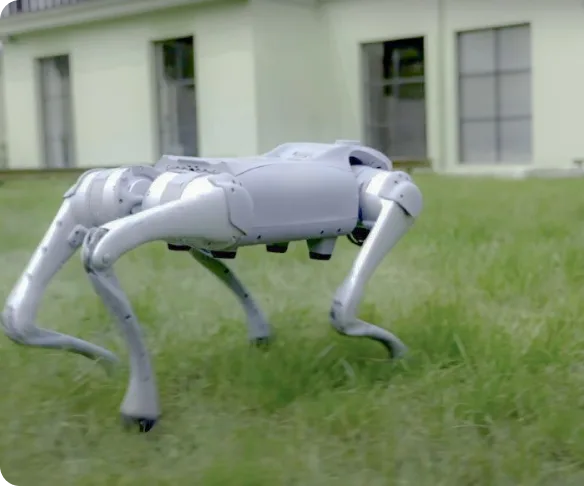
Quadruped robots have a key advantage over wheeled machines. They can move through environments built for humans. Stairs, uneven terrain, narrow hallways, and outdoor surfaces all become accessible.
This mobility makes them ideal for real-world applications such as:
home monitoring and patrol
industrial inspection and surveillance
research and AI development
logistics support in complex environments
Unlike humanoid robots, quadrupeds are more stable and energy efficient. This makes them one of the first robotic forms to achieve practical deployment at scale.
As AI models improve, these robots are becoming smarter. They can recognize objects, map environments, and make decisions in real time. This is why many buyers are now exploring them as security robots for both residential and commercial use.
What Makes a Quadruped Robot Worth Buying
Not all quadruped robots are built for the same purpose. In 2026, serious buyers are evaluating robots based on three core systems.
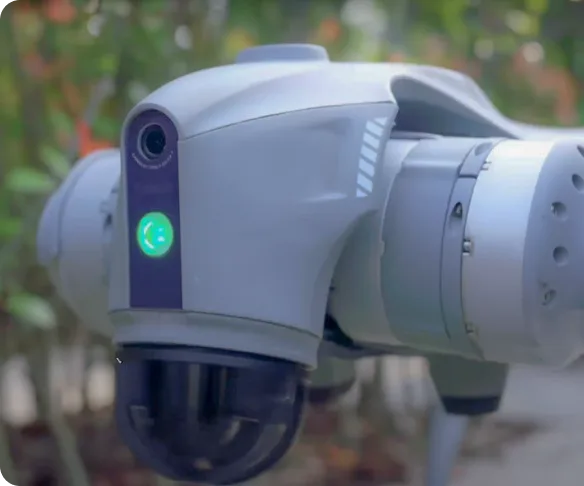
First is perception. Cameras, LiDAR, and sensors allow the robot to understand its surroundings. Advanced models can detect movement, identify objects, and navigate autonomously.
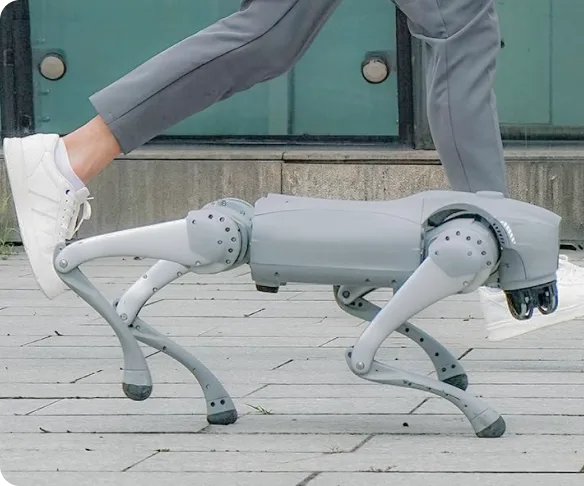
Second is motion control. High-performance actuators enable smooth walking, turning, and obstacle avoidance. Stability is critical, especially for real-world deployment.
Third is AI integration. Modern robots combine onboard computing with cloud-based processing. This allows them to learn, adapt, and improve performance over time.
These capabilities define whether a robot is a simple demonstration device or a functional robot dog for home security that can operate reliably in daily use.
Quadruped Robots You Can Actually Buy in 2026
The market has expanded significantly, but a few models stand out due to their balance of performance, accessibility, and real-world usability.
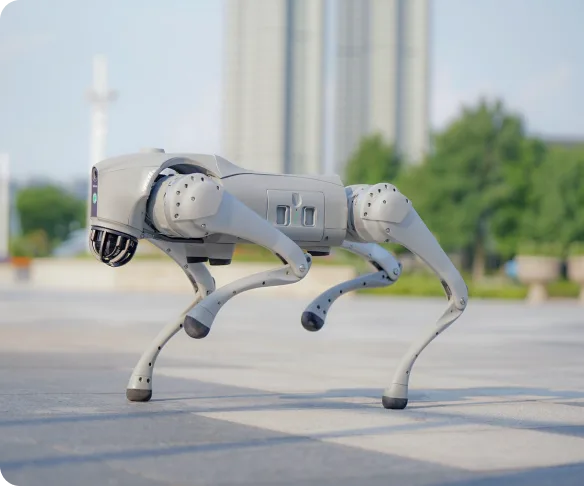
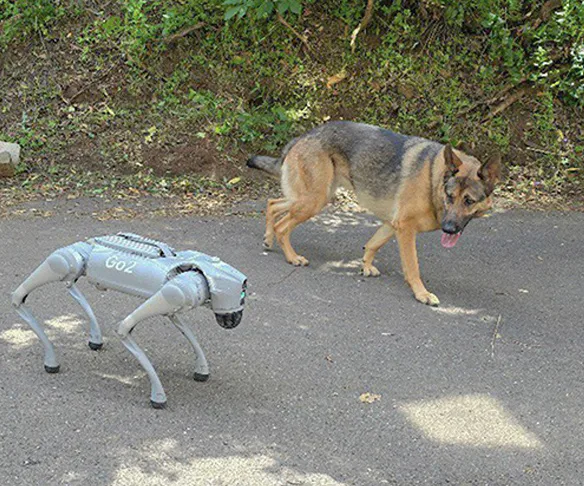
Among the most notable are Unitree’s Go2 series, which represent some of the most advanced and accessible quadruped platforms available today.
1. Go2 Edu Standard
A strong entry point for developers and first-time buyers. The Go2 Edu Standard offers stable mobility and basic AI capabilities, making it ideal for learning and experimentation.
2. Go2 Edu Plus
An upgraded version with improved computing power and enhanced sensors. The Go2 Edu Plus is well-suited for users exploring autonomous navigation and AI applications.
3. Go2 Edu Mid-360
Designed for advanced perception, the Go2 Edu Mid-360 includes 360-degree sensing capabilities. This makes it highly effective for monitoring environments and supporting security robots use cases.
4. Go2 Edu Hesai XT16
A high-end configuration featuring LiDAR integration for precise mapping. The Go2 Edu Hesai XT16 is ideal for professional applications such as inspection, patrol, and advanced robotics development.
How Quadruped Robots Are Used in Real Environments
Quadruped robots are no longer experimental. They are already being tested and deployed in real-world scenarios.
For home use, buyers are exploring them as a robot dog for home security. Equipped with cameras and sensors, these robots can patrol spaces, detect unusual activity, and provide real-time monitoring.
In industrial settings, they are used for inspection tasks. Robots can navigate warehouses, monitor equipment, and identify safety risks without human intervention.
For developers, these platforms provide a way to test physical AI systems. Instead of working in simulation, engineers can experiment with real-world movement, perception, and decision-making.
This versatility is why quadruped robots are emerging as one of the most practical forms of embodied AI.
Why Toborlife AI Is a Key Gateway for Robotics Buyers
As robotics technology advances, access becomes a major factor. Many buyers struggle to find reliable platforms that balance performance, support, and availability.
Toborlife AI addresses this gap by curating advanced robotic systems that are ready for real-world use. Instead of navigating fragmented suppliers, buyers can explore proven platforms in one place.
Through Toborlife AI, users can:
- compare different quadruped robot configurations
- access research-grade and commercial-ready systems
- evaluate robots for home, business, or development use
- connect with experts for robotics implementation
This approach reduces friction and allows buyers to move from curiosity to hands-on experimentation more quickly.
Why 2026 Is a Turning Point for Quadruped Robots
Several trends are converging to accelerate adoption.
AI models are becoming more capable of understanding physical environments. Robotics hardware is improving in reliability and efficiency. At the same time, the production scale is increasing, which helps reduce costs.
These changes are making quadruped robots more accessible than ever before. What was once limited to research labs is now entering homes, businesses, and developer ecosystems.
For buyers in the United States, this means new opportunities to explore robotics not as a distant concept, but as a practical tool.
The Future of Robot Dogs Is Already Here
Quadruped robots represent one of the clearest paths toward real-world AI deployment. Their ability to move, sense, and interact with environments makes them uniquely suited for both consumer and industrial applications.
Whether you are exploring a robot dog for home security, developing AI systems, or evaluating next-generation security robots, the technology available in 2026 offers unprecedented possibilities.
If you want to explore advanced quadruped robots and find the right system for your needs, visit Toborlife AI to discover available platforms and start your robotics journey today!

Comments are closed for this post.