Natural-Language Robotics Is Advancing Faster Than Expected
One of the most important aspects of Scout AI’s strategy involves natural-language robotic control.
The idea sounds futuristic, but the technology is moving quickly.
Modern AI systems are becoming increasingly capable of translating conversational instructions into robotic actions. That includes navigation, movement coordination, task sequencing, and environmental interaction.
This trend is already influencing humanoid robotics development across commercial and educational sectors.
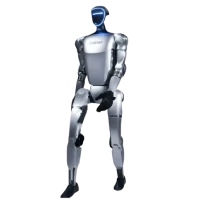
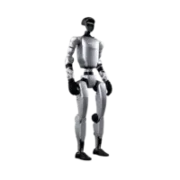
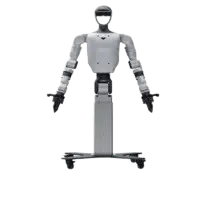
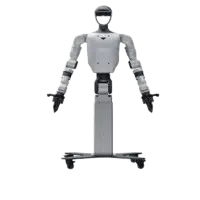
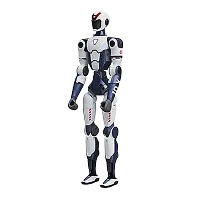
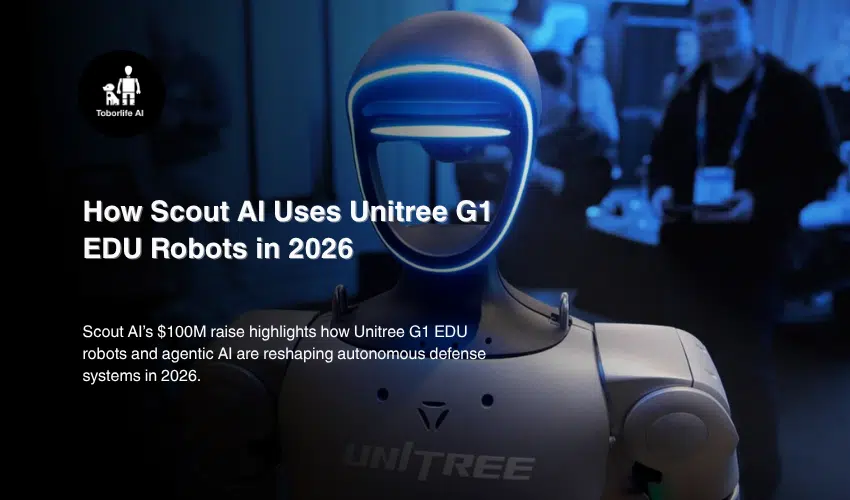
Robotics communities exploring systems like the Unitree G1 are paying close attention to how agentic AI can improve:
- Motion learning
- Task adaptation
- Autonomous coordination
- Human-robot interaction
- Multi-step physical execution
Interest around humanoid robotics research environments is also increasing because these systems create valuable training grounds for embodied AI experimentation.
Robotics Developers Are Paying Attention to Humanoid Learning Models
The broader robotics industry is watching these developments closely because agentic AI is becoming increasingly relevant outside military applications.
Humanoid systems are beginning to learn physical actions through more adaptive interaction models instead of relying entirely on manually programmed routines.
That shift could influence:
Warehouse automation
Humanoids may eventually adapt to changing workflows without extensive reprogramming.
Public infrastructure robotics
AI-driven mobility systems could operate more efficiently inside airports, hospitals, and transportation hubs.
Research robotics
Educational humanoids are becoming valuable testbeds for embodied AI learning.
Human-robot collaboration
Natural-language interaction creates more flexible coordination between humans and robotics systems.
Toborlife AI Is Following the Next Phase of Physical AI
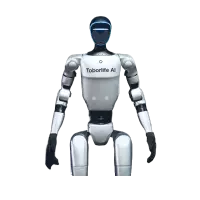
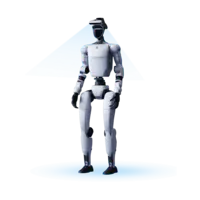
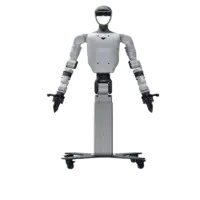
As robotics moves deeper into autonomous coordination and embodied AI, we are also continuing to expand our robotics ecosystem at Toborlife AI around next-generation humanoid systems, AI mobility robotics, and emerging physical AI technologies.
Interest around robotics like the Unitree G1 EDU series is growing rapidly among developers, researchers, and creators exploring how agentic AI can shape the next generation of humanoid interaction and robotic learning.
Some of the areas driving momentum across the robotics industry include:
- Natural-language robotics control
- Autonomous mobility intelligence
- Humanoid learning systems
- Multi-agent robotic coordination
- AI-powered physical task execution
As the robotics industry evolves beyond scripted automation, systems capable of adaptive movement and AI-driven coordination are becoming significantly more important across research and commercial robotics environments.
Autonomous AI Is Expanding Beyond Software
Scout AI’s $100 million funding round may ultimately represent something much larger than a defense-tech investment.
It highlights how quickly AI is evolving into a physical-world technology stack capable of coordinating robotics, autonomous mobility systems, and large-scale machine collaboration.
The race is no longer only about who develops the most advanced chatbot or language model. The next frontier is physical execution.
Companies building autonomous orchestration systems, humanoid learning models, and AI mobility frameworks are now shaping the future direction of robotics itself.
Humanoid robotics is entering a completely new phase where AI systems can interpret, adapt, and operate in physical environments with far greater autonomy. At Toborlife.ai, we are continuing to expand alongside that momentum with emerging robotics technologies and next-generation humanoid systems gaining attention across the industry.
With physical AI evolving at startup speed, the robotics conversation is changing almost weekly, and the Toborlife AI experts continue exploring the innovations driving the next era of intelligent robotics.


Comments are closed for this post.