How Toborlife AI Enables Real-World Robotics Access
As robotics technology advances, access becomes a key challenge. Many organizations understand the potential but lack direct exposure to working systems.
Toborlife AI provides a practical bridge between innovation and application. Instead of focusing on experimental prototypes, it offers access to platforms designed for real-world use.
Users can explore robotics systems for:
- security and monitoring applications
- AI development and testing
- research and educational programs
- commercial and industrial use cases
This approach allows organizations to move beyond theory and begin working directly with advanced robotic platforms.
Quadruped Platforms for Security and Monitoring
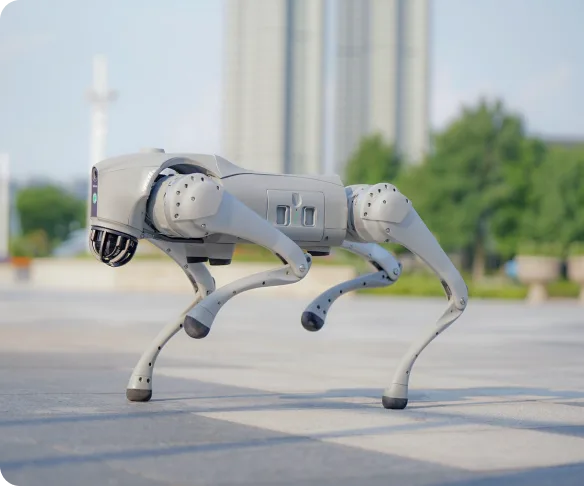
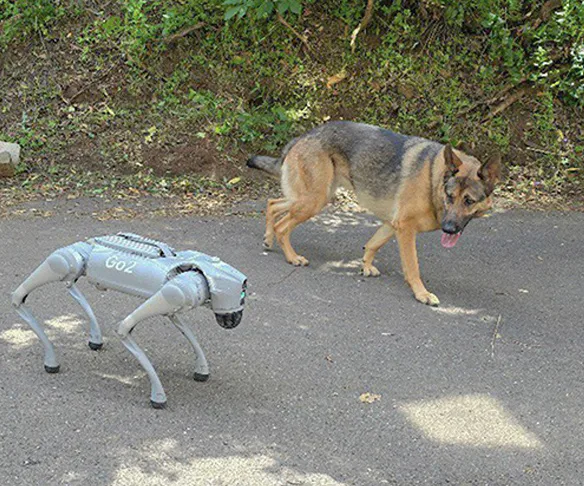
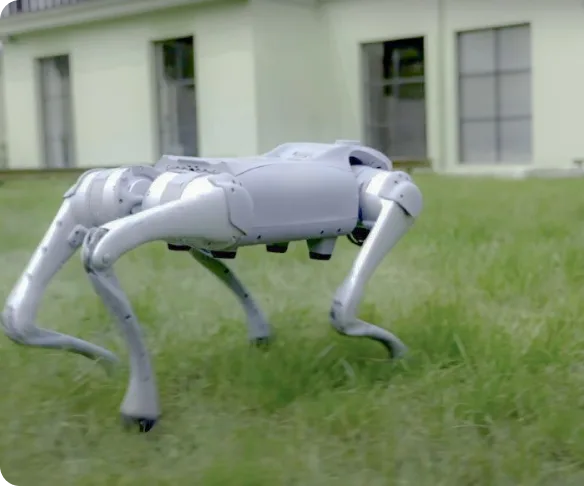
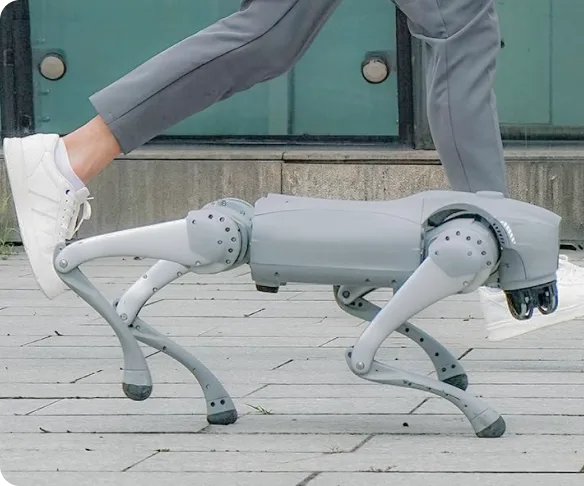
While much of the public attention centers on humanoid performances, many of the same underlying technologies are already being explored in quadruped systems. These platforms often provide a more immediate path to real-world deployment, particularly in areas like monitoring, inspection, and security.
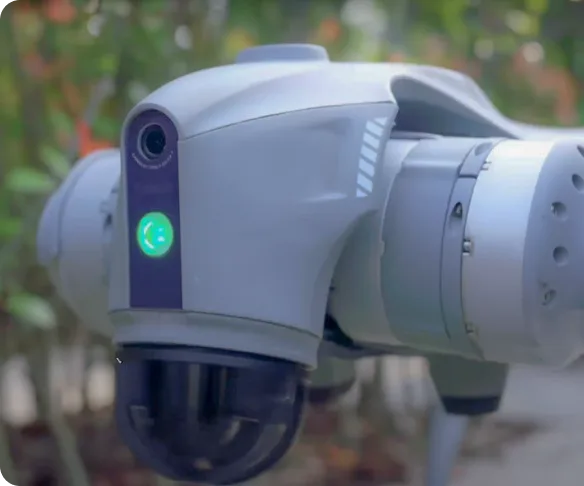
For example, systems such as the Go2 Edu Mid-360 emphasize continuous environmental awareness through wide-angle sensing and real-time data capture. This kind of capability reflects how surveillance robots are evolving—from static camera systems into mobile, adaptive observers that can navigate and interpret space.
Similarly, platforms like the Go2 Edu Hesai XT16 incorporate LiDAR-based mapping to operate with greater spatial precision. In practice, this allows robots to move through complex environments with a level of consistency that begins to resemble the early stages of a robot security guard, particularly in structured facilities or large operational sites.
What’s notable is not just the hardware itself, but the continuity between spectacle and application. The same balance control, perception, and motion intelligence seen in performance settings are quietly being adapted into systems designed for everyday environments—where reliability matters more than choreography.
Why 2026 Is a Defining Moment for Physical AI
The rapid progress in robotics is not happening in isolation. Several factors are converging to accelerate development.
Artificial intelligence models are becoming more capable of processing visual and spatial data. Hardware systems are improving in efficiency and reliability. Manufacturing scale is increasing, reducing costs and expanding access.
At the same time, public demonstrations like the Spring Festival Gala are increasing awareness and acceptance. When people see robots performing complex tasks, the idea of integrating them into everyday environments becomes more tangible.
For US-based organizations, this moment represents an opportunity to explore robotics before widespread adoption reshapes the market.
The Future Beyond the Stage
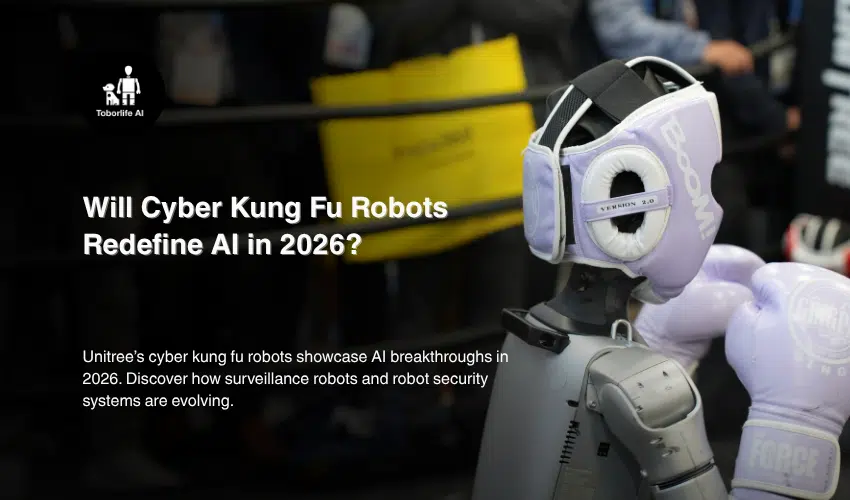
The image of robots performing kung fu on stage is compelling, but it is only the beginning. The underlying technology is already moving into industries that require reliability, adaptability, and continuous operation.
In the near future, we can expect to see:
robots monitoring public and private spaces
autonomous systems supporting security teams
AI-driven machines assisting with logistics and inspection
As these systems evolve, the role of surveillance robots and robotic security platforms will continue to expand.
A New Era of Robotics Is Taking Shape
The Spring Festival Gala performance is more than a cultural moment. It is a signal that robotics has reached a level of maturity where complex, coordinated behavior is possible in real time.
For developers, businesses, and innovators in the United States, this represents a shift. Robots are no longer distant concepts. They are tools that can be explored, tested, and integrated into real-world applications.
If you want to understand how these technologies can support your projects or explore advanced robotic platforms firsthand, Toborlife AI provides a gateway into the next phase of robotics innovation.

Comments are closed for this post.