Robotics Research and AI Development
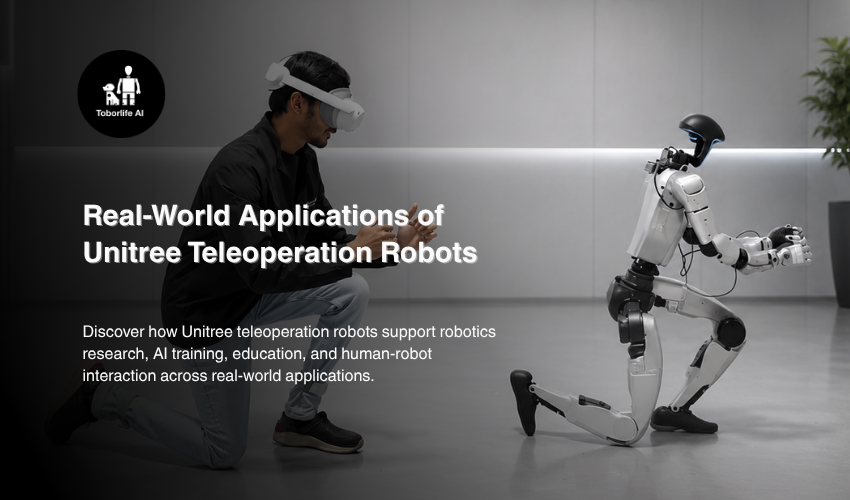
Teleoperation has become an essential tool for robotics research because it allows developers to evaluate robot capabilities before relying on fully autonomous systems.
Instead of programming every movement manually, researchers can remotely guide a humanoid robot through different tasks while observing its balance, motion, perception, and response to changing conditions. This enables faster testing and reduces the risks associated with deploying unproven autonomous behaviors.
Researchers also use teleoperation to evaluate locomotion, upper-body coordination, manipulation, and whole-body motion. During development, repeated testing helps identify limitations in hardware, control strategies, and perception systems before new models are deployed.
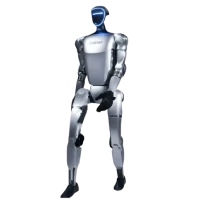
Unitree supports these research workflows through an open development ecosystem that includes teleoperation, simulation, and AI development resources. Together, these tools allow developers to test robot behaviors in simulation before validating them on physical humanoid robots, creating a more efficient development cycle.
For research teams working on embodied AI, this combination of simulation, remote operation, and real-world testing provides a practical foundation for developing increasingly capable humanoid systems.
Dexterous Manipulation and Human-Robot Interaction
Unlike many industrial robots that repeat predefined motions, humanoid robots are designed to interact with environments built for people. This makes manipulation one of the most important areas of robotics research.
Teleoperation allows operators to demonstrate tasks such as reaching, grasping, carrying objects, opening doors, or interacting with equipment while monitoring how the robot performs each movement. These demonstrations help researchers evaluate arm coordination, hand movement, balance, and overall task execution.
Because the operator remains involved throughout the process, researchers can quickly modify movements, repeat difficult actions, and investigate how different control strategies affect robot performance.
Teleoperation also supports research into human-robot interaction. Developers can observe how robots respond to operator commands, coordinate movements with people, and perform collaborative tasks that may later become partially or fully autonomous.
Rather than replacing human expertise, teleoperation combines human decision-making with robotic precision, allowing developers to explore increasingly complex manipulation tasks while maintaining direct control over the robot.
Supporting Robotics Education
Humanoid robots are becoming valuable educational platforms for universities and research institutions. They provide students with practical experience that extends beyond simulation and classroom theory.
Through teleoperation, students can directly observe how control commands influence robot movement, how perception systems respond to the environment, and how multiple software components work together during real-world operation.
This hands-on approach helps learners better understand topics such as robot kinematics, motion planning, perception, computer vision, control systems, and artificial intelligence. Rather than immediately building fully autonomous applications, students can first learn how robots move, interact with objects, and respond to operator input before progressing toward more advanced autonomous behaviors.
Unitree also provides software development resources that allow researchers and educators to build custom applications, making humanoid robots suitable for robotics courses, graduate research, and AI development projects.
Building Better AI Through Human Demonstration
One of the most valuable applications of teleoperation is collecting high-quality demonstration data for embodied AI.
Instead of manually programming every possible action, developers can perform tasks through teleoperation while recording robot movements, observations, and control commands. These demonstrations become valuable training data for imitation learning and other machine learning approaches.
Human demonstrations often capture subtle movements and task sequences that are difficult to define through traditional programming alone. By learning from these examples, AI models can gradually develop behaviors that more closely resemble human decision-making and movement.
Unitree’s open-source development ecosystem supports these workflows by enabling developers to combine teleoperation with simulation, data collection, and AI model development. This allows teams to refine robot behavior through continuous testing while creating datasets that support future autonomous capabilities.
As embodied AI continues to evolve, teleoperation remains one of the most practical methods for generating the real-world data needed to improve humanoid robot performance.
Choosing the Right Teleoperation Workflow
Successfully deploying a humanoid robot involves more than selecting the right hardware. Organizations must also consider how operators will control the robot, what tasks it needs to perform, what data should be collected, and how teleoperation fits into their long-term development strategy.
Research laboratories may prioritize AI experimentation and data collection, while universities often focus on education and software development. Other organizations may require humanoid robots for testing manipulation tasks or evaluating new human-robot interaction scenarios. Each application benefits from a teleoperation workflow designed around specific project objectives rather than a one-size-fits-all solution.
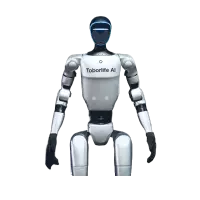
Toborlife AI helps organizations evaluate these requirements by providing Unitree teleoperation services that support research, education, and robotics development. From selecting appropriate humanoid platforms to integrating teleoperation into AI workflows, the goal is to help teams build solutions that can evolve alongside their projects.
For organizations planning to buy Unitree teleoperation system solutions, understanding the intended application before selecting hardware or software creates a stronger foundation for future robotics development. A carefully planned teleoperation workflow not only improves immediate project outcomes but also supports the transition toward increasingly capable autonomous Unitree teleoperation robots.


Comments are closed for this post.