What Is Whole-Body Control?
Whole-body control (WBC) is a control approach that allows a humanoid robot to coordinate its entire body as a single system rather than controlling individual joints or body parts in isolation.
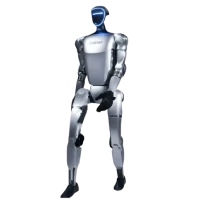
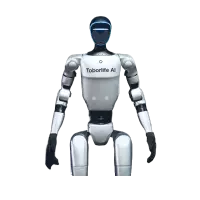
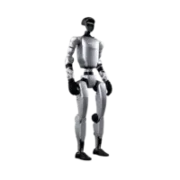
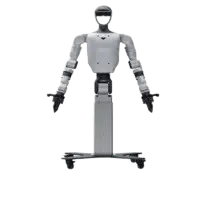
A humanoid robot, such as the Unitree G1, typically has many degrees of freedom, and most tasks require several of them to work together.
When a robot reaches for something, it needs to move its arm toward the target while maintaining balance, staying within joint limits, and keeping stability. If the arm extends too far, the resulting shift in momentum and center of mass can affect the robot’s balance.
A controller that treats the arm, torso, and legs independently would need to compensate for these interactions after they occur.
Whole-body control, instead, considers the robot as a coordinated system. Given everything the robot’s trying to do (stay balanced, hit a target, hold a reasonable posture) and everything it physically can’t violate (contact forces, joint torque limits), whole-body control systems determine a coordinated set of commands for the robot.
How Does a Whole-Body Controller Work?
A Whole-body controller operates in a continuous control loop, running many times per second. At each cycle, the controller considers the robot’s current state and desired objectives, then determines a coordinated set of commands that best satisfies those objectives while respecting the robot’s physical constraints.
These constraints can include:
- Joint position and velocity limits
- Actuator torque limits
- Robot dynamics
- Foot and other contact constraints
- Balance requirements
The controller may also need to prioritize competing objectives.
For example, maintaining balance is more important than achieving a preferred arm position. If both cannot be satisfied simultaneously, the system should preserve the higher-priority objective and relax the lower-priority one.
This task hierarchy is an important part of whole-body control. Rather than asking every part of the robot to achieve its goal independently, the controller coordinates available motion around the most important requirements.
Why Is WBC Especially Important for Humanoids?
Whole-body coordination becomes particularly important when a robot combines locomotion and manipulation. A humanoid, like the Unitree G1 platform, may need to walk while carrying an object, reach while standing, turn its torso while manipulating something, or adjust its posture while interacting with its environment.
In these scenarios, whole-body control allows the robot’s different joints to work together rather than treating each movement independently. The arms, torso, legs, and balance can all contribute to completing a task, allowing the humanoid to make use of the full range of movement its physical design provides.
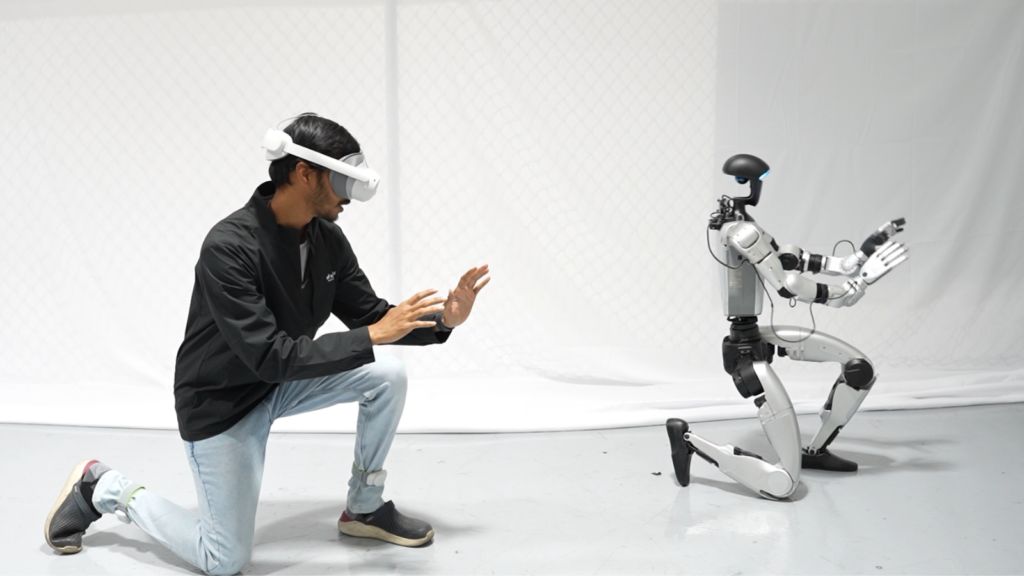
This becomes especially important in teleoperation. When an operator moves a humanoid’s arm through an XR interface, the robot will coordinate that movement with the rest of its body.
Why WBC Matters for Teleoperation
A Whole-Body Controller serves as the layer between human input and coordinated robot motion. Rather than directly mapping every operator movement to isolated robot joints, the controller can interpret the operator’s intended movement within the context of the robot’s entire body. This allows the system to coordinate the arms, torso, balance, and locomotion as the operator performs a task.
For the teleoperation system, it also means the robot’s physical capabilities are less constrained by the interface itself. A system with limited whole-body coordination may need to restrict certain operator movements to avoid instability, while a more capable controller can allow the operator to perform more complex movements.
WBC and Teleoperation Data
When teleoperation is used for research, benchmarking, or training robot policies, these operation sessions can also become a source of valuable demonstration data. What gets recorded, however, depends partly on what the teleoperation system allows.
With whole-body control, the robot can coordinate a broader range of movements across its body, allowing demonstrations to capture more complete task execution—from locomotion and positioning to manipulation and interaction.
This creates an important connection between control and robot learning:
Better whole-body control = better teleoperation = better demonstrations = better training data.
For teams using teleoperation as part of the research workflow, WBC is a key feature that can influence the quality of the data generated during robot development.
Whole-Body Control in Tobor Harness™ Unitree Teleoperation
For teleoperation to be useful beyond basic remote control, the robot needs to do more than simply reproduce an operator’s individual joint movements. The control system needs to translate human intent into coordinated movement across the robot’s entire body. This is a central design principle behind the Tobor Harness™ Teleoperation System.
Whole-body control is a core component of the Tobor Harness teleoperation kit. The system uses a proprietary Whole-Body Controller for Unitree G1 teleoperation, designed to coordinate the robot’s arms, torso, balance, and locomotion during teleoperation.
This also connects teleoperation with Toborlife AI’s broader robotics development workflow. Demonstrations captured during the teleoperation can be brought into Toborverse for data organization, cleaning, labeling, grouping, and model training, with trained models then deployed for evaluation and further improvement.
The resulting workflow can be viewed as:
Teleoperate → Collect → Clean → Label → Train → Deploy → Improve
As humanoid robots move toward more complex manipulation and real-world tasks, whole-body coordination becomes increasingly important.
At Toborlife AI, we build a complete robotics system that connects human control, coordinated robot behavior, and robot learning. Tobor Harness teleoperation kit is designed to turn human demonstrations into structured data that supports the development of future autonomy.
Learn more about Tobor Harness™ Teleoperation.


Comments are closed for this post.