• UNITREE ROBOTICS’ NO.1 US PARTNER

  • FREE SHIPPING, DELIVERY AND LOCAL SUPPORT
  • WIN A ROBOT NOW
  • SALES AND ENGINEERING OFFICES BASED IN MOUNTAIN VIEW, CA AND LAS VEGAS, NV

  • (408) 409-4061
  • UNITREE ROBOTICS’ NO.1 US PARTNER

  • FREE SHIPPING, DELIVERY AND LOCAL SUPPORT
  • WIN A ROBOT NOW
  • SALES AND ENGINEERING OFFICES BASED IN MOUNTAIN VIEW, CA AND LAS VEGAS, NV

  • (408) 409-4061

Free battery with every R1 EDU Pro D — ends 11/27

Toborlife AI Robots
Applications Applications
Teleoperation A2 Quadruped Manipulation Package Interactive Package Performance Robot Home Business Education & Research Police & Fire Safety
Media Media
Robot News Toborlife Event Robot Blogs
Resource Center
Win a Robot

(408) 409-4061 Talk to an Expert
  • Go2 Pro & Edu
  • Go2 Ent
  • A2
  • A2 Quadruped Manipulation Package
  • B2
  • Homedog (Go2 Pro)
  • Go2 Edu Standard
  • Go2 Edu Plus
  • Go2 Edu Mid-360
  • Go2 Edu Hesai XT16
  • Go2 X
  • Shop All Go2 Edu Models
  • Go2 Ent
  • Go2 Ent Plus
  • Go2 Ent MPTZ
  • Go2 Ent GAS
  • A2
  • A2 Pro
  • A2-W
  • A2-W Pro
  • Shop All A2 Models
  • A2 Quadruped Manipulation Package
  • B2
  • B2-W
Get Accessories
Go2 Go2 Edu Go2-Ent A2 B2 B2-W
  • G1
  • R1
  • H2
  • G1 Basic
  • G1 Edu Standard
  • G1 Edu Plus
  • G1 Edu Pro A
  • G1 Edu Pro B
  • G1 Edu Pro E
  • G1 Edu Pro F
  • G1 Edu Pro G
  • G1 Edu Pro H
  • G1 Edu Pro I
  • G1 Edu Pro SAKE
  • G1 Edu Ultimate A
  • G1 Edu Ultimate B
  • G1 Edu Ultimate C
  • G1 Edu Ultimate D
  • G1 Edu Ultimate E
  • G1 Edu Ultimate F
  • G1 Edu Ultimate G
  • G1 Edu Ultimate H
  • G1 Edu Ultimate I
  • G1 Edu Ultimate SAKE
  • G1 Pro
  • G1 E
  • G1 E Performance
  • G1 Edu Boxing
  • G1 Comp
  • Shop All G1 Models
  • R1 Basic
  • R1 Edu Standard
  • R1 Edu Smart
  • R1 Edu Pro A/B
  • R1 Edu Pro C/D
  • Shop All R1 Models
  • H2 Basic
  • H2 Edu Standard
  • H2 Edu Smart A
  • H2 Edu Smart B
  • H2 Edu Smart C
  • H2 Edu Smart D
  • H2 Edu Smart E
  • H2 Edu Smart F
  • H2 Edu Smart G
  • H2 Edu Smart H
  • H2 Edu Smart I
  • H2 Edu Smart J
  • H2 Edu Smart K
  • H2 Edu Smart L
  • H2 Edu Smart M
  • H2 Plus Smart
  • H2 Plus Ultimate A
  • H2 Plus Ultimate B
  • H2 Plus Ultimate C
  • H2 Plus Ultimate D
  • H2 Plus Ultimate E
  • H2 Plus Ultimate F
  • H2 Plus Ultimate G
  • H2 Plus Ultimate H
  • H2 Plus Ultimate I
  • H2 Plus Ultimate J
  • H2 Plus Ultimate K
  • H2 Plus Ultimate L
  • H2 Plus Ultimate M
  • H2 Plus Ultimate N
  • Shop All H2 Models
Get Accessories
G1 R1 H2
Toborlife AI Robots
Search
Phone Icon
cart-icon
  • No products in the cart.
View Cart
Subtotal: $0
    • Homedog Homedog (Go2 Pro)
      • All Go2 Edu ModelsAll Go2 Edu Models
      • Go2 Edu Go2 Edu Standard
      • Go2 Edu Plus Go2 Edu Plus
      • Go2 Edu Mid-360 Go2 Edu Mid-360
      • Go2 Edu Hesai XT16 Go2 Edu Hesai XT16
      • Go2 ent Go2 Ent
      • Go2 ent Go2 Ent Plus
      • Go2 ent Go2 Edu MPTZ
      • Go2 ent Go2 Ent GAS
      • All A2 ModelsAll A2 Models
      • A2 A2
      • A2 Pro A2 Pro
      • A2 W A2-W
      • A2 W Pro A2-W Pro
    • A2 Quadruped Manipulation Package A2 Quadruped Manipulation Package
    • B2 EDU B2
    • B2-W B2-W
    • Get accessories for...
    • Homedog
    • Go2 Edu
    • Go2 Ent
    • B2
    • B2-W
      • G1 BasicAll G1 Models
      • Unitree G1 BasicG1 Basic
      • Unitree G1 Edu StandardG1 Edu Standard
      • Unitree G1 Edu PlusG1 Edu Plus
      • Unitree G1 Edu Pro AG1 Edu Pro A
      • Unitree G1 Edu Pro BG1 Edu Pro B
      • Unitree G1 Edu Pro EG1 Edu Pro E
      • Unitree G1 Edu Pro FG1 Edu Pro F
      • Unitree G1 Edu Pro GG1 Edu Pro G
      • Unitree G1 Edu Pro HG1 Edu Pro H
      • Unitree G1 Edu Pro IG1 Edu Pro I
      • Unitree G1 Edu Pro SAKEG1 Edu Pro SAKE
      • Unitree G1 Edu Ultimate AG1 Edu Ultimate A
      • Unitree G1 Edu Ultimate BG1 Edu Ultimate B
      • Unitree G1 Edu Ultimate CG1 Edu Ultimate C
      • Unitree G1 Edu Ultimate DG1 Edu Ultimate D
      • Unitree G1 Edu Ultimate EG1 Edu Ultimate E
      • Unitree G1 Edu Ultimate FG1 Edu Ultimate F
      • Unitree G1 Edu Ultimate GG1 Edu Ultimate G
      • Unitree G1 Edu Ultimate HG1 Edu Ultimate H
      • Unitree G1 Edu Ultimate IG1 Edu Ultimate I
      • Unitree G1 Edu Ultimate SAKEG1 Edu Ultimate SAKE
      • Unitree G1 ProG1 Pro
      • Unitree G1 EG1 E
      • Unitree G1 E PerformanceG1 E Performance
      • Unitree G1 Edu BoxingG1 Edu Boxing
      • Unitree G1 CompG1 Comp
      • All R1 ModelsAll R1 Models
      • R1R1 Basic
      • R1R1 Edu Standard
      • R1R1 Edu Smart
      • R1R1 Edu Pro A
      • R1R1 Edu Pro B
      • R1R1 Edu Pro C
      • R1R1 Edu Pro D
      • All H2 ModelsAll H2 Models
      • Unitree H2 BasicH2 Basic
      • Unitree H2 Edu StandardH2 Edu Standard
      • Unitree H2 Edu Smart AH2 Edu Smart A
      • Unitree H2 Edu Smart BH2 Edu Smart B
      • Unitree H2 Edu Smart CH2 Edu Smart C
      • Unitree H2 Edu Smart DH2 Edu Smart D
      • Unitree H2 Edu Smart EH2 Edu Smart E
      • Unitree H2 Edu Smart FH2 Edu Smart F
      • Unitree H2 Edu Smart GH2 Edu Smart G
      • Unitree H2 Edu Smart HH2 Edu Smart H
      • Unitree H2 Edu Smart IH2 Edu Smart I
      • Unitree H2 Edu Smart JH2 Edu Smart J
      • Unitree H2 Edu Smart KH2 Edu Smart K
      • Unitree H2 Edu Smart LH2 Edu Smart L
      • Unitree H2 Edu Smart MH2 Edu Smart M
      • Unitree H2 Plus SmartH2 Plus Smart
      • Unitree H2 Plus Ultimate AH2 Plus Ultimate A
      • Unitree H2 Plus Ultimate BH2 Plus Ultimate B
      • Unitree H2 Plus Ultimate CH2 Plus Ultimate C
      • Unitree H2 Plus Ultimate DH2 Plus Ultimate D
      • Unitree H2 Plus Ultimate EH2 Plus Ultimate E
      • Unitree H2 Plus Ultimate FH2 Plus Ultimate F
      • Unitree H2 Plus Ultimate GH2 Plus Ultimate G
      • Unitree H2 Plus Ultimate HH2 Plus Ultimate H
      • Unitree H2 Plus Ultimate IH2 Plus Ultimate I
      • Unitree H2 Plus Ultimate JH2 Plus Ultimate J
      • Unitree H2 Plus Ultimate KH2 Plus Ultimate K
      • Unitree H2 Plus Ultimate LH2 Plus Ultimate L
      • Unitree H2 Plus Ultimate MH2 Plus Ultimate M
      • Unitree H2 Plus Ultimate NH2 Plus Ultimate N
    • Get accessories for...
    • G1 Basic
    • G1 Edu
    • H2
    • R1
  • Talk to an Expert
    • Teleoperation
    • A2 Quadruped Manipulation Package
    • Interactive Package
    • Performance Robot
    • Home
    • Business
    • Education & Research
    • Police & Fire Safety
    • Robot News
    • Robot Diaries
    • Robot Blogs
  • Enter to Win a Robot
  • Resource Center
  • About Us
  • Shipping
  • Returns and Exchanges
  • Warranty
  • Contact Us
Search
Clear
Tweet

News

Unitree-R1-for-Sale

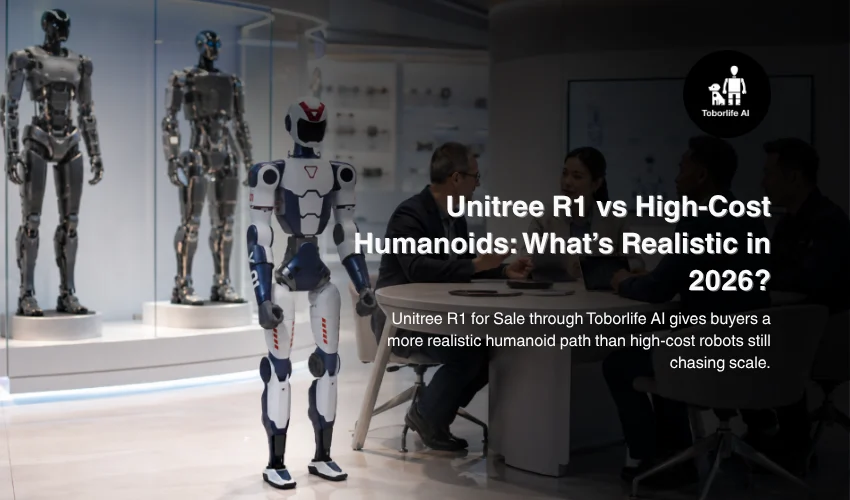
Unitree R1 vs High-Cost Humanoids: What’s Realistic in 2026?

  • By Toborlife AI
  • July 13, 2026
  • Unitree R1 for Sale
  • No comments

The humanoid robot market is entering a strange new phase.

Factories are scaling faster, investors are getting louder, and demos are getting flashier. But the question buyers keep coming back to is much more practical: which humanoid robot can they actually afford, access, and use in 2026?

That is exactly why the Unitree R1 deserves attention. For buyers searching for Unitree R1 for Sale, the conversation is not just about who has the biggest vision. It is about which platform makes humanoid robotics feel realistic right now.

According to AP News, China’s humanoid industry is scaling quickly, but experts say real buyer demand may still lag behind manufacturing capacity. AP also notes that many humanoids remain more performative than functional, and that commercial use cases are still limited in messy real-world environments.

That is the real comparison: not hype versus hype, but access versus ambition.

Discover how robots can better your life!

See Details

High-Cost Humanoids Still Own the Big Vision

Figure, Tesla Optimus, and 1X NEO all represent serious long-term robotics ambition.

Tesla has the factory automation narrative. Figure is pushing toward general-purpose humanoid labor. 1X NEO is aiming at home assistance and human-centered interaction.

Those are important directions.

But most buyers in 2026 are not making a billion-dollar automation bet. They are trying to understand whether humanoid robotics fits a school, lab, event, demo space, developer program, or early business workflow.

That changes the buying decision.

A robot can have a massive future and still be impossible to buy, test, or justify today.

R1 Wins on Realistic Entry

This is where Unitree R1 starts to stand out.

Through Toborlife AI, buyers can explore R1 as a more accessible humanoid pathway instead of waiting for high-cost platforms to become broadly available. The Unitree R1 Basic is listed at $8,990 and includes dummy hands, up to 24 degrees of freedom, an 8-core high-performance CPU, OTA upgrades, Wi-Fi 6, Bluetooth 5.2, binocular cameras, and about 1 hour of battery runtime.

That makes R1 less of a distant robotics promise and more of a deployable starting point.

For schools, creators, small labs, and early-stage robotics buyers, that matters.

The question is not always, “Which humanoid is the most powerful?”

Sometimes it is, “Which humanoid lets us start learning now?”

What Real Buyers Should Care About

The humanoid market generates a lot of noise.

Specs matter, but buying logic matters more.

Real buyers should look at:

1. Availability
Can you actually access the robot, or is it still mostly roadmap?

2. Entry price
Does the cost allow real testing, or does it limit the robot to elite labs?

3. Use-case fit
Is the robot right for education, demos, research, events, or early development?

4. Support path
Can you talk to a supplier who understands model selection and buyer needs?

5. Upgrade path
Can you move from entry-level exploration to more advanced configurations later?

That is why working with an R1 robot distributor matters. The product is only one part of the decision. Buyers also need help matching the robot to a realistic use case.

Where Toborlife AI Fits

Toborlife AI gives U.S. buyers a clearer way into the Unitree-powered humanoid category.

If R1 Basic is the accessible starting point, higher configurations such as R1 Edu Smart and R1 Edu Pro C give teams more room for education, development, and advanced robotics exploration.

That makes Toborlife relevant for:

  • robotics educators
  • university labs
  • STEM programs
  • developers
  • trade show teams
  • early humanoid buyers
  • innovation departments


Instead of asking buyers to chase the most expensive robot in the room, Toborlife helps them ask the better question.

What can your team actually use?

Our Verdict on This Humanoid Comparison

High-cost humanoids will keep shaping the future of robotics. They deserve attention.

But in 2026, realistic access matters.

For many buyers, R1 is the smarter starting point because it lowers the barrier to humanoid exploration. It gives teams a way to test physical AI, understand motion, build demos, and start learning without waiting for the most expensive platforms to mature.

If your goal is to watch the future, premium humanoids are fascinating.

If your goal is to begin working with humanoid robotics now, R1 is much easier to justify.

Ready to move from humanoid headlines to hands-on exploration? Visit Toborlife AI to explore R1 models, or contact the team through the Toborlife AI contact page if you are ready to buy R1 robot hardware for your school, lab, event, or robotics roadmap.
Ready to make this robot yours?

Shop Now
Unitree-A2

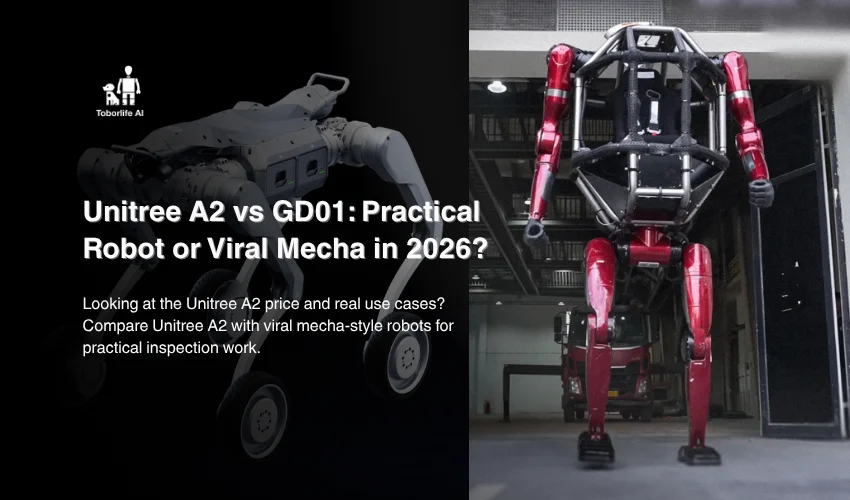
Unitree A2 vs GD01: Practical Robot or Viral Mecha in 2026?

  • By Toborlife AI
  • July 9, 2026
  • Unitree A2
  • No comments

Some robots are built to make the internet stop scrolling. Others are built to quietly make real operations easier. That difference matters more than ever in 2026, especially as viral robotics clips create excitement faster than most buyers can evaluate what a robot actually does.

A recent Inc. / Fast Company article spotlighted Unitree’s GD01, a giant transformable mecha-style robot shown smashing through a concrete brick wall. It was dramatic, cinematic, and impossible to ignore. But for buyers comparing an A2 robot for sale with a viral concept-style machine, the real question is simpler: what can you actually use?

That is where the Unitree A2 becomes more relevant for most commercial buyers.

Discover how robots can better your life!

See Details

GD01 Shows the Power of Robotics Spectacle

GD01 is built to attract attention. According to the Inc. / Fast Company report, the large piloted robot weighs more than 1,100 pounds and was presented as a transformable mecha capable of moving in both upright and four-legged modes. The article also framed the demo as part of a much bigger physical AI shift, where robotics is moving from digital hype into real-world machines.

That kind of showcase has value. It signals ambition. It creates media attention. It helps the public imagine what robotics might become in construction, emergency response, industrial operations, or high-impact demonstrations.

But spectacle is not the same as procurement. Most businesses are not looking for a wall-smashing robot. They are looking for a robot that can inspect, patrol, monitor, demonstrate, and support real workflows without becoming an oversized experiment.

Unitree A2 Is Built for Practical Field Robotics

The A2 Stellar Hunter category is different. Instead of trying to dominate headlines through scale, A2 is designed around mobility, inspection, patrol, and field robotics.

For a facility manager, university lab, security team, or innovation department, that practical focus matters. A robot dog does not need to smash a wall to create value. It needs to move through real environments, collect useful visual data, support perimeter awareness, and give teams a platform they can realistically deploy, test, and learn from.

That is why the buy A2 robot conversation is more grounded than the mecha conversation. Buyers can think in terms of everyday robotics goals:

  • Facility inspection
  • Campus patrol
  • Field robotics testing
  • Security awareness
  • Infrastructure monitoring
  • Physical AI demonstrations
  • Robotics education and research


A2 fits the part of the robotics market where curiosity turns into action.

Practical Robot vs Viral Mecha: What Buyers Should Care About

The biggest difference between A2 and GD01 is not only size. It is buying logic.

A viral mecha-style robot is built around spectacle, media impact, and future-facing imagination. A practical quadruped robot is built around mobility, usability, and repeatable value.

For real buyers, the important questions are usually:

  • Can the robot fit our environment?
  • Can our team operate and understand it?
  • Does it support inspection or patrol workflows?
  • Is the platform realistic for education or research?
  • Can we compare configurations and pricing?
  • Is there a clear path to purchase and support?


That is where
Toborlife AI becomes useful. Instead of asking buyers to chase viral robotics concepts, Toborlife AI helps them evaluate Unitree-powered platforms that can fit actual business, school, research, or field-use scenarios.

Why Unitree A2 Price Matters More Than Hype

Robotics hype is exciting, but pricing decides whether a technology becomes accessible. A massive mecha robot may create headlines, but most buyers need to understand the unitree a2 price, available configurations, and whether the robot makes sense for their use case.

The A2 category gives buyers a more practical entry into advanced quadruped robotics. Teams can explore patrol, inspection, research, and AI mobility without waiting for futuristic concept machines to become broadly useful.

That difference is important. In 2026, the smartest robotics buyers are not only asking what looks impressive. They are asking what can move their roadmap forward.

Toborlife AI Helps Buyers Choose Practical Robotics

Toborlife AI focuses on giving U.S. customers a clearer way to explore Unitree-powered robots. For buyers interested in A2, Toborlife also offers related options such as A2 Pro and A2-W for different industrial and mobility needs.

A spectacle robot may inspire the future. A practical robot helps teams begin.

That is the real advantage of A2. It gives businesses, schools, developers, and robotics teams a tangible platform for real inspection, patrol, research, and physical AI exploration today.

Where Practical Robotics Wins

GD01 shows how powerful robotics spectacle can be. It captures attention and pushes the imagination forward. But most buyers need more than a viral moment. They need a robot that fits their space, budget, use case, and long-term strategy.

For teams exploring commercial field robotics in 2026, Unitree A2 is the more practical choice. It is built for buyers who want to move from watching robotics online to testing it in the real world.

If A2 feels like the right next step for your robotics roadmap, visit Toborlife AI to explore available Unitree-powered platforms or reach out to our team for tailored product guidance.

Ready to make this robot yours?

Shop Now
Unitree-A2

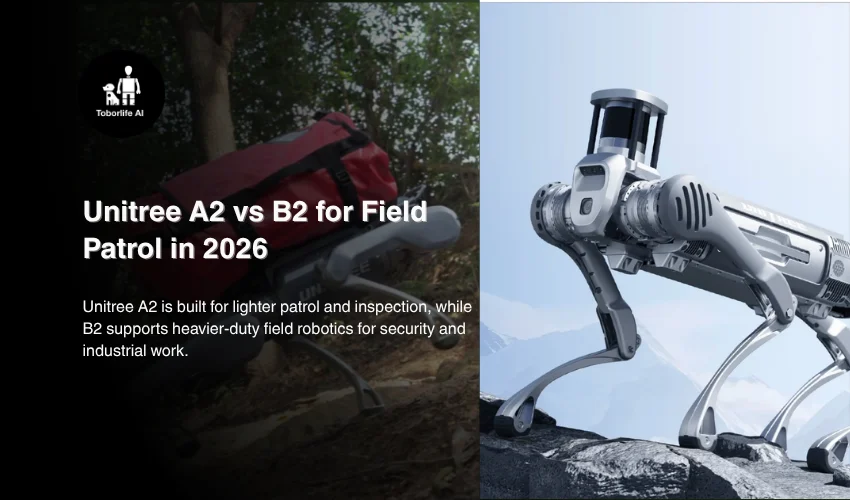
Unitree A2 vs B2: Lighter Patrol Robot or Heavy-Duty Field Robot in 2026?

  • By Toborlife AI
  • July 3, 2026
  • Unitree A2
  • No comments

Not every robot dog needs to be the biggest machine in the room. Sometimes the smarter choice is the robot that moves efficiently, fits the environment, and handles patrol or inspection work without adding unnecessary complexity. That is the real decision behind Unitree A2 vs B2 in 2026.

A recent company profile maps Unitree’s robot families across humanoids, quadrupeds, industrial robotics, AI systems, and research platforms. It frames A2 for industrial inspection, patrol, infrastructure monitoring, security, field robotics, and research, while B2 sits closer to heavier-duty industrial and field deployment. For buyers, that creates a practical question: do you need a lighter patrol robot or a stronger field robot?

Discover how robots can better your life!

See Details

Unitree A2: Built for Lighter Patrol and Inspection

The A2 category is designed for teams that want serious mobility without immediately moving into the heaviest industrial class. The Unitree A2 fits buyers exploring facility patrol, inspection routes, campus security, field testing, and robotics research in a more agile form factor.

That makes the A2 Robot especially useful for organizations still shaping their robotics roadmap. A warehouse team may want to test patrol routes. A university lab may need a quadruped for mobility research. A commercial property team may want better perimeter awareness without deploying a larger, more specialized machine.

The appeal is balance. A2 gives buyers a platform that feels industrial, but not oversized. It can support real-world mobility exploration while remaining approachable for teams that are still learning how robot dogs fit into their workflow.

B2: The Heavy-Duty Field Workhorse

B2 belongs to a more rugged category. It is better suited for buyers who already know they need stronger field performance, heavier payload support, and more demanding patrol or inspection capability.

The Unitree B2 is designed for tougher industrial environments where terrain, endurance, payload, and reliability matter more than compactness. For example, a utility site, large industrial campus, construction environment, or remote facility may need a robot dog that can handle more demanding operational conditions.

That does not automatically make B2 the better choice for everyone. It simply means B2 is built for a different kind of buyer. If A2 is the agile patrol option, B2 is the stronger field robot for teams that need more muscle from the start.

A2 vs B2: The Real Buying Difference

The difference between unitree a2 robots and B2-style platforms is not just size. It is a deployment philosophy.

A2 is for buyers who want mobility, inspection, patrol support, and field testing in a lighter industrial package. It makes sense for teams exploring robot dogs for the first time or expanding into physical AI with a platform that does not feel overly complex.

B2 is for buyers with heavier-duty needs. If the robot must carry more, travel farther, handle rougher environments, or support more demanding industrial patrols, B2 may be the stronger fit.

A simple way to think about it:

  • Choose A2 for lighter patrol, inspection, research, and facility awareness.
  • Choose B2 for rugged field work, heavier payloads, and demanding industrial environments.
  • Choose A2 if flexibility and easier adoption matter most.
  • Choose B2 if power and heavy-duty capability matter most.


That clarity matters because many buyers do not simply want a robot dog. They want the right robot dog for a specific operational reality.

Who Benefits Most From A2?

A2 may be the stronger fit for business campuses, schools, research labs, technology teams, and commercial facilities that want a capable quadruped without jumping into the largest field robotics category.

It works well for buyers thinking about:

Perimeter awareness

  • Facility inspection
  • Campus patrol
  • Robotics education
  • AI mobility testing
  • Product demonstrations
  • Research and development
  • Early security robotics planning


For these users, the value is not only raw power. It is practical access. A2 can help teams start learning how quadruped robotics fits into real-world spaces before committing to more intensive deployment requirements.

Who Benefits Most From B2?

B2 is better for organizations that need a more forceful industrial platform. That may include large facilities, field operations teams, infrastructure operators, security departments, and industrial buyers that expect tougher environments from day one.

B2 becomes especially relevant when the job involves longer patrols, heavier equipment, rougher surfaces, or more demanding outdoor conditions. It is less about testing the category and more about preparing for serious field use.

In that sense, B2 is not simply “more robot.” It is a different tier of robot dog built for users with heavier expectations.

Why an A2 Robot Supplier Matters

Choosing between A2 and B2 is not always obvious from a product page alone. A buyer may know they need a robot dog for patrol or inspection, but still need help understanding which platform fits their facility, budget, and use case.

That is where working with an A2 robot supplier like Toborlife AI becomes valuable. Toborlife AI helps U.S. buyers explore Unitree-powered robot dogs through a more guided, buyer-facing process.

For teams comparing A2 options, Toborlife also offers related platforms such as A2 Pro and A2-W, depending on the user’s needs. Buyers can also explore the B2 category when heavier-duty deployment makes more sense.

Final Thoughts

The Unitree A2 vs B2 decision comes down to how much robot your environment actually needs.

A2 is the lighter patrol and inspection platform for teams exploring commercial security, facility awareness, research, and field robotics in a more agile format. B2 is the heavier-duty field robot for buyers who need stronger industrial capability from the beginning.

For many businesses entering physical AI in 2026, A2 may be the smarter first step. For organizations with tougher terrain, heavier payloads, and more demanding field requirements, B2 may be the better long-term workhorse.

To explore which Unitree-powered robot dog fits your goals, visit Toborlife AI or contact the team through our contact page for more information!

Ready to make this robot yours?

Shop Now
robot-rentals

Robot Dancers vs Traditional Entertainment: Which Wins in 2026?

  • By Toborlife AI
  • June 29, 2026
  • robot rentals
  • No comments

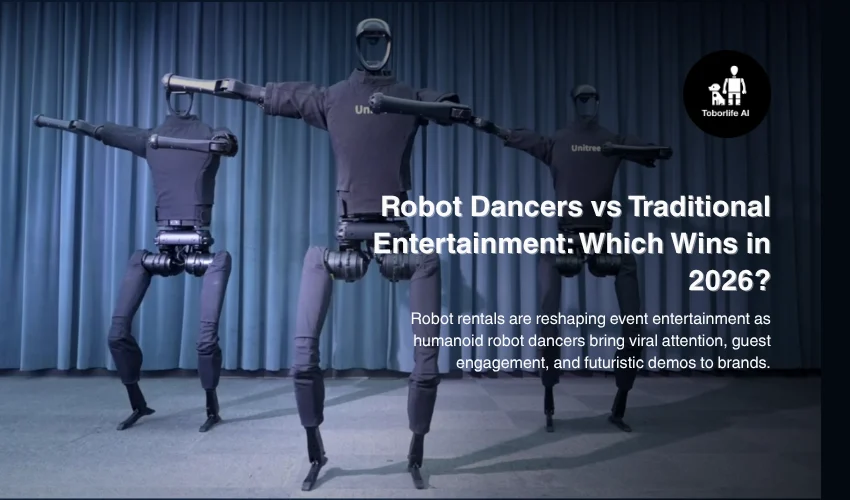
Robot dancers are quickly becoming one of the most attention-grabbing event technologies of 2026. According to Global Times, the humanoid robots that appeared on America’s Got Talent were confirmed by Unitree Robotics as G1 models, giving mainstream audiences a clear look at how robot performers can create stage impact. That visibility is also pushing more brands to explore robot rentals for trade shows, expos, schools, and launch events.

Traditional entertainment still has a place. Live musicians, dancers, hosts, magicians, speakers, and photo booths can create warmth and familiarity. But the rise of humanoid robot dancers introduces a different kind of value: technological surprise. Instead of simply entertaining the audience, robot dancers make the event itself feel like a future-facing experience.

Discover how robots can better your life!

See Details

Traditional Entertainment Is Familiar

Traditional event entertainment works because people already understand it. A live performer can set the tone for a corporate event. A host can guide the audience through a product launch. A dancer or musician can bring energy to a stage segment.

The limitation is that many event formats now feel predictable. At trade shows, attendees walk past dozens of polished booths. At brand launches, audiences often expect the same lighting, speeches, videos, and photo moments. Traditional entertainment can still be effective, but it may not always create the kind of “stop, film, and share” reaction modern brands want.

That is where robot dancers create a stronger visual break.

Robot Dancers Create a Viral Technology Moment

A humanoid robot dancer does more than perform choreography. It turns robotics into a live physical AI experience. Guests can see motion control, balance, synchronization, and human-robot interaction happening directly in front of them.

For event teams asking whether to rent a robot, the strongest value is not only novelty. It is attention density. A humanoid robot can attract booth traffic, support a product reveal, become part of a live demo, and generate short-form social content from the same event moment.

Robot dancers are especially useful for:

  • Trade show booth traffic
  • Brand launch visibility
  • STEM and school demonstrations
  • Investor showcases
  • Corporate innovation events
  • Technology expos
  • Interactive guest engagement


In these settings, the robot becomes both entertainment and a message. It shows that the brand is not only talking about innovation. It is placing innovation directly in the room.

Toborlife Humanoid Robots vs Traditional Acts

The best comparison is not simply “robots replace people.” That misses the real opportunity.

Traditional performers create emotional connection. Toborlife humanoid robots create technological presence. For many brands, the strongest event strategy may combine both: a human host, performer, or presenter leading the story while a humanoid robot adds visual impact and future-facing credibility.

Through Toborlife AI, businesses can explore Unitree-powered humanoid platforms such as the Unitree G1 Edu Pro B, Unitree G1 Edu Pro F, and G1-D models for demos, education, research, and event applications.

For schools, these robots can help students experience robotics beyond classroom theory. For expos, they can create a high-traffic attraction. For product launches, they can make the brand feel more advanced without relying only on screens or slide decks.

When Should Brands Hire Robots for Events?

Brands should hire robots for events when the goal is to make technology visible, memorable, and interactive. A robot dancer works best when it supports a clear purpose rather than appearing as a random gimmick.

A startup may use a humanoid robot to signal innovation during a product reveal. A university may use one to introduce students to coding, motion control, and physical AI. A corporate team may use a robot dancer or greeter to create a futuristic welcome experience at an expo booth.

The key is planning. Event teams should think through stage space, audience distance, demo timing, staff support, lighting, and the story the robot is meant to tell. A well-designed robot experience can feel premium and unforgettable. A poorly planned one can feel like a disconnected hardware demo.

So…Which Wins in 2026?

The most memorable events in 2026 are not just asking people to watch. They are giving audiences something they have never seen in person before. That is why robot dancers win in 2026: event expectations are changing. Audiences are no longer impressed by polished lighting, standard booth setups, or familiar entertainment formats alone. They want experiences that feel current, visual, interactive, and aligned with the way technology now shapes everyday life.

We are entering a new era where technology is not separate from lifestyle, entertainment, education, or brand storytelling. It is part of how people learn, connect, create, and experience the world. A humanoid robot dancer reflects that shift. It turns an event into a live physical AI moment and shows how advanced robotics can serve human imagination across more than just factories or labs.

Traditional entertainment can still create warmth, but robot dancers create future-facing attention. They help brands signal innovation, give audiences something worth filming, and make technology feel present in the room.

That is why Toborlife AI is becoming a practical resource for brands, schools, and event teams exploring humanoid robots. The company helps buyers understand which Unitree-powered platform fits their goals, whether they are planning a trade show demo, STEM event, brand launch, or corporate innovation showcase.

Final Thoughts

The Unitree G1 appearance on America’s Got Talent showed how quickly humanoid robots can move from robotics headlines into mainstream entertainment. For event planners, that moment signals a new category of engagement.

Robot dancers are not just another performance act. They are a physical AI statement.

To explore humanoid robots for your next event, visit Toborlife AI or contact the team through the Toborlife AI contact page to find the right platform for your goals.

Ready to make this robot yours?

Shop Now
unitree-h2-robot

Unitree G1 vs. Unitree H2 Robot: Which Humanoid Platform Leads in 2026?

  • By Toborlife AI
  • June 10, 2026
  • unitree h2 robot
  • No comments

The humanoid robotics sector is moving into a new commercial phase in 2026. Developers, robotics labs, universities, and industrial automation companies are now looking beyond demo-stage robotics and focusing on deployable humanoid platforms with real operational value.

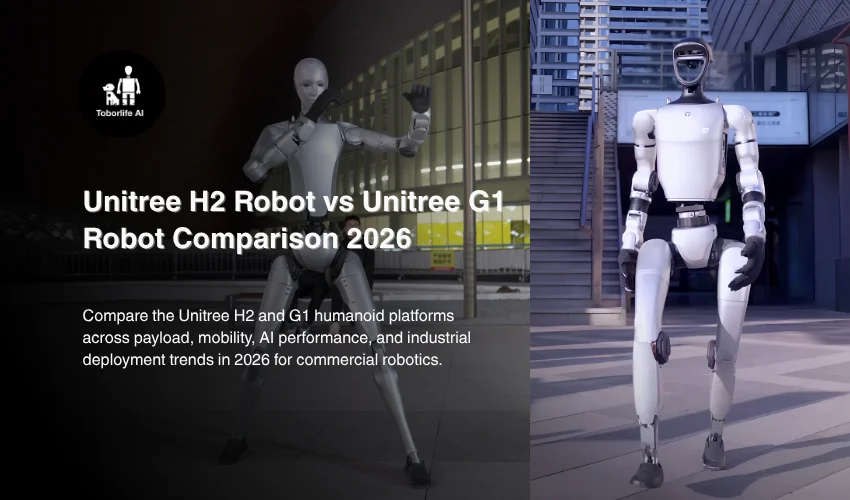
That shift is putting massive attention on Unitree’s latest humanoid lineup. The compact G1 and the larger H2 are targeting very different segments of the robotics market, even though both platforms share the same AI-first design philosophy.

The biggest difference comes down to scale and application focus. The G1 is designed as a lightweight humanoid for research, education, and AI development. The unitree h2 humanoid robot pushes much further into industrial-grade robotics with significantly higher payload capacity, larger physical dimensions, and stronger real-world task execution.

Below, we’ll compare how these two humanoid systems differ across mobility, deployment potential, and commercial robotics applications in 2026.

Discover how robots can better your life!

See Details

Quick Comparison: Unitree G1 vs H2

FeatureUnitree G1Unitree H2
Main FocusResearch and educationIndustrial deployment
Robot SizeCompact humanoidFull-scale humanoid
PayloadLowerHigher
Best ForAI labs and universitiesWarehousing and automation
Education ModelsG1 Edu PlusH2 Edu
Deployment ScaleDeveloper-friendlyEnterprise-focused

G1 Focuses on Accessibility and Research Deployment

The Unitree G1 is gaining popularity because it lowers the barrier to humanoid robotics development. Its smaller form factor and lower pricing structure make it attractive for universities, robotics startups, and AI research teams that want a humanoid platform without enterprise-scale costs.

The robot maintains strong agility while remaining compact enough for controlled indoor environments.

Where the G1 Performs Best

  • Educational robotics programs
  • AI and reinforcement learning research
  • Lightweight humanoid testing environments


The G1 also creates easier deployment opportunities for developers experimenting with motion learning, robotic interaction systems, and edge AI software stacks.

For many smaller robotics teams, accessibility is becoming just as important as raw capability.

H2 Moves Closer to Industrial Humanoid Robotics

The unitree h2 takes a very different direction. This platform is significantly larger, more powerful, and designed for demanding operational environments that require higher payload performance and stronger physical interaction capabilities.

Compared to the G1, the H2 offers:

  • Greater load-bearing capability
  • Larger full-scale humanoid dimensions
  • Stronger industrial task potential
  • Expanded motion stability and balancing systems


The robot is clearly positioned closer to commercial automation and industrial robotics workflows rather than research-first experimentation.

This is one reason interest in the unitree h2 robot continues to grow across manufacturing and logistics sectors in 2026. Companies want humanoid systems capable of operating inside dynamic environments instead of controlled showcase conditions.

AI Processing and Motion Systems Are Scaling Fast

One of the biggest trends in humanoid robotics right now is the shift toward real-time embodied AI. Modern humanoids are expected to process motion planning, navigation, balance correction, and environmental awareness simultaneously.

The H2 platform, including the H2 Edu configuration, reflects this transition with more advanced motion architecture and stronger deployment potential for large-scale robotics environments. Meanwhile, the G1 Edu Plus continues gaining traction among universities, AI labs, and robotics developers focused on software experimentation, embodied AI research, and lightweight humanoid testing. 

What robotics buyers now prioritize

  • Real-world movement stability
  • Scalable AI integration
  • Payload performance
  • Deployment flexibility


Discussions around
unitree h2 cost and overall deployment budgets are also increasing as more businesses evaluate humanoids for operational environments instead of experimental use cases.

Toborlife AI Is Expanding Access to Next-Generation Humanoids

As humanoid robotics adoption accelerates, more businesses are exploring platforms that balance advanced AI mobility with practical deployment accessibility. Companies researching the latest humanoid systems can explore humanoid robots available at Toborlife AI, including advanced Unitree G1 and Unitree H2 robotics solutions.

Businesses evaluating the latest humanoid platforms can also review current availability, technical specifications, and evolving discussions around unitree h2 price trends by contacting the robotics specialists at Toborlife AI.

Ready to make this robot yours?

Shop Now
parking-lot-security-robot

Quadruped Security Dogs vs. Wheeled Patrol Bots: Which Parking Garage Robot Wins in 2026?

  • By Toborlife AI
  • May 29, 2026
  • parking lot security robot
  • No comments

The global security robotics market is entering a faster growth phase as commercial properties and transportation hubs invest heavily in AI-powered surveillance and autonomous patrol systems. According to Fortune Business Insights, unmanned ground vehicles are becoming one of the strongest growth segments across the industry.

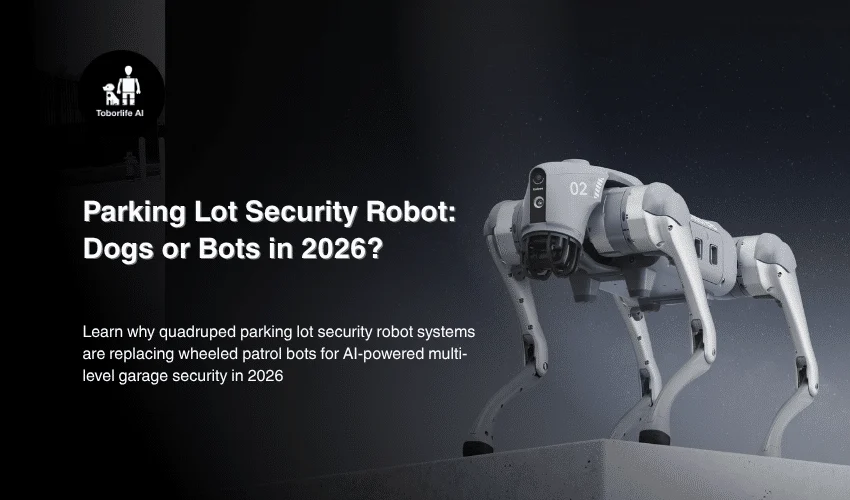
San Francisco is quickly becoming a real-world testing zone for next-generation parking lot security robot deployments. Multi-level garages across the city are exposing the mobility limits of older wheeled patrol units, pushing quadruped robotic dogs into the spotlight for more adaptive and stable security coverage.

Below, we’ll compare why quadruped security robots are gaining momentum over traditional wheeled patrol systems in 2026.

Discover how robots can better your life!

See Details

Why Are Wheeled Security Bots Struggling in Urban Parking Structures?

Most wheeled security robots were originally designed for flat indoor environments like office campuses and warehouse corridors where navigation conditions remain predictable. Multi-level parking garages create a far more demanding environment with steep ramps, damaged concrete surfaces, and narrow turning zones that reduce mobility efficiency.

Unmanned ground vehicles are becoming a major growth segment in the rapidly expanding security robotics market, which is projected to reach $65.80 billion by 2034. That growth is pushing robotics companies to develop more adaptable patrol systems for real-world commercial infrastructure.

Steep inclines affect traction consistency. Tight turns interrupt mapping performance. Low-light conditions also reduce sensor stability during movement transitions. Quadruped robots are gaining attention because adaptive locomotion handles these environments with far greater flexibility.

Key Operational Advantages Of Quadruped Patrol Robots

  • Better mobility across ramps and uneven surfaces
  • Improved balance inside narrow parking lanes
  • More stable camera positioning during patrol movement


Why Is AI Mobility Becoming the Competitive Layer?

The security robotics market is no longer only about cameras and monitoring hardware. The current industry race is centered around autonomous movement, edge AI processing, and real-time environmental understanding.

Modern autonomous security robots now combine:

  • Lidar navigation
  • Thermal imaging
  • AI video analytics
  • Remote fleet management systems


Quadruped systems bring an important edge because sensor performance remains more stable while traversing difficult terrain. This creates better video capture consistency and stronger environmental awareness during patrol operations.

Several San Francisco property groups are now evaluating robotic dogs specifically for after-hours garage monitoring where visibility conditions become difficult for older robotic platforms.

The rise of AI-powered surveillance is also supporting broader demand for robotic infrastructure monitoring. That trend is accelerating growth in the commercial inspection robots category as facilities search for automation tools that handle both patrol and operational diagnostics.

Toborlife AI and the Market Momentum Behind Security Robotics in 2026

The Fortune Business Insights report highlights strong growth across unmanned aerial vehicles, unmanned ground vehicles, and unmanned marine systems. Commercial security applications are expanding especially fast due to rising labor costs, growing infrastructure footprints, and demand for continuous monitoring.

Silicon Valley robotics companies are responding by focusing on deployment-ready hardware instead of experimental prototypes.

This is where Toborlife AI is gaining attention. Businesses are looking for robotic systems that combine advanced mobility with scalable AI operations across commercial facilities.

Robots like the Unitree Go2 Ent available at Toborlife AI represent the direction the market is moving toward. Agile movement, compact form factors, and adaptable navigation systems are becoming critical for next-generation patrol robotics.

Is the Future of Parking Garage Security Moving on Four Legs?

Commercial operators are increasingly prioritizing robotic patrol systems with autonomous navigation, faster anomaly detection, and AI-assisted remote monitoring. As urban parking infrastructure becomes more demanding, quadruped robots are emerging as a stronger fit for complex multi-level environments.

Companies exploring next-generation patrol robotics are also paying closer attention to advanced robots available at Toborlife AI as security automation adoption continues to accelerate in 2026.

To explore commercial robotic security solutions for your facility, contact the experts at Toborlife AI. 

Ready to make this robot yours?

Shop Now
robot-security-guard

Chinese Surveillance Robots vs. US Security Systems: Who Wins the Trust Battle in 2026?

  • By Toborlife AI
  • May 21, 2026
  • robot security guard
  • No comments

The global robotics race is no longer just about performance. It is about trust, control, and data. The United States is now actively pushing back against foreign-made robots, especially those from China, citing serious national security concerns.

At the center of this debate is a new legislative push led by Tom Cotton and Chuck Schumer. Their proposed law targets surveillance robots used in federal systems. The concern is not just hardware. It is what these machines can access, transmit, and potentially expose.

Let’s break down how this creates a real comparison between Chinese robotics platforms and US-aligned security systems.

Discover how robots can better your life!

See Details

The Policy Shift: Robots Are Now a Security Layer

The proposed American Security Robotics Act aims to block federal agencies from using robots made by foreign adversaries.

This includes:

  • Humanoid robots
  • Remote-controlled surveillance machines
  • Unmanned ground systems used in public and government operations


Lawmakers are focused on one core issue. These robots are connected systems. That means they can collect data, process it, and potentially transmit it outside secure environments.

This turns robots into more than tools. They have become part of the cybersecurity surface.

Chinese Robots: High Capability, High Concern

Chinese robotics companies are scaling quickly across global markets. Their systems are now being adopted in universities, research labs, public safety environments, and commercial sectors.

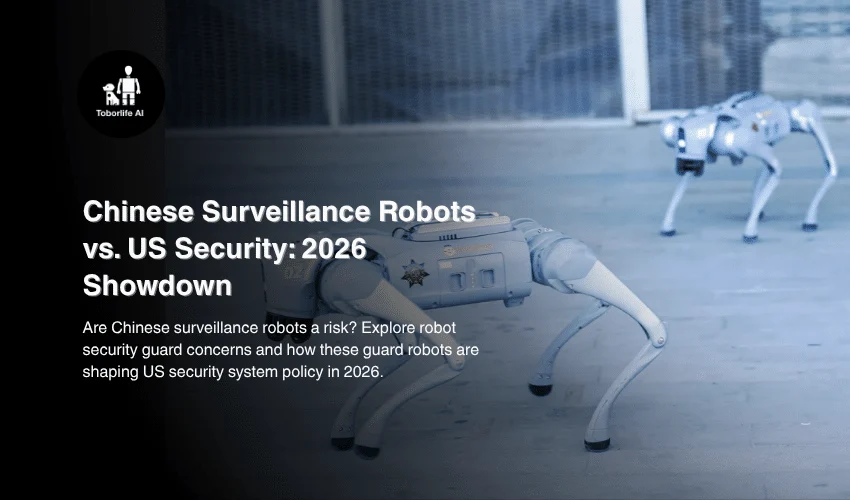
This includes advanced platforms like surveillance robots, autonomous patrol units, and robot dog law enforcement systems designed for real-world deployment.

From a technology standpoint, these robots are evolving fast and combining multiple advanced capabilities:

  • AI-driven perception systems for real-time decision-making
  • Autonomous navigation across complex environments
  • Continuous monitoring and data collection capabilities


The concern raised by US lawmakers is not about performance. It is about control. There is growing attention on how these robots handle sensitive data, who can access their systems, and how they operate within critical infrastructure.

This is where the conversation shifts from innovation into security oversight and long-term trust.

How These Robots Show Up in the Real World 

Surveillance and Public Safety

Chinese-made surveillance robots offer advanced monitoring capabilities. But US regulators are concerned about where that data ends up.

Law Enforcement

The rise of robot dog law enforcement systems shows how robots are entering sensitive environments. This includes patrol, inspection, and threat response.

Commercial Access

Even consumer-facing products like a robot guard dog for sale could become part of a larger data ecosystem if connected improperly.

Build Secure Robotics Systems with Toborlife AI

The robotics landscape is shifting fast. Security is now part of the core conversation, not an afterthought. As robots become more connected, factors like data control, system access, and compliance are becoming critical for buyers and developers.

At Toborlife AI, the focus is on helping you navigate both performance and security in real-world deployments. This includes advanced platforms like Chinese robot security guard systems such as the Homedog Pro, which are designed for surveillance and patrol use cases while aligning with practical deployment needs.

Here is how Toborlife brings an advantage:

  • Curated robot selection with focus on real-world security and deployment use cases
  • Guidance on choosing platforms that balance performance with data and system control
  • Support for developers, businesses, and institutions entering advanced robotics safely


We help you move forward with robotics that is not only capable, but also aligned with modern security expectations.

The Real Decider in 2026: Trust Over Specs

This is not a traditional robot comparison. It is a trust comparison.

Chinese robots bring speed, scale, and rapid innovation. US-aligned systems bring control, compliance, and stronger security alignment.

In 2026, the winning platform will not just be the most advanced. It will be the one that users trust with their data, their systems, and their environment.

If you are planning to adopt robotics for security or operational use, Toborlife AI can help you choose the right platform with the right balance of performance and control.

Get in touch with our team to discuss your requirements and find the best-fit robot solution.

Ready to make this robot yours?

Shop Now

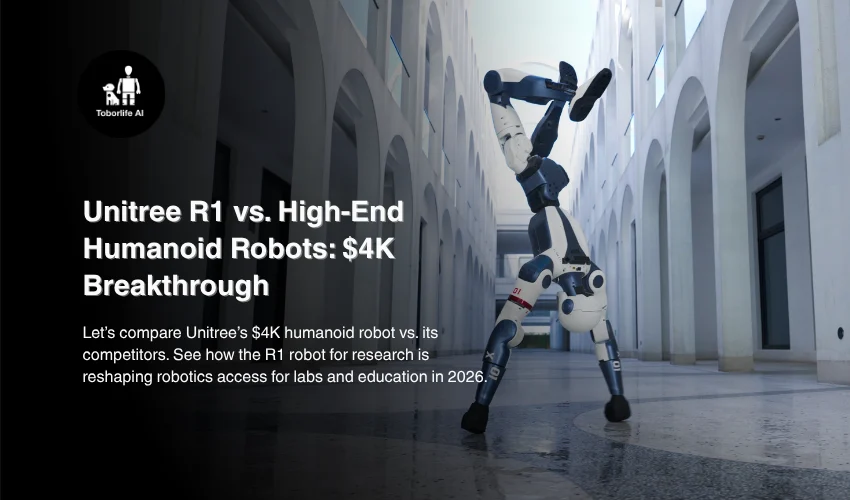
Unitree R1 vs. High-End Humanoid Robots: Is the $4K Robot the Real Disruptor in 2026?

  • By Toborlife AI
  • May 11, 2026
  • R1 robot for research
  • No comments

The humanoid robot market has always been defined by one thing. High cost. That is exactly what Unitree Robotics is trying to break with its global launch of the R1, priced around $4,000 to $5,500.

This puts the R1 robot for research into a completely different category compared to legacy humanoids that often cost $20,000 to $50,000.

So the comparison is no longer just robot vs. robot. It is affordability vs. capability. 

Let’s break it down.

Discover how robots can better your life!

See Details

Quick Comparison: R1 vs. Traditional Humanoids

CategoryUnitree R1High-End Humanoids
Price~$4K–$6K$20K–$50K+
Target UsersDevelopers, schools, labsEnterprises, advanced research
MobilityStrong agility, dynamic motionAdvanced but costly
AI FeaturesVoice + image recognitionAdvanced but expensive stacks
AvailabilityGlobal consumer rolloutLimited production

What Makes Unitree R1 Different?

The R1 robot for universities fits directly into robotics labs that need real humanoid systems without enterprise budgets.

The R1 is not trying to replace industrial humanoids. It is targeting access.

  • Around 4 feet tall and ~25 kg, making it compact and portable
  • 26 joints enable dynamic movement like running, balancing, and even cartwheels
  • Multimodal AI supports voice and image recognition for interaction


This is where the positioning becomes clear. The R1 is a developer-first platform, not a household assistant.

Where Does Unitree R1 Gain the Advantage?

The momentum is clearly shifting toward accessible humanoid platforms. Unitree Robotics available at Toborlife.ai is positioning the R1 as a practical entry point into real-world robotics, not just a limited prototype.

Here is where the R1 stands out:

  • Optimized performance for learning, testing, and rapid iteration
  • Compact design that fits real lab and classroom environments
  • Ready for hands-on deployment without enterprise-level infrastructure


While larger humanoid robots focus on maximum power and industrial-scale tasks, the R1 focuses on usability and reach. That difference matters for developers, educators, and researchers who need consistent access, not restricted pilots.

Instead of chasing peak specifications, the R1 delivers something more impactful. It puts humanoid robotics into more hands.

How Does Unitree R1 Bring Real-World Impact?

For Research Labs

The R1 robot for research creates a new entry point. Labs can now test locomotion, perception, and AI models on real humanoids instead of simulations.

For Education

 R1 robot for education bridges a major gap. Schools can move beyond basic coding robots to real humanoid systems that support AI interaction.

For Developers

The R1 enables experimentation with:

  • Multimodal AI integration
  • Navigation and balance systems
  • Human-robot interaction


Toborlife AI: Accelerating Your Robotics Adoption 

At Toborlife AI, the focus is on helping teams move from simple kits to real, deployable robot systems. The goal is clear. Make advanced robotics easier to access, test, and scale. 

With us, you can have:

  • Access to advanced humanoid options like R1 Basic for hands-on development
  • Curated robot selection built around real research and education use cases
  • Guidance for universities, labs, and developers entering humanoid robotics


Final Verdict

The comparison is clear.

High-end humanoids still lead in capability. But the R1 is redefining access.

The R1 robot for research is not designed to be the most powerful system. It is designed to be the most accessible and usable platform for real-world experimentation. In 2026, that shift opens the door for more developers, more labs, and faster innovation.

If you are ready to explore humanoid robotics for your projects, Toborlife AI can help you get started with the right platform. Reach out to our experts to discuss your use case and find the best robot setup for your needs.

Ready to make this robot yours?

Shop Now
robot-dog-for-school

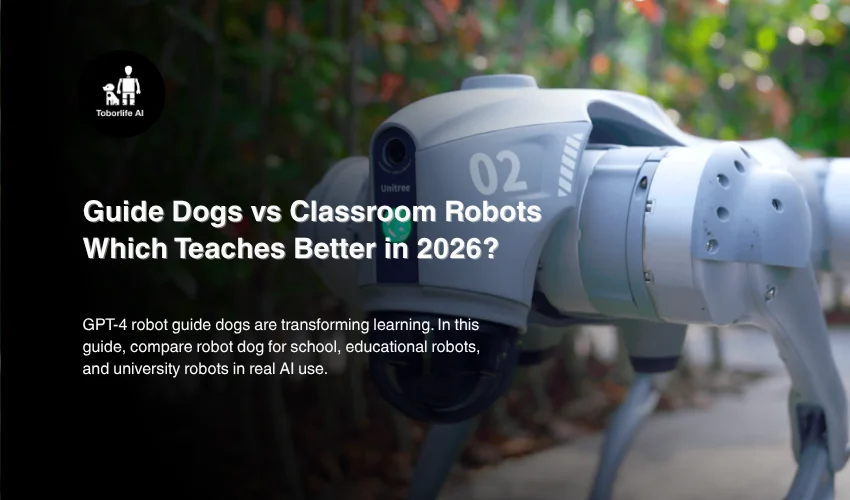
Robot Guide Dogs vs. Classroom Robots: Which Teaches Better in 2026?

  • By Toborlife AI
  • May 4, 2026
  • Uncategorized
  • No comments

A new class of robots just changed the conversation.

Researchers recently demonstrated a robot guide dog powered by GPT-4 that can navigate spaces and talk to users in real time. It does not just follow commands. It explains surroundings, answers questions, and guides users through complex environments.

This is not a classroom toy. It is a real-world intelligent system.

So here is the real comparison that matters in 2026.

Do schools need traditional educational robots, or should they move toward advanced systems like a robot dog for school that combine AI, mobility, and interaction?

Discover how robots can better your life!

See Details

The Core Difference: Learning Tools vs Real Systems

Let’s get clear on what we are comparing.

Educational Robots (Classroom Model)

These are designed for structured learning. Students code actions and see predictable results.

Robot Guide Dog Systems (Real AI Model)

These combine robotics + GPT-level AI. They can:

  • Ask users where they want to go
  • Describe environments like “long corridor” or “open lobby”
  • Respond to voice commands dynamically

This is a completely different level of interaction.

Intelligence: Scripted vs Conversational AI

This is where the gap becomes obvious. In testing, the robot guide dog handled 77 navigation scenarios successfully using AI-driven commands.

Educational Robots

  • Pre-programmed behaviors
  • Limited commands
  • Focus on coding basics


They are great for introducing logic.

Robot Dogs with GPT-4

  • Natural language conversations
  • Context-aware responses
  • Real-time explanations


Mobility: Desk-Based vs Real-World Navigation

Most educational robots stay on desks or classroom floors.

Robot guide dogs operate in real environments.

They can:

  • Navigate multi-room buildings
  • Detect obstacles
  • Guide users through unfamiliar spaces

This matters for learning.

Students are no longer just programming movement. They are working with systems that interact with the real world.

This is why advanced university robots are shifting toward mobile AI platforms instead of static kits.

Learning Experience: Passive vs Interactive

Traditional Classroom Approach

  • Step-by-step instructions
  • Fixed outcomes
  • Teacher-led structure


AI Robot Dog Approach

  • Students ask questions
  • Robot responds in real time
  • Learning becomes exploratory

Participants in testing preferred combined verbal + physical guidance, not just movement alone.

That same principle applies in education. Interaction drives engagement.

Discover how robots can better your life!

See Details

Cost vs Capability: Where Schools Need to Decide

Educational robots are:

  • Affordable
  • Easy to deploy
  • Designed for scale in classrooms

Robot dog systems are:

  • More advanced
  • Closer to real industry use
  • Capable of multiple applications

But here is the shift.

As AI and hardware improve, programmable robots for schools are moving toward hybrid systems. Not just coding kits. Real robots with intelligence layers.

Where Each One Fits

Choose Educational Robots If You Need:

  • Basic coding education
  • Structured classroom lessons
  • Entry-level robotics programs


Choose Robot Dogs If You Need:

  • AI + robotics integration
  • Real-world problem solving
  • Advanced STEM learning environments


Toborlife AI Perspective: From Learning to Real Deployment

At Toborlife AI, we see a clear transition happening.

Education is moving beyond simplified tools. Schools now want systems that reflect real-world robotics.

That is where robot dog platforms come in. They bridge the gap between:

  • Learning concepts
  • Applying them in real environments


We help institutions explore solutions that combine programmability, mobility, and AI interaction. The goal is simple. Prepare students for how robotics actually works today.

Final Verdict

This is not a close comparison. Educational robots still play an important role. They teach fundamentals. But robot guide dogs powered by GPT-4 represent the next phase.

They:

  • Understand language
  • Navigate real spaces
  • Interact like intelligent systems


That changes how students learn.

At Toborlife AI, we are seeing more schools and institutions explore this next step. From advanced robot dogs to interactive AI systems, the focus is on giving students access to technology that reflects real-world applications.

If you are looking to upgrade your robotics program, our experts can help you find the right balance between foundational tools and advanced platforms.

Ready to make this robot yours?

Shop Now
robot-dog-for-home security

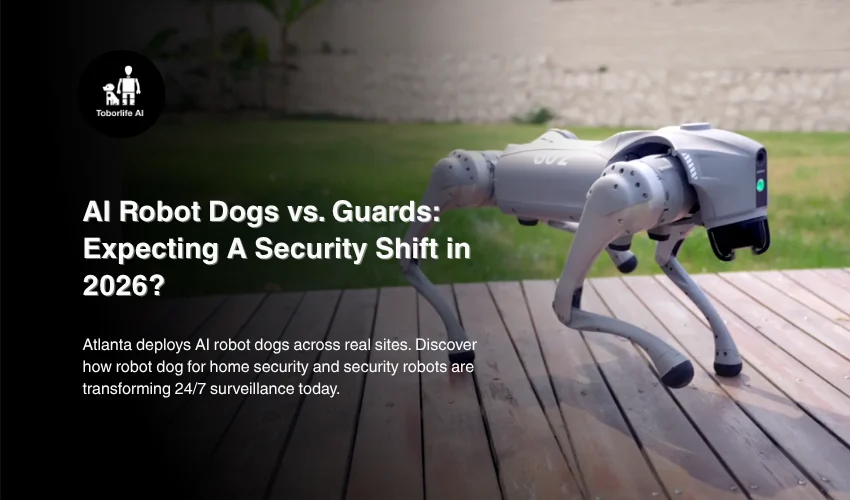
AI Robot Dogs vs. Guards: Expecting A Security Shift in 2026?

  • By Toborlife AI
  • April 22, 2026
  • security robots
  • No comments

Atlanta is no longer testing robotic security. It is deploying it at scale.

Across apartment complexes, parking lots, and construction zones, AI-powered robot dogs are now part of daily patrol operations. These machines move through real environments, stream live video, and allow remote monitoring teams to respond instantly.

This shift is not experimental. It is operational now. And it is changing how people think about security on the ground.

Discover how robots can better your life!

See Details

From Human Guards to Autonomous Patrol

Security has always depended on human presence. Guards walk routes, monitor spaces, and respond to incidents. But this model comes with limits.

Costs are high. Coverage is inconsistent. And scaling requires more people.

Robot dogs are now stepping into that gap.

They bring:

  • 24/7 uptime with no fatigue
  • Real-time video feeds from multiple angles
  • Remote control access for fast response


This is why property managers in Atlanta are adopting them. The value is immediate and measurable.

What These Robot Dogs Are Actually Doing

These are not static systems. They are active patrol units.

In Atlanta deployments, robot dogs are:

  • Navigating apartment complexes during night patrol
  • Monitoring parking areas for unusual activity
  • Inspecting construction sites after hours


They are equipped with cameras and sensors that continuously send data back to human operators. If something looks off, operators can step in and take control.

This creates a hybrid model. Machines handle the movement and monitoring. Humans handle decisions.

Why This Model Is Scaling Fast

The biggest driver is cost efficiency.

Traditional security requires multiple guards across shifts. That adds up quickly. Robot dogs reduce that dependency.

For many use cases, a robot dog for home security like Homedog Pro or small property patrol can deliver similar monitoring at a fraction of the long-term cost.

There is also consistency. Robots do not miss patrols. They do not get distracted. Every route is covered as planned.

This reliability is a key reason adoption is growing.

Technology Behind the Patrol

The effectiveness of these robot dogs comes from their tech stack.

They combine:

  • High-resolution cameras for live streaming
  • Sensors for obstacle detection and navigation
  • AI systems for basic decision support


Operators can access feeds remotely and control the robot when needed. This makes them more than just cameras on legs. They are mobile surveillance systems.

Compared to traditional security robots, robot dogs bring more flexibility. They can move through tighter spaces and handle uneven terrain.

Public Reaction and Open Questions

Not everyone is fully comfortable with robotic patrol.

There are concerns around:

  • Privacy and constant surveillance
  • How data is stored and used
  • The long-term role of robotics in public spaces


At the same time, many see the benefits. Increased safety. Lower costs. Faster response times.

Atlanta is becoming a real-world test case for how cities balance these factors.

What This Means Going Forward

The key takeaway is simple. AI-powered patrol is no longer limited to high-end facilities. It is entering everyday environments.

Apartment managers, site operators, and even homeowners are starting to explore robotic security options.

The line between consumer and enterprise solutions is also starting to blur. What was once enterprise-only is becoming accessible at smaller scales.

This opens the door for wider adoption of both security robots and more compact robot dogs.

Final Take

Atlanta is showing what modern security looks like in action.

Robot dogs are not replacing humans. They are extending coverage and improving efficiency. They handle routine patrol tasks while humans stay focused on critical decisions.

As this model gains traction, Toborlife AI is making it easier for businesses to step into this space. From agile robot dogs to scalable security robotics solutions, the focus is on real-world deployment that fits everyday environments.

If you are considering bringing robotic security into your operations, you can connect with our experts to explore the right setup for your needs. Our team can guide you through available options, use cases, and deployment strategies based on your space.

As technology continues to evolve, this approach will expand into more cities and industries.

The shift is already happening. The only question now is how quickly others will follow.

Ready to make this robot yours?

Shop Now
  • ‹ Previous
  • 1
  • 2
  • 3
  • 4
  • Next ›

Contact Us

Call 408-409-4061 or fill out the form

Floating Contact Form

"*" indicates required fields

footer-logo
  • instagram
  • Tiktok
  • Facebook
  • X
  • Linkedin
  • Linkedin

LET US HELP YOU

  • Shipping
  • Return & Exchanges
  • Cancel an Order
  • Warranty
  • Payment Information
  • Contact Us

GET TO KNOW US

  • About Us
  • Terms and Conditions
  • Privacy Policy

COMMUNITY

  • Robot News
  • Toborlife Event
  • Book Us for Events
  • Join Our Affiliate Program
All Rights Reserved © 2026.
We are a robotics company based in Mountain View, California, specializing in physical AI and advanced robotic systems. We are not affiliated with similarly named software or SaaS companies.
Scroll to top
TOBoRLife

Can Navigate Rough Terrain

The Home Dog effortlessly maneuvers up and down stairs with precision and avoids obstacles autonomously, ensuring it never collides with walls or objects. Experience a robot designed for real-world navigation and equipped with cutting-edge technology.

TOBoRLife

Playful Entertainment For The Whole Family

Watch in awe as the Home Dog performs captivating tricks like flips, handstands, and lively dance routines. Plus, its state-of-the-art balancing capabilities ensure smooth and stable movements, making it safe and fun for everyone to enjoy.

TOBoRLife

Camera provides security assistance for your home

Harness the Home Dog's camera feature for comprehensive home monitoring directly from your smartphone. Utilize this versatile robot as a mobile surveillance device to enhance your home's security.

TOBoRLife

Easy to control

Take charge of the Home Dog robot effortlessly with multiple control options: the bimanual controller, the companion remote control, or the intuitive phone app. When connected to the same WiFi network as the Home Dog, harness the power of voice command via your phone, allowing the Home Dog to respond and interact using ChatGPT.

TOBoRLife

Keeps up with you

Stay in sync effortlessly with the Home Dog featuring our ISS 2.0 Intelligent Side-Follow System. This innovative technology allows the robot to smoothly track alongside you, matching your pace with precision. Experience seamless companionship and convenience like never before.

Cart

Free shipping. Fast Delivery.

    Your cart is empty

    Meet our robots

    Add to your order

        Subtotal —

        Discount

        Shipping

        Tax

        Estimated total —

        Taxes and shipping calculated at checkout

        Check out View cart