Availability Is Where G1 Pulls Ahead First
This is the most important starting point.
According to Robozaps, Tesla Optimus is still not commercially available as of March 2026, while Unitree G1 is already shipping worldwide and starts at around $13,500 to $16,000, depending on configuration. Tesla’s expected price remains around $30,000, but it is still tied to internal deployment and future rollout plans.
That alone changes the comparison.
If you are trying to actually test, deploy, or buy a humanoid robot today, G1 is already in the conversation. Tesla Optimus is still more of a future-facing bet.
These Two Robots Were Designed for Different Jobs
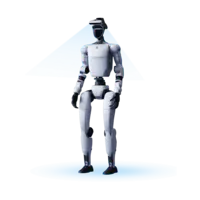
Tesla Optimus is being shaped around large-scale factory integration. Tesla’s long-term play is clear: connect robotics with its Full Self-Driving AI stack, internal manufacturing systems, and large automation pipeline. That gives Optimus a strong long-term industrial narrative.
The G1 takes a different path.
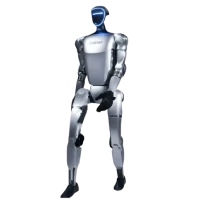
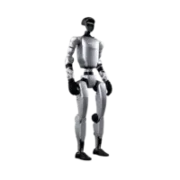
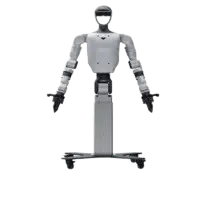
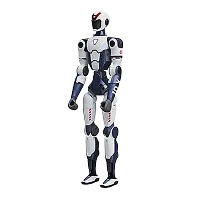
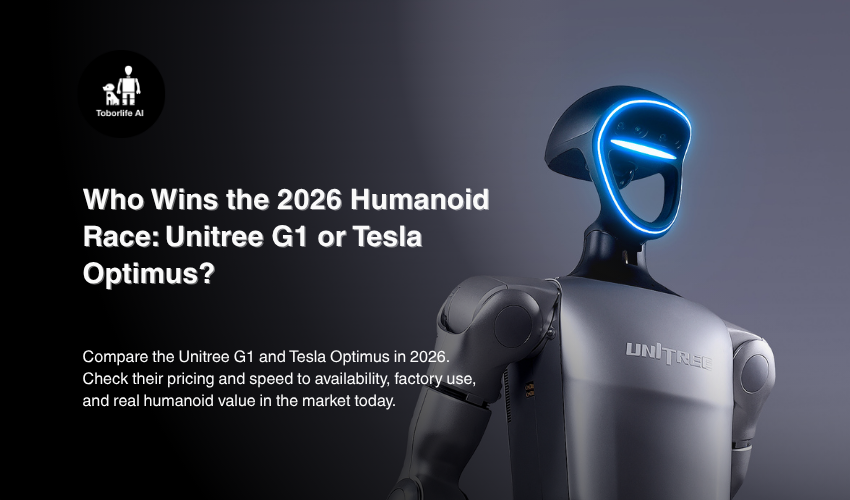
The unitree humanoid robot is smaller, lighter, and more accessible. It stands at about 127 cm, weighs 35 kg, and is positioned more for research, education, developer use, and light-duty commercial applications.
That makes the G1 much more relevant for users who want hands-on robotics access now, not years from now.
G1 Wins on Agility and Entry Price
This is where the technical split gets more interesting.
G1 robots can reach a top walking speed of 12 km/h, compared with around 8 km/h for Tesla Optimus. It also offers up to 43 degrees of freedom, depending on configuration, while Tesla’s public configurations remain lower on full-body articulation.
That gives the humanoid robot G1 a clear edge in agility and movement density.
And then there is the cost.
For many buyers, the real attraction is the unitree G1 price. It lowers the barrier to entry for universities, robotics teams, labs, and advanced enthusiasts who want a real humanoid platform without stepping into six-figure territory.
Tesla Still Has the Bigger AI Vision
To be fair, Tesla is not losing the narrative battle.
Its biggest strength is not availability. It is ecosystem scale.
Tesla Optimus is expected to benefit from Tesla’s FSD neural network stack, simulation pipeline, and Dojo training infrastructure. That gives Tesla a very different AI runway if it can eventually deliver at scale.
So if you are thinking about long-term factory automation, Tesla still holds a strong upside.
But if you are asking what is usable today, G1 has the clearer answer.
How Toborlife Aligns With the More Accessible Side of Humanoids
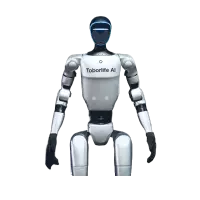
If you want to actually explore or buy unitree G1, Toborlife gives you a direct path into the category. The company’s G1 product page highlights features like 23 DOF, 3D LiDAR, depth sensing, Wi-Fi 6, Bluetooth 5.2, and an estimated 2-hour runtime, which also gives buyers a useful snapshot of unitree G1 battery expectations.
That is why Toborlife AI connects well with:
- robotics educators
- research labs
- developers
- early-stage humanoid buyers
You can explore the G1 directly here: Unitree G1 Basic Robot. If you need help choosing the right model, you can also contact Toborlife’s robotics team.
Our Verdict on This Humanoid Face-Off
Tesla Optimus still owns a lot of the future-facing attention in 2026. But the G1 is doing something more valuable right now: it is actually available, faster to access, and far more reachable for real buyers.
If your goal is to watch the future, Tesla is still fascinating. If your goal is to work with it now, the g1 humanoid robot is in a much stronger position.
That is what really separates these two robots. One is still on the horizon, while the other is already here. And for buyers who want to move beyond the hype, Toborlife.ai makes the G1 much easier to explore today!


Comments are closed for this post.