Why Is Full Autonomy Still Harder Architecture?
Autonomous locomotion and autonomous manipulation solve fundamentally different control problems. Walking policies manage balance, terrain, and trajectory, while manipulation policies must interpret object geometry, estimate material behavior, choose a viable grasp, regulate force, coordinate the upper body, and recover when the environment diverges from the model’s assumptions.
That complexity produces a long tail of operational edge cases. Reflective packaging can distort perception, deformable materials can change shape under contact, partial occlusion can hide grasp points, and visually similar objects can require materially different handling strategies. Each exception expands the training requirement and increases hardware-software integration overhead before the robot can operate reliably without human oversight.
The risk profile also changes once AI leaves the screen and begins applying force. An incorrect language response creates an information error; an incorrect physical action can damage inventory, interrupt a workflow, destabilize the robot, or expose nearby personnel to unnecessary risk. Full autonomy therefore requires more than a capable model—it requires validated recovery behavior, explicit safety authority, and evidence that the system remains controllable outside ideal demonstrations.
What Does Teleoperation Solve Today?
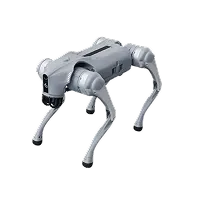
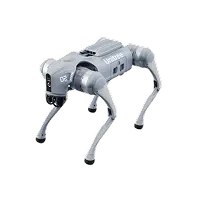
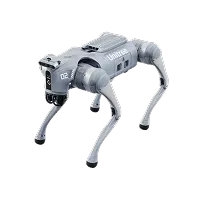
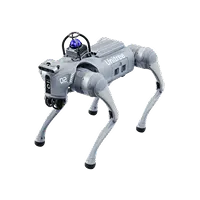
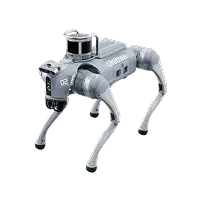
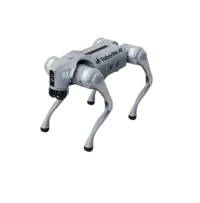
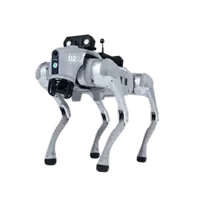
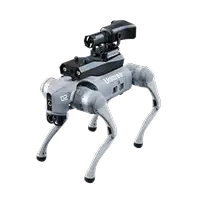
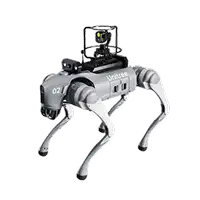
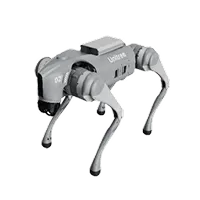
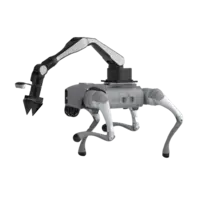
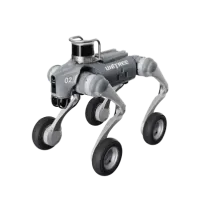
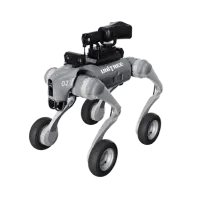
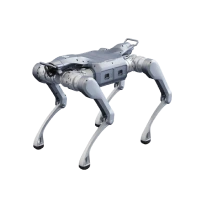
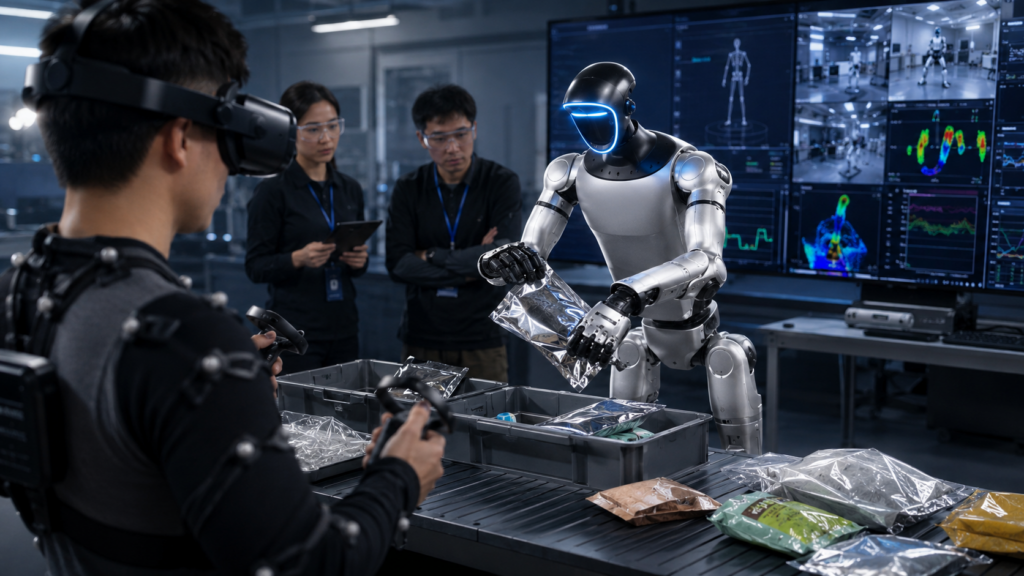
A unitree teleoperation robot keeps human judgment inside the control loop while preserving the robot’s mobility, reach, sensing, and remote physical presence. The operator resolves ambiguity in real time, while the system captures how successful actions unfold across perception, joint state, pose, contact, and task outcome.
A properly engineered teleoperation layer creates three immediate advantages:
1. The operations team can begin bounded task execution before generalized autonomy reaches production reliability, reducing the time between procurement and measurable use.
2. The robotics team can capture demonstrations based on the buyer’s actual tools, objects, workspaces, and failure conditions rather than relying only on generalized training data.
3. The safety team retains a defined intervention path when confidence, network quality, balance state, or task conditions move beyond the validated operating envelope.
The strongest deployment is rarely the most theatrical. Supervised control creates greater embodied AI deployment velocity when it allows an organization to quantify operator workload, identify repeatable subtasks, and determine where automation produces genuine capital efficiency rather than merely shifting hidden labor into exception handling.
Which Unitree Configuration Fits Manipulation Research?
Product selection should begin with the data objective because a locomotion platform and a manipulation platform support different research programs. Dexterity teams need controllable hands, secondary-development access, sufficient onboard compute, and a teleoperation architecture capable of recording synchronized demonstrations across the full control loop.
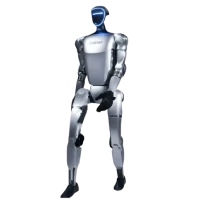
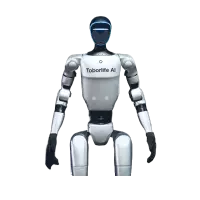
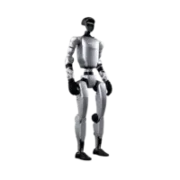
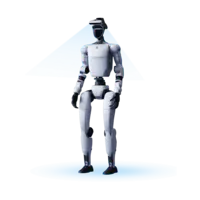
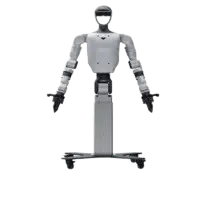
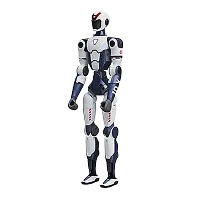
The G1 Edu Pro F combines 35 degrees of freedom, 100 TOPS of edge compute, secondary-development access, and tactile five-finger hands, making it the appropriate Unitree body when the program requires force-aware grasping experiments under supervised control.
The Tobor Harness Teleoperation System pairs XR control, hand controllers, body tracking, whole-body command, and synchronized data capture so that each G1 session produces operator-guided manipulation trajectories rather than an isolated remote-control demonstration.
This pairing reduces deployment friction by aligning the robot body, end effectors, operator interface, and data workflow before custom development begins. That integration discipline protects the program from downstream failure modes such as unusable demonstrations, calibration drift, unstable command mapping, incomplete telemetry, and repeated model-training work caused by fragmented data collection.
How Should Buyers Compare Teleoperation With Autonomy?
The comparison becomes more useful when buyers stop treating teleoperation and autonomy as competing endpoints. Unitree teleoperation functions as both an operating layer and a data-generation system that supports progressively more autonomous behavior across pilot-to-production pipelines.
1. Teleoperation fits variable, low-volume, or exception-heavy workflows because human supervision can absorb uncertainty that would otherwise require an uneconomical amount of task-specific training.
2. Autonomous control fits bounded and repetitive workflows where objects, geometry, access conditions, and recovery procedures remain stable enough to produce a measurable intervention rate.
3. Hybrid control fits most near-term deployments because validated routines can run autonomously while operators resolve ambiguity, authorize recovery, or assume direct control.
4. Manual remote control creates limited strategic value unless the system preserves synchronized telemetry, demonstrations, and outcome labels that contribute to future model development.
The Total Cost of Ownership (TCO) model should therefore include operator labor, network architecture, station utilization, safety supervision, data storage, model development, calibration, and failure recovery. A platform marketed as autonomous can carry a higher effective TCO when intervention remains frequent but the operator workflow, escalation logic, and data architecture were never designed explicitly.
What Should Buyers Require From Teleoperation Services?
Serious unitree teleoperation services should define the operating architecture before demonstrating the interface. Buyers need documented latency budgets, degraded-network behavior, emergency-stop authority, operator-to-robot ratios, calibration procedures, data ownership, session logging, and the transition logic between autonomous and manual control.
Without those controls, teleoperation remains a demonstration feature rather than an operational system. A credible service model should also identify which failures are handled by the robot, which require operator intervention, and which conditions force a safe stop.
The economic objective matters as well. A buyer pursuing immediate labor substitution needs dependable throughput, predictable intervention rates, and quantified station utilization; a buyer pursuing long-term capital efficiency may accept a supervised research phase because the resulting physical datasets reduce future model-development cost and create a proprietary advantage around task-specific manipulation.
When Should a Team Buy the System?
Organizations preparing to buy unitree teleoperation system hardware should proceed when the workflow is bounded, the operator environment is defined, the data policy is clear, and successful intervention can be measured. The program should remain in architecture planning when network conditions cannot support safe control, no internal owner exists for the resulting datasets, or the target task is still too ambiguous to produce a defensible operating envelope.
Toborlife AI has already compressed this implementation surface by pairing Unitree humanoid configurations with XR control, dexterous-hand options, domestic logistics, and deployment-side engineering diligence. The value lies in entering procurement with the robot body, operator station, safety authority, network topology, data capture, and development pathway already treated as one integrated system rather than a collection of disconnected components.
For teams moving from manipulation research toward a production-grade teleoperation stack, Toborlife AI provides the U.S. distribution and implementation layer required to turn Unitree hardware into a controlled, supportable deployment. Talk with our team before procurement to align the robot, operator station, safety controls, network architecture, and data pipeline—before configuration gaps become sunk cost.


Comments are closed for this post.