How the Training Process Worked
The researchers did not train the robot by hand. Instead, they used a virtual training environment where the robot practiced more than fifty million trial sessions. It learned where to move, how to position the arm, and how to time each swing.
The digital arm holding the racket was paired with stereo cameras that tracked the shuttlecock. This allowed the robot to predict its movement path and adjust its own speed. After this long virtual process, the team transferred the learned instructions to the real robot.
The physical robot then performed on an actual court. It returned shots at speeds near twelve meters per second. Its body coordinated leg movement with arm rotation, something that is difficult even for many advanced robots.
The Robot Explores a New Level of Coordinated Motion
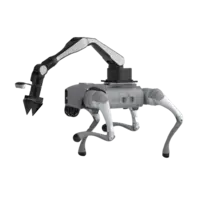
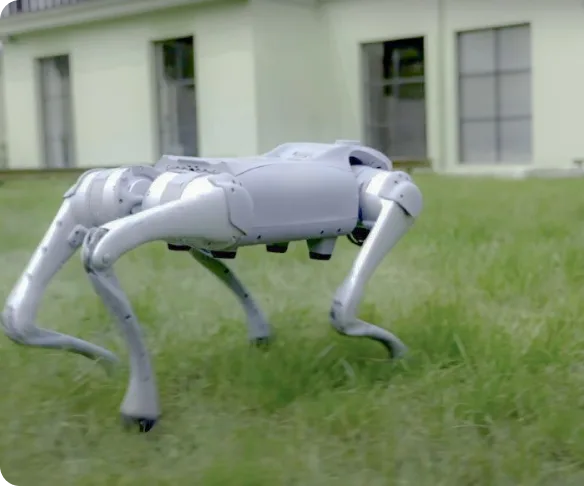
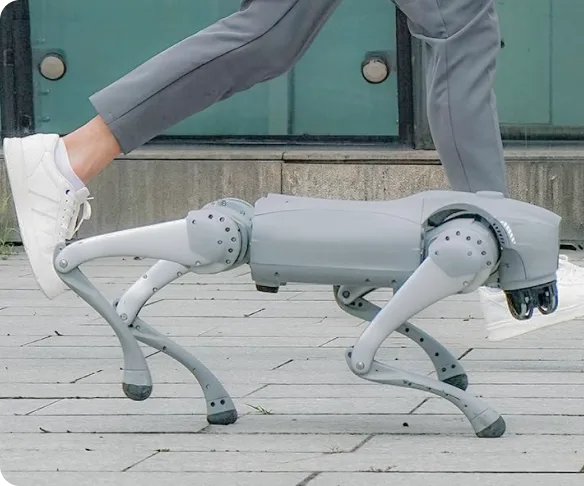
The ANYmal robot used eighteen joints to coordinate its movement. That includes leg joints and the extended arm joint. Each piece worked together to create smooth transitions on the court.
The robot changed its stance depending on the incoming shot. For close-range returns, it used short steps. For far shots, it moved quickly across the court. At times, it stretched its body forward to reach wide angles. This type of dynamic adjustment shows the growing potential of agile robotics.
The researchers believe this is more than a sports demonstration. It is proof that robots can operate in unpredictable spaces.
How This Progress Translates Into Real Tasks
Badminton is complex.
It asks for:
- Fast direction changes
- Quick prediction
- Clean balance
- Coordinated limb control
- Controlled force application
- Timing accuracy
When a quadruped robot handles all of this, it suggests that the same technology can help in other areas. These areas may include search and rescue, environmental scanning, or interactive demonstrations for public audiences.
Many teams that plan to hire robots for events want robots that can move safely around people. A robot that handles a badminton court with stability also navigates human spaces more confidently.
This makes the technology feel closer to real-world deployment.
What Makes This Breakthrough Unique
Robots often focus on either locomotion or object handling. Few systems combine these abilities well. This project brings both together. The robot uses vision to track a moving object while running across the court.
The robot also learned to recover its posture. For example, after swinging the racket, it repositioned its legs to stabilize the next move. This gave it a natural flow that made rallies possible.
Another unique aspect was the robot’s speed. Returning a fast shot is not easy. Yet the robot reacted in fractions of a second. This real-time behavior is a step toward more responsive robotics.
Why This Is Useful for Events and Demonstrations
Humanoid and quadruped robots increasingly appear at corporate events, product launches, tech shows, and festival stages. People want memorable demonstrations. A robot that plays badminton becomes an immediate attraction.
Robots performing physical tasks create excitement and visibility. They help show clients what advanced robotics can do. This drives the rising demand for robot rentals among event planners. Platforms like toborlife.ai help companies select robots that match the experience they want to create.
Teams that want to rent a robot for interactive exhibitions now look for robots with clear capabilities. Movement, coordination, and audience engagement are all important factors.
This badminton robot shows what future event performances may look like.
The Role of Reinforcement Learning
The project succeeded because of large-scale reinforcement learning. The robot tried millions of moves, failed, corrected itself, and learned a better response.
This process trained the system to:
- Predict shuttlecock movement
- Balance while swinging
- Move without losing accuracy
- Adjust arm position
- Time returns against a human player
- Time returns against a human player
This type of learning is flexible. It does not limit the robot to badminton alone. The same process could train robots for other active tasks, including object pickup, obstacle courses, or dynamic tests.
This expands the types of demonstrations event hosts can offer.
How Toborlife AI Fits Into This New Wave
As robots become more dynamic, more companies want to work with them. Toborlife AI helps organizations explore movement features, compare platforms, and plan event experiences that involve physical interaction.
Buyers come to the platform to look for:
- Robots for demonstrations
- Robots that show movement
- Robots for themed environments
- Robots for brand experiences
- Robots that fit controlled indoor spaces
We help clients navigate availability and choose robots that match their goals. With more interest in agile robots, platforms like toborlife.ai have become key for companies planning future-centered events.
The Direction This Experiment Is Leading Toward
The success of a badminton-playing robot suggests a wider future for interactive robotics. It shows that robots can learn physical coordination and respond to quick changes in real-time scenarios.
More teams may now explore sports demos, object-motion tasks, or dynamic public interactions. These experiences can show how robots behave beyond labs and into human environments.
As interest grows, more companies will search for ways to hire robots for events or run demonstrations for their audiences.
Robotics is shifting from static display units to performance-ready systems.
Closing Perspective
The badminton robot marks an exciting step for agile robotics. It proves that quadruped robots can coordinate movement, vision, and timing in real environments. The experiment also highlights how reinforcement learning can push robots toward new types of interaction.
As more groups explore these capabilities, event organizers, research teams, and tech companies will seek platforms that offer access to advanced robotic demonstrations. Toborlife AI supports this shift by helping buyers find movement-ready robots for events, showcases, and brand experiences.
If you want to explore new robotics options or plan an interactive demonstration, visit toborlife.ai to discover what next-generation robots can bring to your audience!



Comments are closed for this post.