Why This Is a Huge Win for Educational Robotics
Educational robotics is becoming more ambitious in 2026. Schools, STEM labs, coding clubs, and higher-ed engineering programs are asking for more than novelty.
They want systems that can actually support learning outcomes.
That includes robots that can:
- explain coding and hardware concepts in simpler ways
- help students test ideas in real time
- stay useful across beginner and advanced use cases
This is exactly where next-gen adaptive AI becomes valuable.
If a student asks a robot why a line-following algorithm failed, the ideal robot should not just return a generic troubleshooting script. It should understand the likely issue, the context of the environment, and the student’s current learning level. If it is unsure, it should be able to recognize that and improve the response.
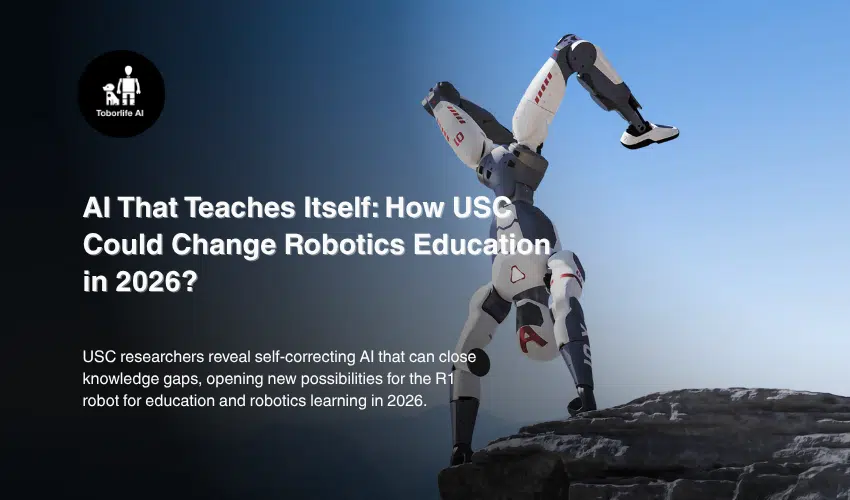
That is where the future of the R1 robot for robotics education gets especially interesting.
Because the next wave of robotics products will not just be judged on hardware design. They will be judged on the intelligence stack running inside them.
The Ethics Layer Is Not Optional Anymore
Another important angle in Liu’s work is AI alignment and ethics.
She co-chairs the Institute of Ethics and Trust in Computing at USC Viterbi and has explicitly pointed to the need for large language models to align with human ethics. That matters even more in education, where AI systems are interacting with younger users, shaping understanding, and influencing how technical concepts are learned.
In robotics education, trust is not a side feature.
It affects:
- how students interpret technical advice
- how teachers adopt AI tools in classrooms
- how institutions decide what products are safe to scale
A self-correcting AI model is not just a performance upgrade. It can also be a trust upgrade, especially if it becomes better at flagging uncertainty instead of masking it.
That is a major step forward for education-focused robotics.
What Toborlife Should Be Part of in This Shift
This is exactly the type of industry moment where product teams need to think bigger than feature lists.
For Toborlife AI, the opportunity is not just to sell robots. It is to position robotics as a modern AI learning platform for schools, educators, labs, and future engineers.
That means connecting hardware with the kind of adaptive intelligence users now expect.
A next-gen education robot should feel like:
- a STEM tool
- a robotics coach
- a live AI interface for experimentation
If you are evaluating educational robotics in 2026, it makes sense to look beyond specs and ask better questions:
How does the robot respond when a learner asks something unfamiliar? Can it guide exploration instead of repeating canned outputs? Can it evolve with classroom use?
That is the lane where Toborlife can stand out.
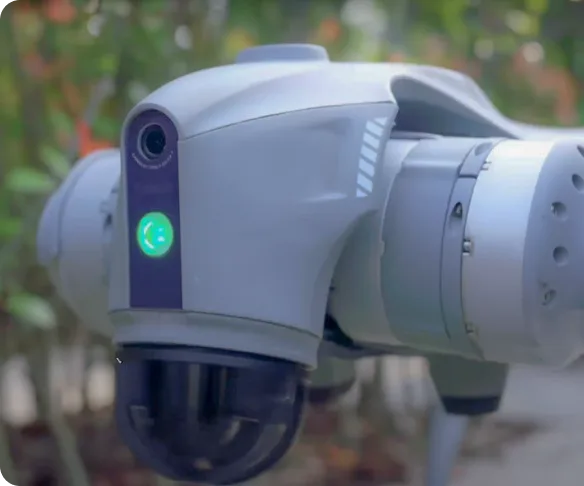
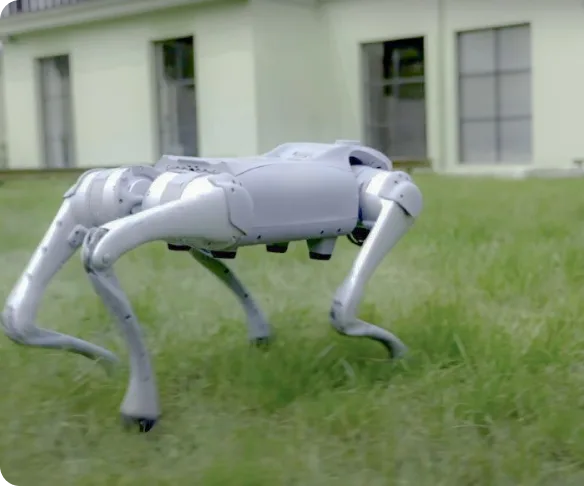
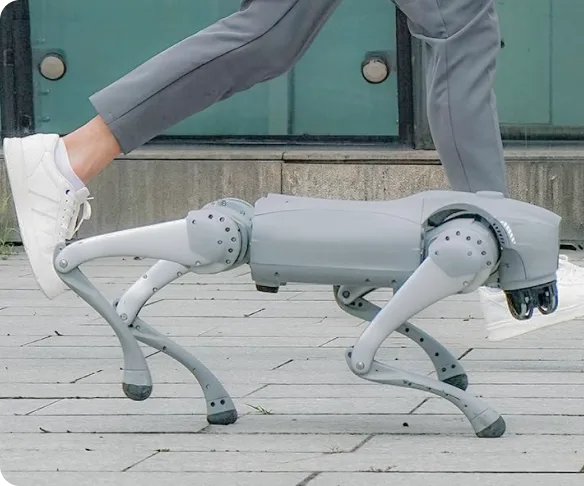
If you are exploring what this could look like in practice, Toborlife already offers education-ready robotics solutions designed for modern learning environments. The R1 EDU Smart available at Tobolife.ai is a strong example of how robotics can support STEM learning, classroom interaction, and hands-on education.
The Market Is Moving Toward AI-Native Robots
The robotics market is changing fast. The most relevant robots in education will not be the ones with the flashiest launch video. They will be the ones that stay useful after week one.
That is why AI self-improvement matters so much.
When a robot can detect weak knowledge, recover from uncertainty, and adapt to real learning environments, it becomes more than a gadget. It becomes a platform.
That platform logic is where the market is headed: AI-native robots that support experimentation, not just demonstration.
And for schools or institutions investing now, this shift matters. Buying decisions made in 2026 should account for how quickly AI capabilities are evolving. A robotics system that cannot grow with modern AI workflows may age out much faster than expected.
Final Take
In 2026, the conversation is moving past “Can AI talk?” and toward “Can AI improve itself in meaningful ways?”
USC’s breakthrough helps answer that with real momentum.
For robotics education, that opens the door to systems that can teach with more context, respond with more accuracy, and stay useful in dynamic learning environments. That is exactly the kind of progress expected from the next generation of the R1 robot for robotics education.
If you are looking for where educational robotics is heading next, keep your eye on adaptive AI, self-correcting models, and platforms that are ready for modern STEM learning.
And if you want to bring that future into your classroom, lab, or robotics program, explore Toborlife’s latest education-ready robotics lineup and connect with the team at toborlife.ai.

Comments are closed for this post.