Let’s take a closer look at how Black Panther 2.0 redefined what robots on four legs can do and what it could mean for the future of robotic mobility.
The Race That Redefined Speed
At the World Robot Competition in Wuhan, China, thousands of spectators watched a moment that made headlines across tech and science communities. The Black Panther 2.0 sprinted across the test track with near-human precision, keeping its balance at full throttle while navigating light terrain.
Weighing roughly 38 kilograms and standing just over half a meter tall, the robot delivered both endurance and agility. Built through collaboration between Zhejiang University’s Humanoid Innovation Institute and Hangzhou-based robotics company Mirror Me, it was designed with one goal in mind and that is speed through mechanical precision and adaptive motion.
During testing, the robot sustained its top speed across multiple runs, demonstrating remarkable consistency. For context, elite human athletes reach around 10.4 meters per second at their peak. That means this quadruped didn’t just run like a human; it almost kept up with one of history’s fastest men.
What Makes Black Panther 2.0 So Fast
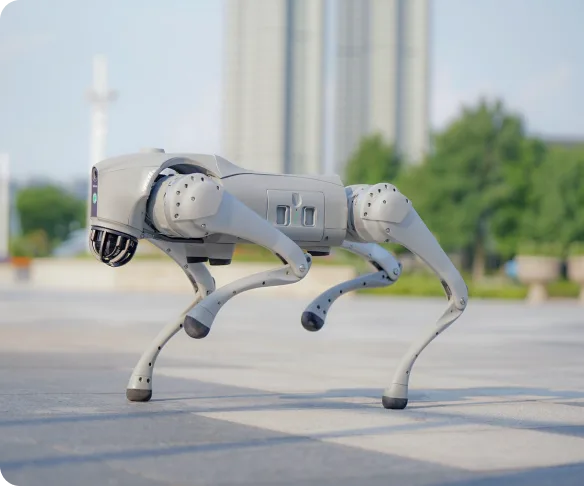
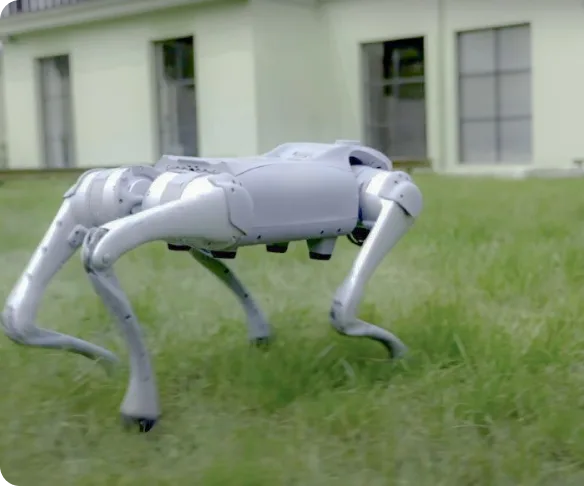
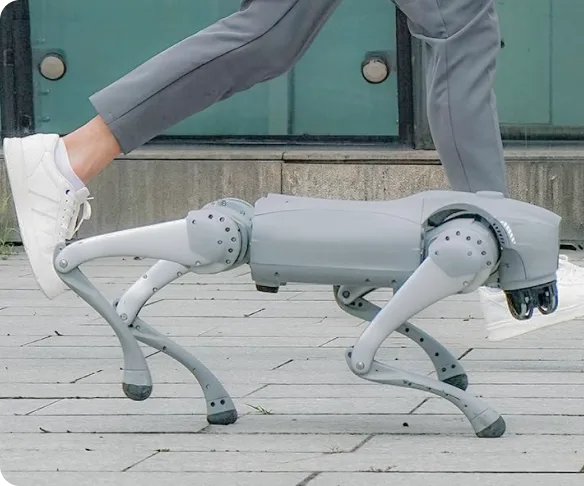
The engineering behind this robot’s success lies in its balance between weight, torque, and control. The legs are crafted from carbon fiber composites that combine strength and flexibility. These materials help it move with minimal drag while maintaining stability even during sharp turns or quick directional changes.
The robot’s lower limbs are designed as a single integrated unit instead of multiple connected pieces. This structure reduces mechanical resistance, allowing the legs to push off the ground with more power.
Each joint uses a high-torque actuator system that enables fast, controlled strides. Real-time motion feedback sensors adjust its gait instantly when it encounters uneven terrain. This allows the robot to react almost like a living animal, compensating for balance without slowing down.
From Competition to Real-World Application
While the speed test drew attention, the real significance lies in how this technology could transform everyday industries. Robotics experts believe that such agility could soon help with critical real-world applications, from inspecting industrial zones to assisting in surveillance robots for public safety.
Speed alone doesn’t make a robot valuable. What counts is how well that speed translates to adaptability, reliability, and multi-purpose use. A robot that can sprint across open areas or rough terrain without losing control could become a vital asset in emergency rescue or border patrol. It could reach danger zones faster than vehicles and safer than humans.
This evolution also reflects a shift toward more independent robotic systems. Instead of remote-controlled units, these machines are designed to interpret surroundings, make quick decisions, and move with purpose, all autonomously.
China’s Push for Robotic Advancement
China continues to lead the global robotics race with consistent innovation across mobility, automation, and artificial intelligence. The development of Black Panther 2.0 is another milestone in the country’s push for performance-driven robotics capable of operating in both civilian and industrial settings.
Researchers at Zhejiang University have been refining quadruped designs for years. Their focus has shifted from controlled lab conditions to challenging outdoor environments. With the support of companies like Mirror Me, this collaboration showcases how academic research and private industry can accelerate the pace of progress.
The government’s investment in robotics education and competitions, such as the World Robot Competition, has played a big role in nurturing this growth. It gives research teams a public platform to showcase how fast engineering is catching up to biology.
The Future of Speed and Security
While this sprinting robot impressed audiences, its real value could come from its future use in safety and protection. In fast-paced or high-risk zones, robot dog law enforcement units could provide real-time surveillance, track intruders, or respond to emergencies long before human teams arrive.
Similarly, surveillance robots capable of moving quickly and adapting to environments can improve security across large facilities, airports, and industrial parks. Instead of relying on fixed cameras, these mobile units can move autonomously, gather visual data, and alert teams to unusual activity.
Speed enhances coverage. A robot that can move from one location to another in seconds adds an entirely new dimension to modern security. Combined with AI-driven detection and analysis, such systems could soon become standard in professional monitoring and safety operations.
How Toborlife AI Advances Practical Robotics
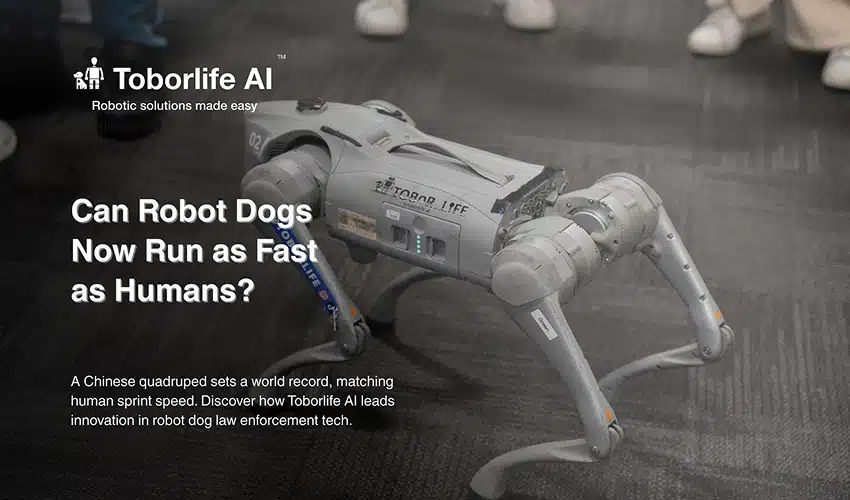
At Toborlife AI, we focus on making robotics accessible, adaptable, and efficient for practical everyday use. While global innovations like Black Panther 2.0 show what’s possible at the frontier, Toborlife’s technology aims to bring advanced robotic performance into real environments such as schools, workplaces, and public spaces.
Our robots are designed to handle real-world challenges, from cleaning and inspection to intelligent assistance and automation. We believe that speed and precision should serve a purpose helping people work safer, faster, and more efficiently.
Those looking to explore functional and customizable robotics for learning or professional environments can visit toborlife.ai to discover solutions that fit their needs.
Where Robotics Is Headed Next
As robotic design evolves, the line between machine performance and biological agility continues to blur. What started as a showcase of speed could eventually define how we build mobile robots for urban and industrial life.
Engineers are now experimenting with lightweight materials, new actuator designs, and advanced AI motion planning to make machines react faster to their surroundings. Soon, we could see quadrupeds that work side-by-side with humans in hospitals, warehouses, or even homes as they are reliable, flexible, and efficient.
A New Benchmark in Robotic Performance
Black Panther 2.0’s record is more than a technical milestone. It’s a preview of how speed, agility, and precision can merge to redefine what robots can achieve in the real world. From industrial inspection to public security, the demand for mobility is clear.
And as innovators like Toborlife AI continue developing accessible solutions, robotics will keep moving forward, staying fast, functional, and built for the world we live in.

Comments are closed for this post.