Why Quadrupeds Are the Future of Planetary Mobility
Traditional rovers like NASA’s Perseverance are marvels of engineering, but they rely heavily on predictable, stable terrain. The lunar surface, however, is unpredictable, filled with hidden craters, soft dust, and steep ridges. A quadruped robot solves that.
Here’s why researchers are betting big on legged explorers:
- Superior stability: Four-legged motion distributes weight evenly, enabling safe traversal across uneven terrain.
- Self-learning gait control: Using AI algorithms, the robot learns to adjust its step length and posture to maintain traction.
- Compact design: Unlike traditional rovers, quadrupeds can crouch, climb, or even jump over obstacles.
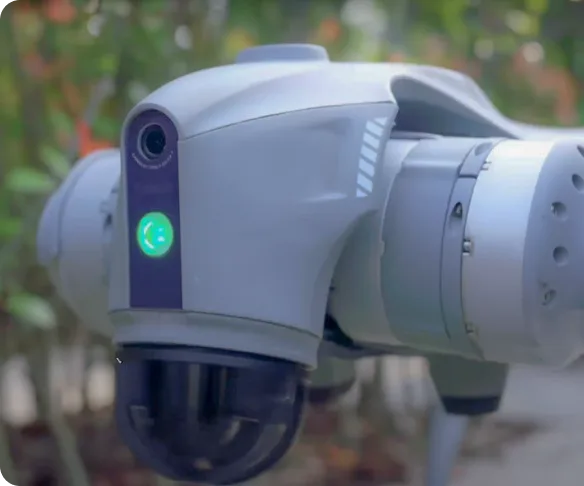
- Autonomous adaptability: With embedded LiDAR, cameras, and proprioceptive sensors, robots like LASSIE can perceive their surroundings and make split-second movement decisions.
As mission planners eye sustained human and robotic presence on the Moon and Mars, these robots will play a vital role, scouting paths, mapping unknown landscapes, and even transporting small payloads to assist astronauts in the field.
Inside the Harsh Testing Grounds
Testing a space-bound quadruped isn’t just about physical balance. It’s a test of endurance, perception, and coordination under extreme conditions. White Sands, New Mexico, provided the perfect analog — blazing heat, fine dust, and high reflectivity, all factors that stress a robot’s sensory and cooling systems.
LASSIE’s mobility trials included:
- Sand dune climbs to test traction and leg torque.
- Autonomous pathfinding across soft terrain using AI mapping.
- Dust resilience assessments, ensuring sensors and motors can operate amid airborne particles.
- Night navigation drills using infrared vision to simulate low-light extraterrestrial environments.
The results impressed engineers: the robot achieved over 97% successful locomotion stability across 5 km of shifting sand, outperforming traditional wheeled systems in mobility endurance.
From Lab Research to Market Innovation
Projects like LASSIE aren’t just academic curiosities. They fuel advancements that directly shape consumer and industrial robotics here on Earth. The same technologies that help a robot survive a Martian dust storm are redefining applications in logistics, inspection, agriculture, and defense.
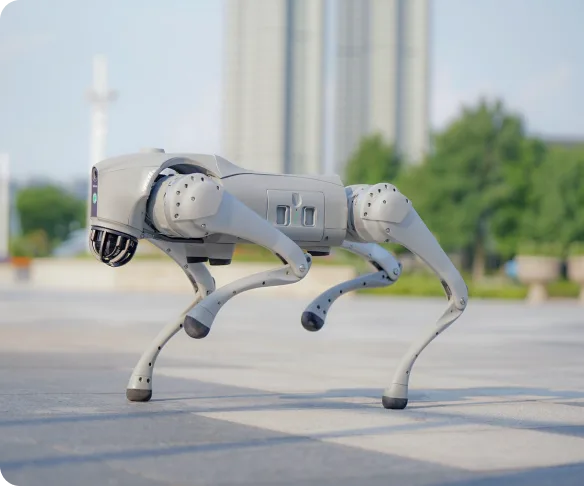
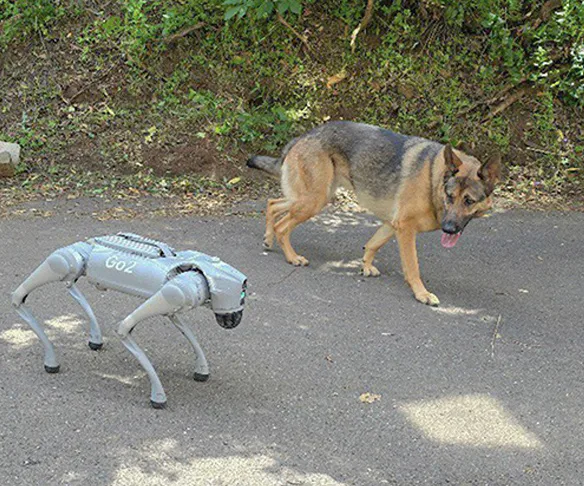
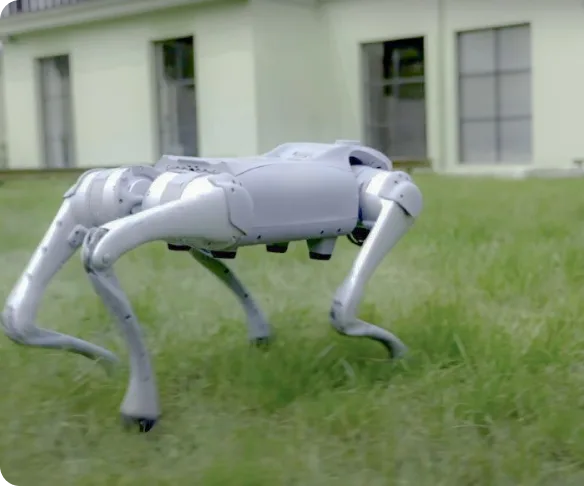
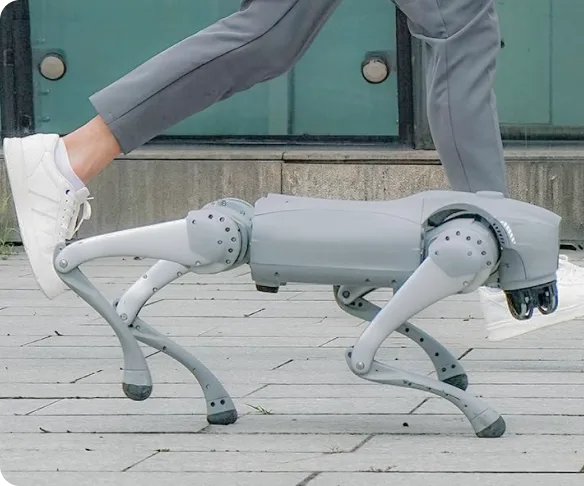
And for innovators, educators, and researchers looking to explore similar robotics architectures, Toborlife AI offers access to industry-leading platforms. The unitree go2 edu model, a close technological relative to the robots used in ESA’s field trials, delivers exceptional mobility, open-source programmability, and customizable payload integration.
By bridging academic research and commercial usability, Toborlife AI empowers developers to prototype the next generation of intelligent machines from Earth-bound automation to interplanetary mobility.
The Intersection of AI, Adaptability, and Exploration
What sets LASSIE apart isn’t just its physical design–it’s its intelligence. Using neural reinforcement learning, the robot refines its movement strategy in real time, responding to unexpected changes in the environment.
This adaptive capability mirrors the AI control stack used in Toborlife AI’s humanoid and quadruped robots, which operate autonomously in unpredictable conditions, from warehouse floors to outdoor landscapes. The underlying concept is embodied cognition: merging sensory data with motion control so that the robot learns through experience.
In space missions, that intelligence could mean survival. With limited communication bandwidth between Earth and Mars, autonomous decision-making will be essential. Robots like LASSIE could analyze geological formations, identify sample sites, and collaborate with other machines, all without human micromanagement.
Toborlife AI’s Role in the Next Robotics Frontier
At Toborlife AI, we view breakthroughs like LASSIE as milestones in a global movement toward resilient, intelligent, and modular robotics. Whether it’s for planetary exploration, industrial deployment, or academic research, the future of robotics lies in adaptability and integration.
Our mission is to democratize access to high-performance robotics, enabling creators, educators, and enterprises to experiment with advanced mobility systems. With platforms like the unitree go2 edu, users gain access to open programming environments, robust APIs, and scalable performance suited for everything from AI testing to real-world deployment.
For institutions or innovators ready to take the next step, now is the perfect time to buy unitree go2 through Toborlife AI. Every purchase includes expert guidance, software customization options, and post-sale support designed to help you explore robotics beyond conventional boundaries.
The Cosmic Future of Robotic Mobility
In the coming years, quadrupeds will no longer be confined to Earth. ESA, NASA, and private space agencies are already planning missions where autonomous legged robots will explore lunar caves, carry instruments, and lay groundwork for human infrastructure.
Imagine a future where a fleet of robotic scouts prepares habitats, maps mineral deposits, or monitors radiation levels, all before the first astronaut sets foot on Mars. It’s not science fiction anymore.
And on Earth, these technologies are already transforming industries. Every leap in autonomy, battery optimization, and terrain control makes robotics more reliable for real-world operations. Whether in mining, environmental research, or agriculture, the lessons from LASSIE’s lunar tests are writing the next chapter of intelligent mobility.
Final Thoughts
As 2025 unfolds, one thing is clear: legged robots aren’t just learning to walk–they’re learning to explore. LASSIE’s lunar trials mark a pivotal shift toward machines that can think, move, and adapt beyond human reach.
For those ready to harness that same spirit of innovation, Toborlife AI offers the tools to get started. From classroom experiments to commercial-grade deployments, our robotic platforms are built for the real and the extraordinary.
Explore the future of robotics today at Toborlife AI, where innovation meets adaptability, and where tomorrow’s explorers are already taking their first steps.


Comments are closed for this post.