What Is the LASSIE Project?
The LASSIE Project is a NASA-funded research effort led by Oregon State University, with contributions from Georgia Tech, Texas A&M, University of Southern California, and the NASA Johnson Space Center. Its goal is simple yet ambitious: create legged robots that can navigate, study, and assist astronauts in extreme environments like the Moon and Mars.
The project’s current field tests in New Mexico simulate Martian terrain. White Sands offers a natural Mars analog. Its soft dunes, uneven slopes, and extreme temperatures challenge even advanced robots. The team ran trials under triple-digit heat, pushing the quadruped’s endurance, agility, and decision-making to new limits.
How the Robot Thinks and Moves
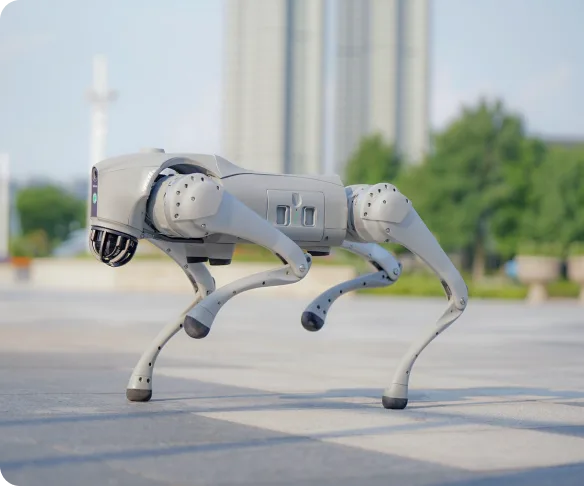
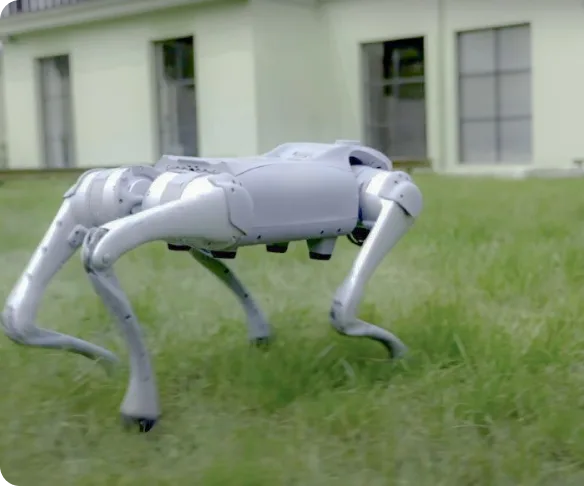
Unlike wheeled rovers, legged robots can handle complex terrain—rocks, slopes, and soft sand. But this one goes a step further. Its four legs act as sensors. Each step gathers data on surface texture, resistance, and grip, teaching the robot how to balance, shift, and plan its next move.
The result? A machine that doesn’t just move rather it learns. It adjusts its stride in real time, recognizing which surfaces are unstable or energy-intensive.
This kind of feedback is essential for Mars, where conditions vary from hard basalt to fine dust.
Is It A Step Toward Autonomy?
What makes this 2025 milestone exciting is autonomous behavior. Earlier versions of quadruped robots needed constant human control. During the latest White Sands trials, the robot acted independently. It chooses paths, navigates obstacles, and gathers field data on its own.
That breakthrough shows the power of merging robotics with artificial intelligence. The robot’s onboard systems processed terrain input, adjusted movements, and executed scouting tasks without live instructions. It’s an early preview of what will eventually become the robotic field partner for astronauts on Mars.
How This Technology Advances Space Exploration
NASA’s long-term Moon to Mars project is about sustainability. It is also about building reliable systems that can assist astronauts and extend exploration time.
Quadruped robots could:
- Scout ahead to identify safe paths or scientific points of interest
- Carry and deliver equipment
- Support human crews in extreme weather or rough terrain
- Collect samples for later study
From Mars to the Classroom
What’s happening in New Mexico doesn’t just matter for NASA. It’s shaping how we teach the next generation about robotics. The same frameworks that make this quadruped robot self-sufficient are now being adapted into robot dog for school programs.
Modern classrooms are moving beyond static coding exercises. Students are now learning to program robots that respond to sensory feedback, navigate environments, and interact with real-world conditions just like the LASSIE robot. It’s an immersive, hands-on approach that builds not just technical knowledge, but creative problem-solving.
This is where Toborlife AI makes its mark.
How Toborlife AI Connects Science and Education
At Toborlife.ai, our mission is to bring this level of innovation into everyday learning. Our AI-powered robots are designed to be approachable, modular, and truly educational. Students can experiment with coding, sensor input, and AI behaviors in real time—developing skills that mirror what NASA’s engineers are using on the frontier of space tech.
We believe the best way to prepare for tomorrow’s world is to let students experience it today. The programmable robotics kits available on our platform are built to teach autonomy, balance, and decision logic. The same concepts applied in the LASSIE project.
If you’ve ever wanted to show your students what AI in motion truly looks like, shop now at Toborlife.ai and explore how our systems bridge imagination and engineering.
Lessons From the Desert
Field testing isn’t just about success. It’s about discovering limits. During the White Sands trials, engineers found that the heat forced early-morning sessions. Dust affected sensors, and steep slopes required new adaptive gaits. Each challenge became data, feeding into improved balance algorithms and movement planning.
These learnings are invaluable. They show how autonomous systems can manage uncertainty. This is a key skill for both planetary exploration and real-world robotics development. When students experiment with programmable robots, they’re learning the same engineering principles used to refine machines bound for other worlds.
The Future: Robots That Learn and Evolve
What’s next for the LASSIE team? Continued field simulations, hardware upgrades, and integrating higher-level AI for even greater independence. Future versions may feature advanced mapping tools, energy optimization, and team coordination capabilities where multiple robots share data to explore faster and safer.
And as that technology matures, its impact will filter down to consumers and classrooms alike. The robotics kits available today are early versions of what will eventually become fully adaptive learning machines.
It’s a perfect time to get hands-on experience with the fundamentals that power real-world robotics.
Why Toborlife AI Leads in Educational Robotic
As more educational institutions invest in robotics, choosing the right platform matters. Toborlife AI stands out for its focus on real functionality over gimmicks. Our programmable systems teach genuine autonomy, interaction, and algorithmic logic. These are the skills aligned with professional-grade robotics.
By blending AI learning with modular design, Toborlife’s robots give students a deeper connection to innovation. They’re not just building or coding. They’re preparing for a future where machines think, adapt, and explore alongside humans.
Visit toborlife.ai to discover the latest programmable robotics kits for education and home learning. The future of exploration is here, and it begins with what we teach today!
Final Thoughts
The LASSIE project’s quadruped robot is more than a scientific milestone. It’s a symbol of how human curiosity and machine intelligence can work together. Its journey through the dunes of White Sands isn’t just preparing it for Mars; it’s inspiring a generation to think differently about technology, movement, and possibility.
As we move into 2026, the line between space innovation and classroom learning grows thinner. The same technologies that will one day walk on Mars are already teaching our students how to build the future.
With companies like Toborlife AI, the future is closer and more innovative than ever!


Comments are closed for this post.