A New Kind of Student-Teacher Partnership
Unlike traditional laboratory experiments, working with a robot dog isn’t just about programming code. It’s about problem-solving in real-world contexts. Students are learning how to integrate robotics into scenarios that range from assisting people with disabilities to supporting first responders during emergencies. These hands-on projects encourage critical thinking and collaboration. Rather than just studying theories, students are gaining the skills to shape practical solutions.
At Toborlife AI, we recognize this shift in education as more than a curiosity. It’s an essential preparation for a world where robotics will be as common as laptops are today. By offering innovative robot dog for school models for consumer and professional use, we aim to make these once-laboratory-only machines accessible to schools, businesses, and homes.
Preparing for Emergencies, Not Just Exams
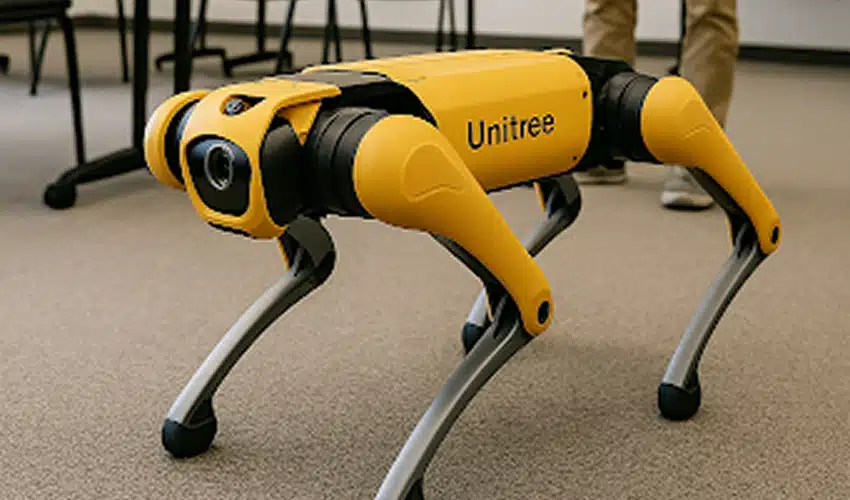
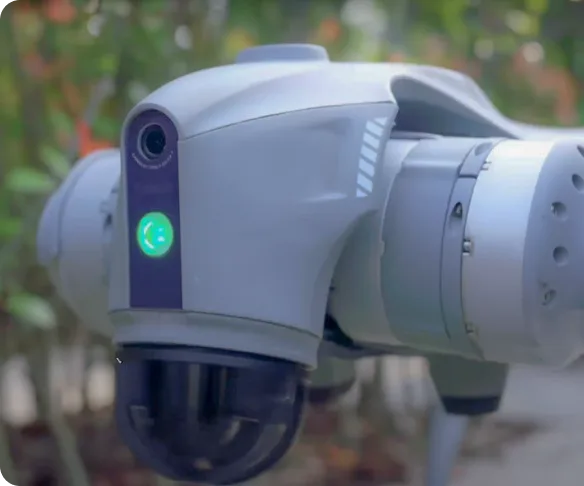
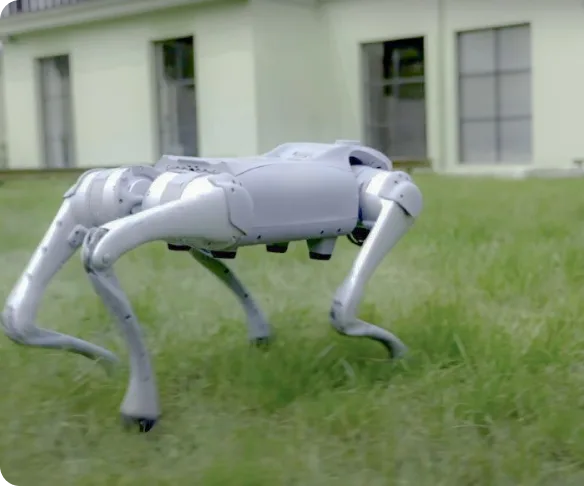
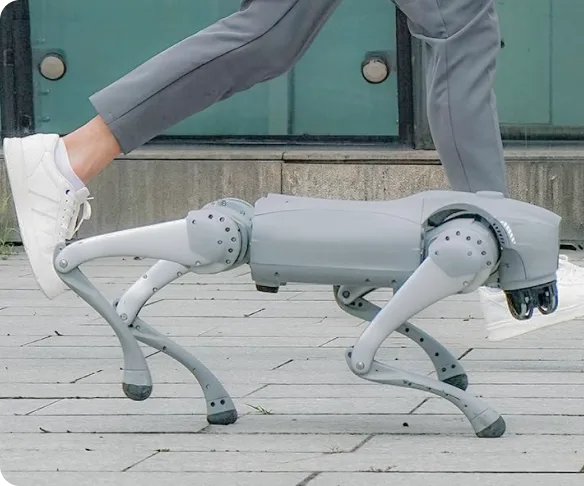
What makes the Unitree Go2 project remarkable is its application beyond classrooms. Students are simulating how robotic dogs could support during emergencies, whether that means delivering medical supplies through rough terrain or helping locate people in disaster zones. These real-world scenarios bring urgency and purpose to the program. A robot dog isn’t simply performing a chore; it’s learning to serve in situations where human presence may be risky or impossible.
This mirrors broader global discussions around the role of robotics in public safety and healthcare. From urban search-and-rescue missions to elder care support, the capacity of robots to adapt and assist is advancing rapidly. Universities experimenting with these technologies today are essentially training the next wave of innovators who will bring safer, smarter solutions to society.
Why Schools Are Turning to Robots
Educational institutions have always been laboratories for the future. Introducing quadruped robots into majors is a natural progression in this evolution. They provide students with hands-on experience in mechanical engineering, software programming, and ethical decision-making. For schools, these technologies are not just teaching aids—they are gateways into critical industries like AI development, robotics manufacturing, and emergency management.
For parents and educators, this transformation raises an important question: should schools start investing in these tools now? The answer, increasingly, is yes. By equipping students with access to robotic platforms early on, institutions prepare them for a workforce that will demand robotics literacy in nearly every sector.
Toborlife AI: Bringing Robotics Closer to You
While a university robotics major might sound far removed from everyday life, the reality is that consumers can already bring these innovations home. At Toborlife AI, we curate a range of robot dogs and humanoid robots designed not just for spectacle, but for practical use. Whether you’re a teacher looking to enrich your curriculum, a tech enthusiast curious about the future of robotics, or a parent wanting to inspire your child with cutting-edge tools, our products make that future tangible.
Unlike traditional educational kits, our robots are not mere toys. They are versatile platforms, capable of supporting learning projects while also demonstrating real-world utility. By shopping with us, you’re not only investing in a product—you’re investing in the future skills and curiosity of the next generation.
Balancing Enthusiasm with Responsibility
Of course, with innovation comes responsibility. The integration of robotics into schools must be handled with care. Ethical considerations, such as ensuring robots do not replace human empathy in caregiving roles, remain at the forefront of discussions. Universities piloting these programs are wisely teaching students not just to build robots, but to think critically about their impact on society.
We believe this ethical lens is crucial. Robots should enhance human potential, not diminish it. That’s why we emphasize transparency, user-friendly programming, and safety-first design in the products we offer.
Looking Ahead
The University of Wisconsin–Eau Claire’s program highlights a trend that is only going to accelerate. As more schools adopt robotics into their curriculum, we’ll see an ecosystem emerge where innovation, responsibility, and accessibility go hand in hand. In 2025, the question isn’t whether robotics belongs in the classroom—it’s how quickly institutions can adapt to integrate it.
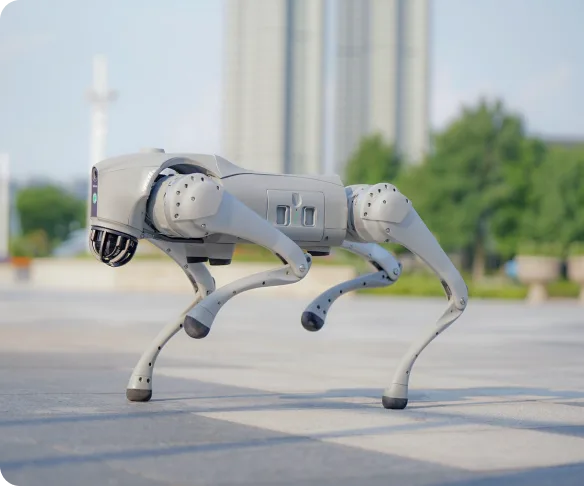
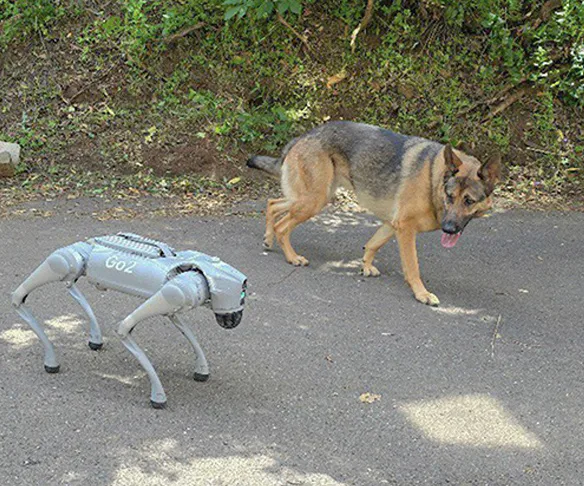
The Unitree Go2 is just one example, but it’s a telling one. It demonstrates how far robotics has come and how much potential remains untapped. From assisting people in need to reshaping the way students learn, robot dogs are no longer just science-fiction novelties. They are becoming everyday allies.
Final Thoughts: Why Now Is the Time to Act
For educators, innovators, and families alike, the message is clear: the future of robotics is already here, and it’s time to engage. Programs like those at UW–Eau Claire are setting the stage, but the ripple effects extend well beyond academia. By exploring and investing in robotic technologies today, you’re preparing yourself—and your community—for a world where machines and humans collaborate seamlessly.
Ready to explore what’s possible? Visit toborlife.ai to shop our selection of cutting-edge robots and bring the future of robotics into your home, classroom, or business.

Comments are closed for this post.