Below we’ll explore where the market is heading, which industries are driving it, and how Toborlife AI fits into the next generation of robotics innovation.
The Global Rise of Humanoid Robotics
Humanoid robots are moving from research labs into practical use. In 2025, early deployments are already happening in manufacturing, automotive production, and warehouse logistics.
While adoption is still small in scale, experts predict the next 10 years will bring a wave of growth as prices fall and technology improves.
The report highlights that real-world use will begin in 2026–2027, with widespread adoption between 2028–2033. By then, humanoids will likely become a common part of industrial and commercial automation ecosystems.
This growth is more about shifting the perception of robotics from specialized tools to everyday collaborators.
Industries Leading the Way
Two sectors are driving the humanoid robotics market forward:
Automakers are integrating humanoids to handle repetitive, precision-heavy tasks like inspection, parts movement, and material handling.
These robots free up human teams for higher-value work while improving consistency and safety.
- Logistics and Warehousing
Robots are already performing picking, sorting, and transporting duties. Though fewer than 100 humanoid units are active in warehouses today, that number is expected to grow exponentially as costs drop and systems become more reliable.
Other areas, such as healthcare, customer service, and hospitality, are also experimenting with humanoids but industry-focused applications remain the strongest near-term growth driver.
What’s Holding Back Widespread Adoption
Humanoid robots are still expensive. Average prices range between $120,000 and $150,000, mainly due to high-precision parts and small-scale production.
The biggest challenges include:
- Battery capacity: Current models have limited runtime, restricting extended operation.
- Mechanical components: Screws, bearings, and reducers are difficult to mass-produce with consistency.
- Sensor systems: Advanced tactile sensors for hands and feet remain complex and costly.
- Software and motion planning: High-level coordination requires heavy computing power and advanced AI integration.
- Affordability barrier: If prices drop to around $20,000 per unit, humanoid robots could become as accessible to mid-sized businesses as industrial arms are today.
The Core Technologies Powering the Shift
The next generation of humanoid robots depends on the integration of several key technologies:
- Actuators and Motors: Compact, efficient designs allow humanoids to move naturally while saving power.
- Sensors: LiDAR, radar, and camera systems provide perception; tactile sensors bring dexterity.
- Batteries: Energy density and cooling efficiency are improving, extending runtime.
- Control Systems: AI-driven controllers enable smoother, human-like motion.
- Software and AI Models: From motion planning to visual learning, AI enables robots to adapt and respond dynamically.
The Component Market Opportunity
Beyond full robots, the components market is also booming. This component ecosystem will become a key source of innovation and competition, as companies look for ways to make humanoid technology modular and efficient.
Over the next decade, growth is expected across all critical parts:
- Actuators and reducers will be in highest demand for mobility and manipulation.
- High-performance sensors will define perception capabilities in commercial robots.
- Batteries and power modules will drive cost reductions as energy density improves.
- AI chips and software platforms will scale alongside robotic capabilities.
What the Next Decade Looks Like
Between 2025 and 2035, humanoid robots will shift from being experimental prototypes to core workforce tools. As prices fall, robots will become increasingly versatile.
Here’s how experts see the timeline unfolding:
- 2025–2026: Early pilot programs in automotive and warehouse logistics.
- 2027–2029: Wider industrial adoption as prices drop and supply chains mature.
- 2030–2035: Entry into commercial and consumer markets for service, retail, and personal assistance.
The Role of Affordability and Scale
The future success of humanoid robotics depends largely on cost reduction.
As the report notes, the high expense of precision components keeps most humanoids out of reach for smaller organizations. But as production increases, prices will decrease dramatically.
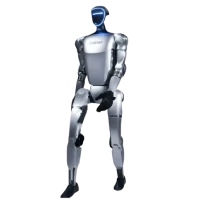
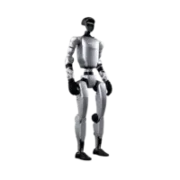
Models like the Unitree G1 Ultimate are helping set a new standard for affordability and performance balance. Once mass production reaches a sustainable scale, humanoid robots could become as common as industrial arms or drones in operational environments.
How Toborlife AI Is Helping Shape That Future
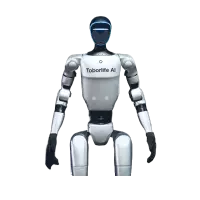
Toborlife AI believes robotics innovation should be accessible and it should be not limited to large corporations or research labs.
Our vision aligns with this market evolution. We design humanoid and service robots that combine:
- Efficient components for long-lasting performance.
- Adaptive AI systems that learn and respond naturally.
- Customizable frameworks for research, education, and industry use.
- Competitive pricing that allows organizations to explore automation confidently.
- Continuous support for seamless integration and real-world reliability.
We focus on making robotics practical — tools that enhance productivity while remaining approachable and cost-effective.
Visit toborlife.ai to explore our humanoid and assistive robotics solutions designed for businesses, educators, and innovators worldwide.
Where the Industry Is Heading
As the humanoid robotics industry matures, we’re moving toward a future where robots don’t just imitate human motion but they also collaborate meaningfully with humans.
The next generation of robots will combine physical dexterity with digital intelligence, creating a synergy between automation and adaptability.
By 2035, humanoid robots could become the standard interface for machine interaction, capable of handling complex physical and cognitive tasks with minimal supervision.
Looking Ahead with Toborlife AI
The coming decade will define how robotics integrates into human environments. What started with industrial automation is now evolving into emotional, intelligent, and service-oriented robotics.
At Toborlife AI, our mission is to help businesses and innovators take advantage of this shift. We’re developing technology that balances precision with personality — reliable enough for work, intuitive enough for real interaction.
Explore the future today at toborlife.ai. Learn how our humanoid robots can support your goals in research, education, and enterprise automation.
The era of humanoid collaboration has begun, and Toborlife AI is here to help make it real.


Comments are closed for this post.