Why Clothing Is Hard for Robots
Rigid objects are predictable. A cup stays a cup. A box stays a box.
Clothing does not behave that way. Fabric bends, folds, stretches, and collapses. Each movement creates a new shape. That unpredictability makes clothing manipulation one of the hardest problems in robotics.
Hanging a T-shirt requires two arms working together. The robot must identify the shirt, grasp it correctly, orient it toward a hanger, and adjust continuously as the fabric shifts.
These challenges mirror everyday tasks humans take for granted. They also define the future of assistive robotics.
How Real-World Experience Shaped the Research Direction
Jasmine Li’s interest in robotics began well before college. Her volunteer work in retirement homes exposed her to daily challenges faced by older adults. Tasks like dressing, folding laundry, or organizing personal items can be difficult without assistance.
At Carnegie Mellon, she applied for a Summer Undergraduate Research Fellowship to combine engineering with practical impact. Her focus became assistive robotics, systems designed to support people with everyday activities.
This context matters. The goal was not a perfect demo. The goal was understanding how robots learn and adapt.
The Robot Setup Behind the Study
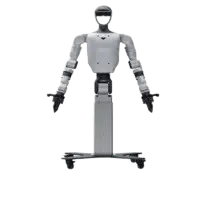
The research used a bimanual robot system with two multi-jointed arms. Each arm could be controlled in two ways. One method used VR joysticks for direct human guidance. The other relied on neural networks trained through data.
This setup allowed researchers to compare teaching strategies and observe how robots respond to failure.
The key insight came from how mistakes were handled.
The Impact of Training Methods on Robot Learning Outcomes
Traditional robot training often relies on small adjustments. When a robot fails, a human nudges it back on track with minor corrections.
Li’s research explored a different approach.
Instead of fixing errors incrementally, the team reset the robot to its original position after failure. They then retried the task with larger trajectory changes.
This method reduced the amount of teaching data required. It also helped the robot learn more robust strategies rather than overfitting for small corrections.
The result was faster learning and better performance.
Improving Robot Learning via Virtual and Physical Trials
The research moved fluidly between simulation and real-world testing to capture how robots learn in controlled and unpredictable settings. Each environment played a distinct role in improving performance and reliability.
Simulation enabled rapid experimentation, allowing researchers to test multiple approaches and analyze failure cases without physical constraints. Physical trials then exposed how fabric behaved under real forces, revealing gaps that simulations alone could not predict.
Together, this approach reflects how modern robotics development progresses.
Key takeaways from this method include:
- Simulations accelerate learning by allowing fast iteration and safe failure analysis.
- Real-world testing uncovers physical behaviors that digital models cannot fully capture.
- Comparing results across both environments helps identify consistent failure patterns.
- Data shared between virtual and physical systems leads to stronger, more adaptable learning strategies.
Expanding the Training Method to Broader Use Cases
The approach did not stop at clothing.
Researchers applied the same learning strategy to other tasks, including packing a burger into a takeout container and sealing an airtight box. These tasks also involve deformable objects and precise manipulation.
The method proved effective across different scenarios. That generalization is critical for assistive robotics.
Robots must handle more than one task. They must adapt.
Why Academic Research Is Shaping Practical Robotics in 2026
By 2026, robotics has moved closer to everyday life. Home robots, service platforms, and assistive systems are no longer theoretical concepts, but their success depends on reliability rather than ambition alone.
Research like this helps close that gap by focusing on how robots learn from data, recover from mistakes, and improve performance with less human intervention. These foundations are critical for robotics systems that need to scale beyond controlled environments.
University robotics labs play a central role in this progress. They provide space to test ideas without commercial pressure, allowing techniques to mature before entering the market. This is why educational robots remain so influential. Methods developed in academic settings often shape the consumer and enterprise robotics platforms that appear years later.




Comments are closed for this post.