What Makes the Go2-W Different
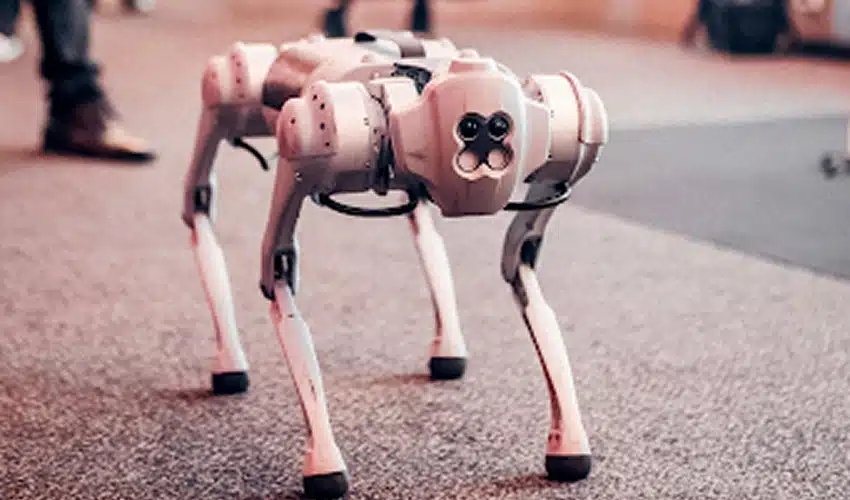
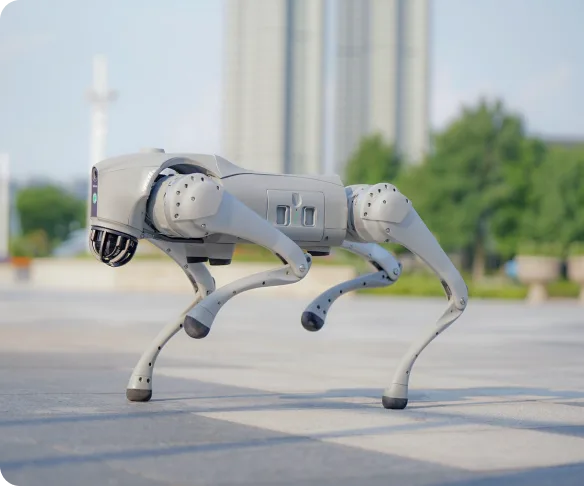
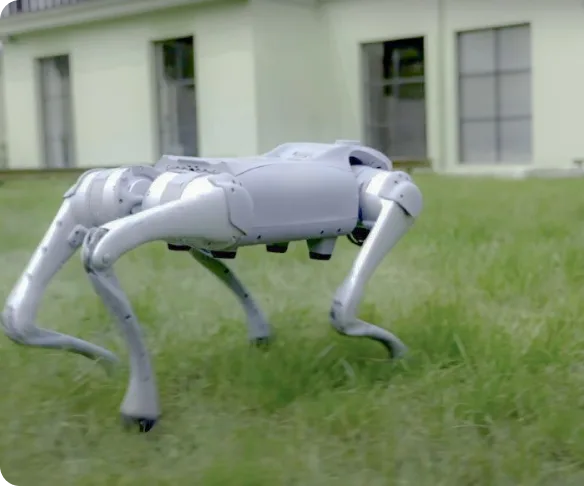
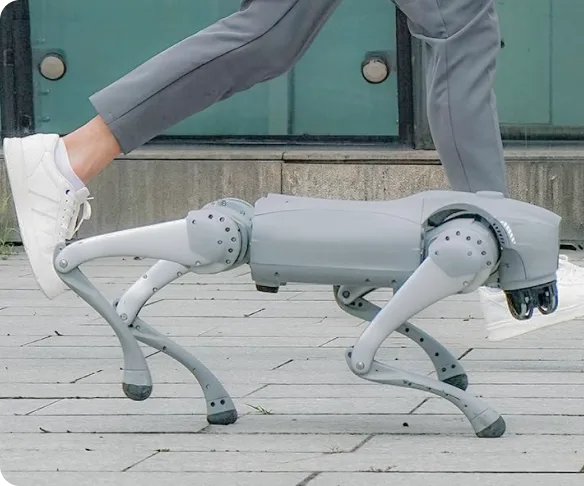
The Go2-W looks like the familiar Go2, but the wheels change everything. Each leg is still there, but the paws are replaced with compact wheels. This makes the design flexible. It can walk like a normal quadruped when it needs to handle stairs or obstacles. Then it can roll smoothly across flat surfaces with speed and efficiency.
The wheels are not fixed. Instead, the legs act like suspension systems. They absorb shocks and keep the body stable, even when moving quickly. This is great for carrying sensors or equipment, since vibrations are reduced and movement feels more natural.
The Go2-W is still compact and lightweight. At 18 kg, it can be carried in and out of vehicles with ease. Its size of 70 cm x 43 cm x 50 cm keeps it practical for personal and professional use.
Key Specs That Stand Out
The Go2-W builds on the proven foundation of the original Go2 but adds features that make it stronger, more versatile, and better suited for real-world missions. These specifications make it clear that the Go2-W is not just an experimental upgrade. It represents a move toward functional robotics that can serve practical needs across personal, commercial, and research applications.
Each specification contributes to performance in ways that go beyond simple novelty:
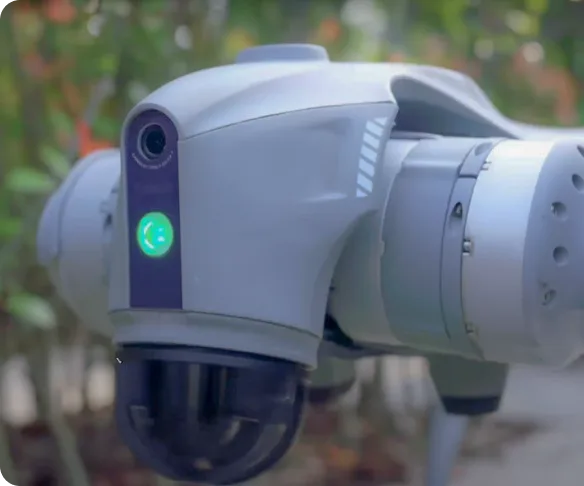
The robot comes with Unitree’s proprietary 4D LIDAR L1. It delivers 360° by 90° hemispherical coverage, giving the Go2-W a wide and accurate sense of its surroundings. This allows it to map spaces in detail, detect obstacles in time, and move with precision even in complex environments.
Measuring 70 cm x 43 cm x 50 cm and weighing just 18 kg (39.7 lbs), the Go2-W is compact enough for portability yet solid enough to handle outdoor challenges. The balance between lightweight design and sturdy build ensures it can be deployed in both controlled indoor labs and rugged outdoor terrains.
By default, the Go2-W includes the standard unitree go2 battery, but a new 15,000 mAh long-endurance version is also available. This upgrade extends runtime significantly, making it possible for the robot to complete long inspection routes, patrols, or research projects without frequent recharging.
Despite the addition of wheels, the robot maintains quadruped functionality. When the wheels are locked, it can walk and step over obstacles up to 70 cm (2.3 ft). This means curbs, stairs, and uneven terrain do not stop it, keeping it relevant in more practical environments.
The most unique aspect of the Go2-W is its ability to switch between two modes of movement. It rolls smoothly on wheels for efficiency on flat, hard surfaces but can instantly switch to walking for stability on rough or vertical paths. This mixed-modality makes it suitable for long missions that involve varied terrain.
Wheels and the Future of Robot Mobility
Wheeled quadrupeds are not brand-new. Other robotics firms have tested them. But 2025 feels like the year the concept becomes practical. The hybrid design saves energy, boosts speed, and keeps the robot stable.
On smooth surfaces like factory floors, labs, or offices, wheels let it glide with less power use. When it encounters stairs or uneven ground, it locks the wheels and walks like a quadruped. This dual approach removes the old limits of pure walking robots.
For businesses or individuals, it means more value for the same purchase. One robot can cover different types of spaces without compromise.
Practical Uses of the Go2-W
This model was not built just for show. The Go2-W is versatile enough for many roles:
- Security Patrols – Moves efficiently across large flat areas and can climb obstacles if needed.
- Mapping and Data Collection – Its sensors make it strong for surveying indoor and outdoor spaces.
- Personal Assistance – Carries light loads, follows owners, and adapts to homes or workspaces.
- Education and Research – Acts as a learning tool for robotics programs, with hybrid mobility to study.
- Field Testing – Handles diverse terrain, making it useful for academic or industrial field work.

Comments are closed for this post.