How RoboBallet Brings Order to Chaos
Manufacturing has always faced a challenge: programming robots to move safely when they share the same space. If two or more robotic arms need to work near each other, every motion must be carefully mapped to avoid crashes. Traditionally, this required hours of manual planning.
RoboBallet changes that equation. Formulated with graph neural networks and reinforcement learning, the system teaches robots to understand their environment like never before. Each robot sees itself as part of a connected system of nodes and edges. The algorithm rewards teamwork and speed, meaning robots learn to finish tasks quicker and with fewer errors.
The results are striking:
- Robots can generate high-quality plans within seconds
- The system works even in layouts it has never seen before
- It scales up to handle as many as 40 tasks with eight robotic arms at once
- Plans are created hundreds of times faster than real time
RoboBallet’s Impact on Modern Manufacturing
The applications go far beyond efficiency alone. A factory floor is often crowded with machines, workers, and moving materials. Positioning robots strategically can be the difference between smooth operations and costly delays. RoboBallet not only helps robots move in sync but also optimizes how they are arranged from the start.
For example, on an automotive line, dozens of robotic arms may weld, paint, and assemble within the same space. With RoboBallet, they operate like a coordinated team instead of competing for room.
This brings real advantages:
- Reduced setup time: Less programming effort is needed to get robots running.
- Faster scaling: New tasks or layouts can be adopted without starting over.
- Flexibility: Robots adjust as production needs or conditions shift.
From Factory Floors to Security Patrols
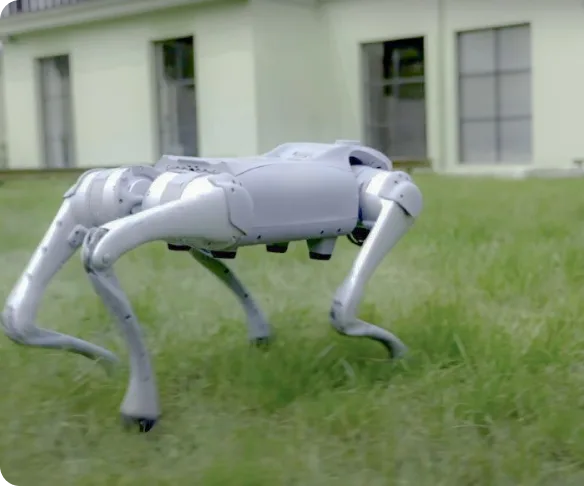
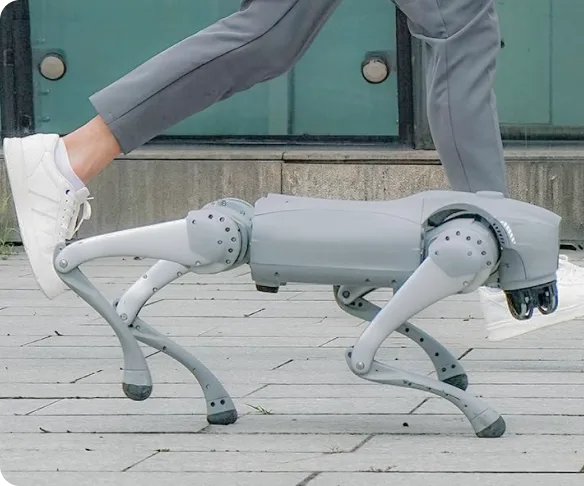
While UCL’s research began with manufacturing, the larger opportunity lies ahead. If robotic arms can be trained to move like a choreographed team, then mobile robots on wheels or legs can learn the same coordination.
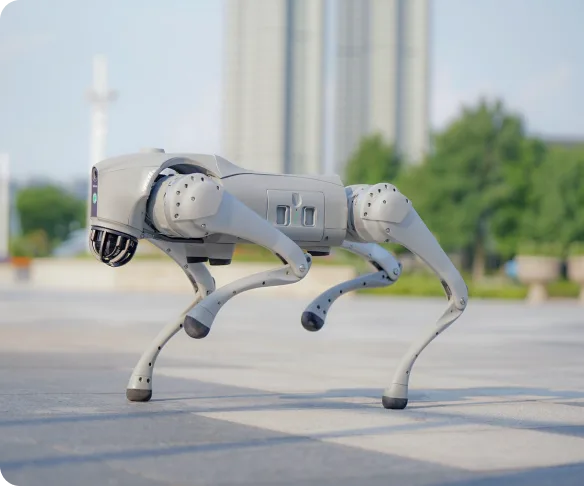
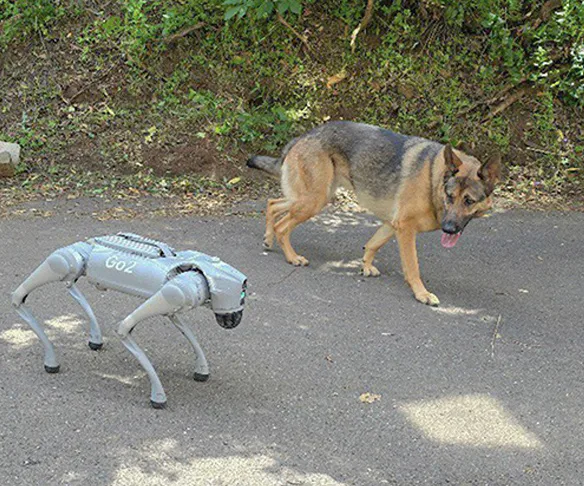
For example, parking lot security robots could use similar algorithms to patrol together, cover blind spots, and share information instantly. Instead of a single unit circling a perimeter, a coordinated group could detect threats, alert authorities, and guide people safely.
This is where research connects with real-world applications.
Companies like Toborlife AI are already taking insights from these breakthroughs and applying them to security and service robots available today.
Technical Magic in Simple Terms
So how exactly does RoboBallet achieve these results? At its core, the system is powered by two major technologies:
Graph Neural Networks (GNNs)
Think of robots and obstacles as dots connected by lines. GNNs process these relationships to help robots “see” how their actions affect others.
Reinforcement Learning (RL)
Robots are trained like players in a game. They earn rewards when they finish tasks faster or avoid collisions. Over time, they learn the smartest moves.
Together, this creates an engine for collaboration that’s not scripted but learned. The robots aren’t just following instructions. But they are making decisions.
Beyond the Factory: Future Scenarios
The researchers call the algorithm “RoboBallet” because it looks like a dance. But in the coming years, it could look more like teamwork in sports, logistics, or even urban safety.
Here are a few possibilities. Each of these scenarios needs more than raw power. They need intelligence in motion which is exactly what RoboBallet promises:
- Construction: Teams of robots assembling homes in record time, with each unit taking on part of the load.
- Healthcare logistics: Multiple service robots delivering supplies in a hospital, avoiding each other in hallways.
- Security patrols: Groups of autonomous security robots moving through large venues or campuses, coordinating paths to cover maximum ground.
- Retail automation: Robot teams stocking shelves, cleaning, and managing back-end logistics.
The Limitations You Should Know
Of course, RoboBallet is not the end of the journey. Right now, it’s best at “reaching” tasks — moving an arm from one point to another. More complex actions like grasping, assembling, or working with diverse robot types still require future research.
There are also challenges in handling strict sequences of tasks or adapting to environments with constantly moving human workers. But these aren’t roadblocks. They’re opportunities for the next generation of AI-driven robotics to push further.
Why Toborlife AI Is Paying Attention
At Toborlife AI, we see these research breakthroughs as a foundation for products that deliver real value. Our vision is to take the coordination seen in RoboBallet and bring it into practical, everyday systems — from smart industrial robotics to next-generation security solutions.
If you’re curious about what’s available now, we invite you to explore our growing line of products. You’ll find tools that reflect the latest research while being ready for real-world use. Visit toborlife.ai to shop, compare options, and see how our solutions stand out from others in the market.
A Choreographed Future
Robots that move like dancers may sound poetic, but the reality is deeply practical. From saving manufacturers time to unlocking safer and more flexible security systems, this is about making robotics smarter and more useful.
The big takeaway from 2025 is simple: collaboration is the new frontier. The age of single-purpose, isolated robots is ending. The age of coordinated, adaptable systems is here.
And the next step? It’s in your hands. Explore what’s possible now with Toborlife AI and be part of the choreography shaping the future!


Comments are closed for this post.