The National Championship as an Innovation Pipeline
The Vietnam National VEX Robotics Championship 2026 brought together leading student teams from across the country. Organized by VREC with co-organisers including Vovinam Digital, Dwight School Ha Noi, Duc Vinh Media, and technical sponsor KC Education, the event functioned as a national innovation filter.
More than a contest, it served as a skills accelerator.
Students demonstrated:
- Advanced mechanical assembly
- Sensor calibration
- Autonomous coding routines
- Real-time strategy execution
- Collaborative engineering teamwork
From this pool of talent, four standout teams qualified for the global VEX Robotics World Championship in the United States. This signals Vietnam’s steady climb in competitive robotics.
What Makes VEX IQ a High-Impact Platform
The VEX IQ category focuses on elementary and middle school students. Yet the technical expectations are far from basic.
Robots must complete:
- Teamwork challenges
- Autonomous programming runs
- Driver-controlled precision tasks
- Mechanical optimization cycles
Students work within constraints that mirror real engineering environments. Weight limits. Component rules. Timed execution. Iterative design. This ecosystem pushes problem-solving at an early age.
Schools adopting structured robotics programs are seeing measurable gains in computational thinking and applied physics skills.
Robotics Education Is Moving Beyond Kits
Now let’s zoom out.
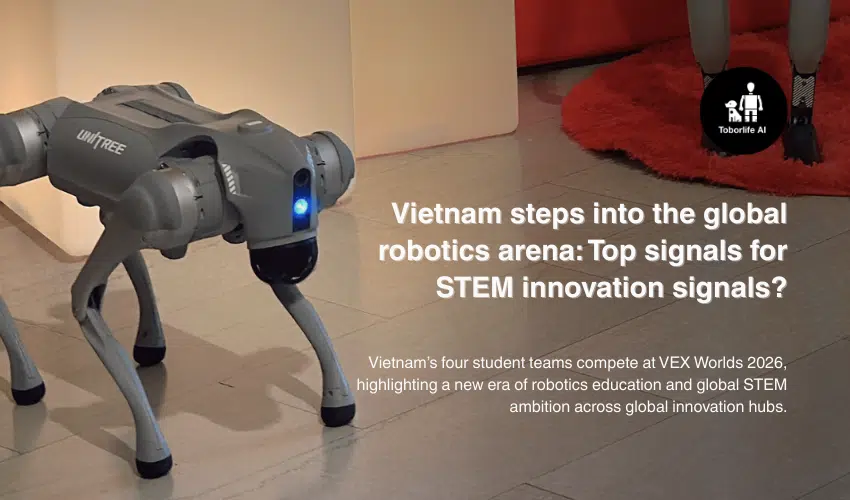
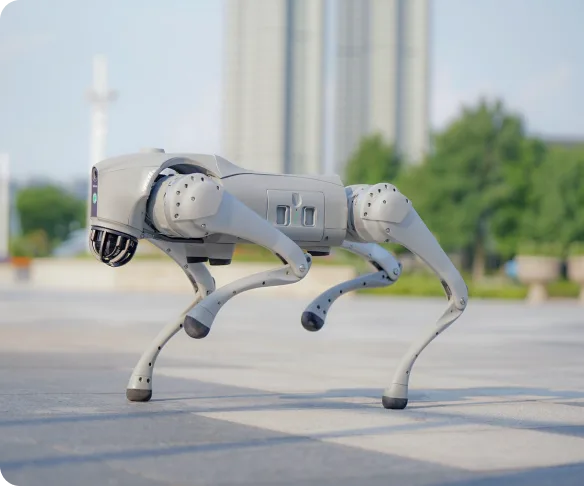
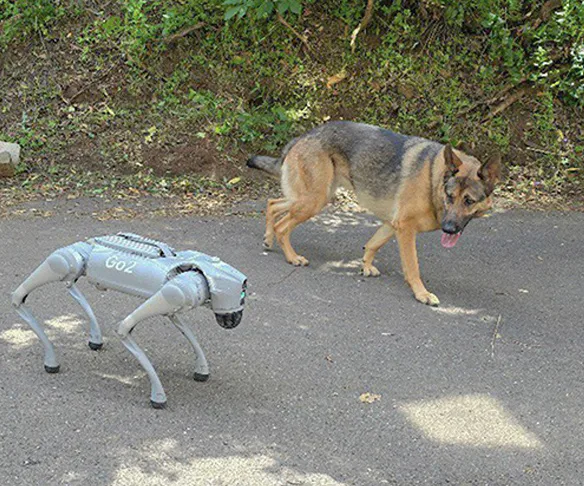
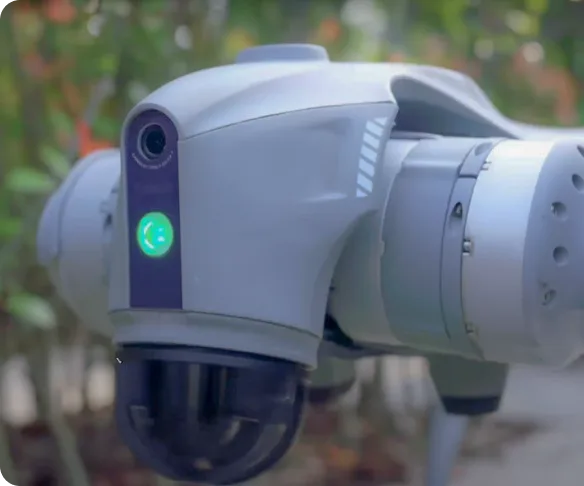
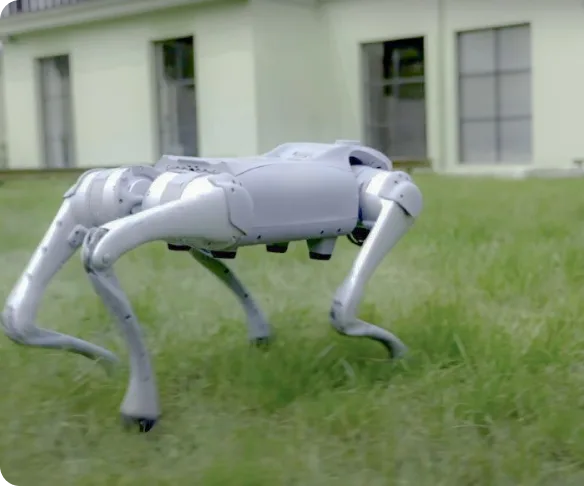
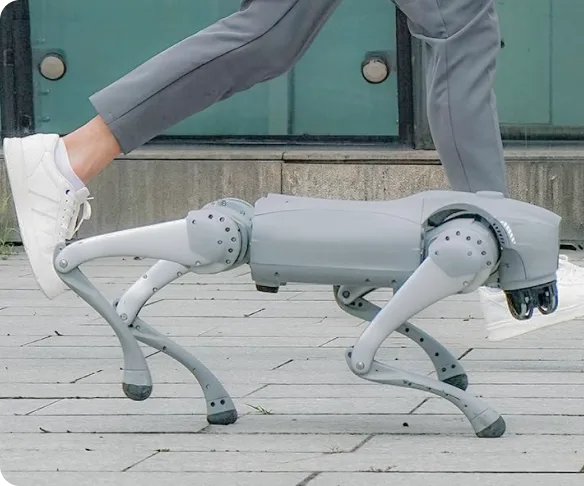
In 2026, robotics education is no longer about simple classroom kits. Institutions are integrating advanced platforms that introduce mobility, perception, and AI logic. Robot dogs for school environments are gaining traction. Quadruped robots introduce dynamic movement, obstacle handling, and applied coding exercises that go beyond tabletop systems.
Here is what modern STEM labs now prioritize:
1. Sensor fusion integration
Combining data from cameras, ultrasonic sensors, IMUs, and lidar to help students understand how robots interpret complex environments in real time.
2. Edge processing concepts
Teaching how data is processed directly on the robot’s onboard system to reduce latency and improve immediate decision-making.
3. Autonomous navigation algorithms
Allowing students to design and test path planning, obstacle avoidance, and mapping systems that enable robots to move independently.
4. Real-world robotics simulation
Using digital twin environments and testing platforms, so students can model scenarios before deploying code to physical robots.
5. Hardware-software coordination
Helping learners understand how mechanical components, motors, controllers, and code work together to produce reliable robotic performance.
From Competition Success to National Strategy
Vietnam’s participation at the VEX Robotics World Championship reflects a larger strategic push.
The National Innovation Center’s involvement shows that robotics is being viewed as infrastructure for economic growth.
Here are three key shifts happening in 2026:
- Early robotics integration in primary education
- Increased private-public partnerships in STEM
- Stronger alignment with global competition standards
This structured approach builds long-term talent pipelines. Countries that invest in robotics education today strengthen their future AI workforce.
Where Toborlife AI Aligns with This Momentum
While VEX IQ competitions build foundational engineering skills, schools are increasingly looking to expand beyond competition frameworks.
At toborlife.ai, the focus is on delivering advanced robotics platforms that support:
- Curriculum expansion
- AI experimentation
- Robotics mobility training
- Real-world deployment scenarios
Institutions seeking to upgrade labs can explore programmable robots for schools that scale from entry-level coding to advanced AI deployment.
Toborlife AI provides structured onboarding, technical guidance, and long-term support to ensure robotics adoption is sustainable.
Advancing From Fixed Platforms to Mobile Robotics
Let’s take a closer look at how STEM classrooms are evolving in 2026.
- From Static Systems to Dynamic Mobility
Traditional educational robots were limited to flat tables and predictable movement patterns. Modern platforms now introduce terrain navigation, balance control, and adaptive motion. This allows students to explore gait algorithms, stability modeling, obstacle avoidance using sensor input, and real-time decision loops. Learning shifts from simple movement commands to understanding how robots maintain control in changing environments.
- From Code to Physical Intelligence
Programming in today’s classrooms goes far beyond block-based instructions. Students now work with object recognition, environmental mapping, and data-driven path planning. They experiment with feedback loops that help robots adjust actions based on live sensor data. Coding becomes a bridge between logic and physical execution, helping learners understand how intelligence translates into movement and response.

Comments are closed for this post.