Four Robots, Four Clear Use Cases
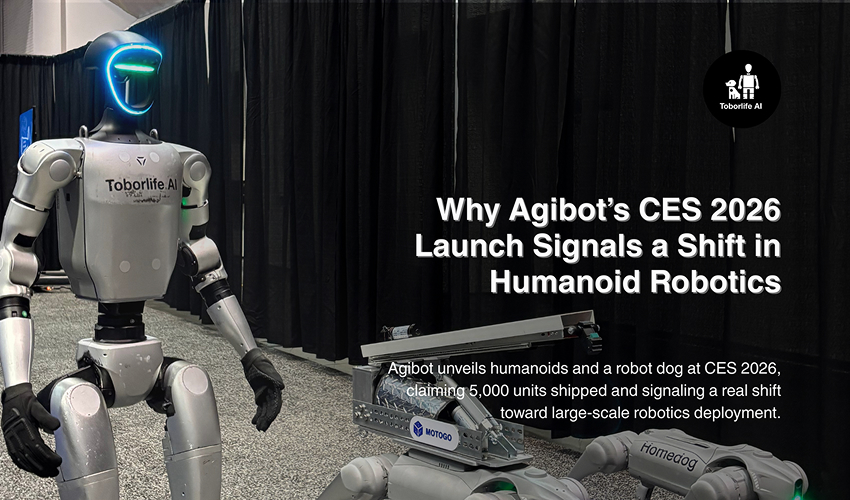
Agibot did not arrive with a single flagship product. Instead, it introduced a portfolio designed around distinct roles. Each robot targets a specific operational environment rather than a one-size-fits-all vision.
This approach reflects a more practical view of robotics adoption.
A2: Full-Size Humanoid for Public-Facing Roles
The A2 humanoid is Agibot’s largest platform and is designed for front-of-house environments. Think guided tours, reception desks, corporate lobbies, and showrooms.
The robot focuses on navigation, interaction, and presentation rather than heavy manipulation. Its value comes from consistent operation, predictable movement, and human-friendly engagement.
For organizations exploring humanoids as brand ambassadors or information assistants, this category represents one of the earliest viable deployments.
X2: Compact Humanoid for Education and Experiences
The X2 is smaller, lighter, and more expressive. It is aimed at education, demonstrations, marketing events, and research environments.
This platform emphasizes interaction and performance over industrial strength. Its size lowers barriers to deployment and transport while still offering humanoid movement and AI-driven interaction.
In the broader market, robots like the X2 help normalize humanoids by placing them in classrooms and public spaces where expectations are different from factories.
G2: Industrial Humanoid for Logistics and Manufacturing
The G2 platform shifts the focus toward work. This humanoid is designed for assembly lines, warehouse sorting, and repetitive industrial tasks.
Force-controlled manipulation and precision handling are central here. The robot is built to operate alongside existing automation rather than replace it entirely.
This is where humanoids begin to overlap with traditional robotics, offering flexibility in environments that were not designed for fixed automation systems.
D1: Quadruped Robot for Outdoor Mobility
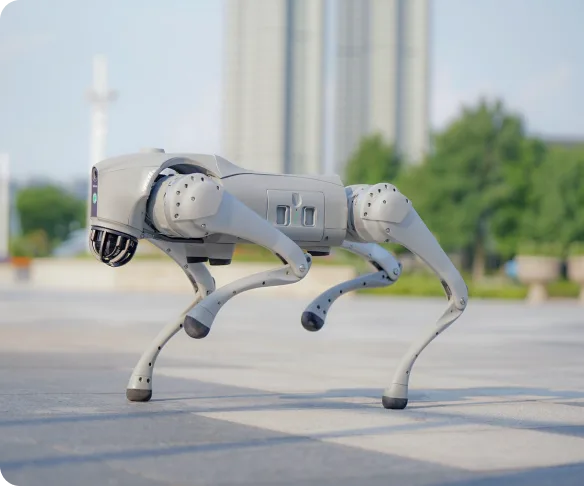
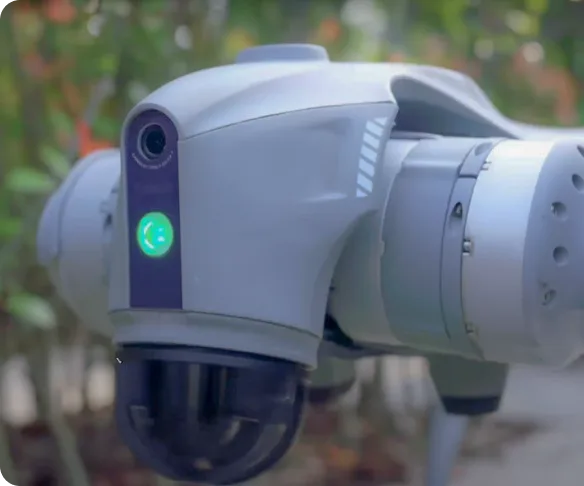
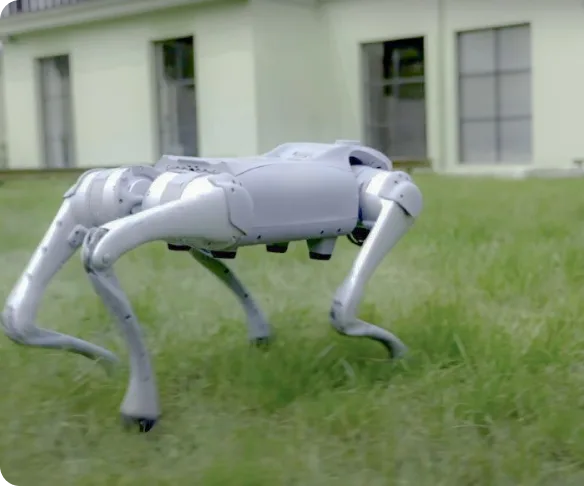
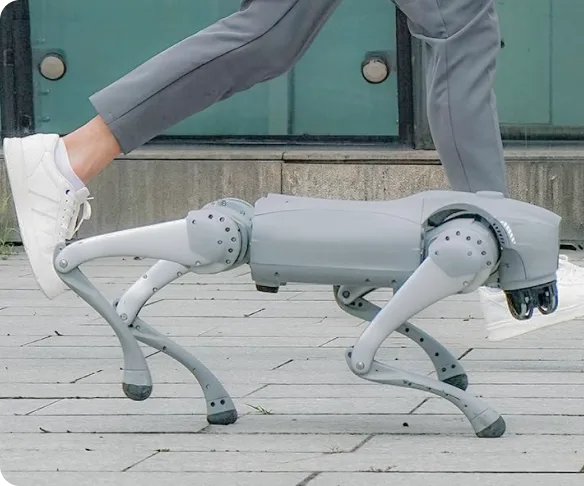
Alongside the humanoids, Agibot introduced the D1 quadruped robot. This platform is built for outdoor movement, patrol tasks, and load-carrying support.
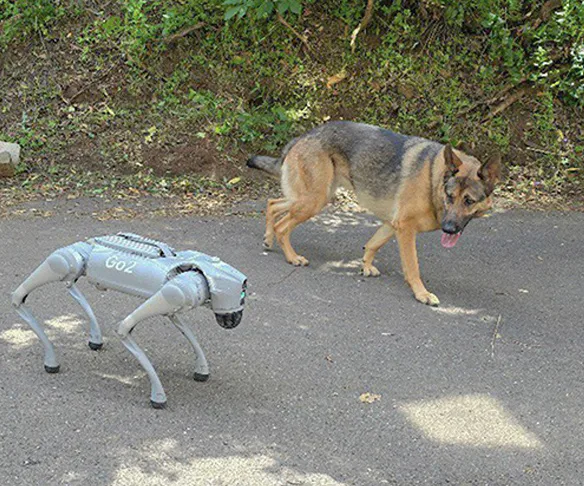
Quadrupeds remain the most practical solution for uneven terrain and large outdoor spaces. They deploy faster than humanoids and require fewer environmental changes.
In many ways, the D1 sits in the same functional category as platforms buyers often compare with solutions like the Unitree Robot Dog, where mobility and reliability matter more than form.
The Meaning Behind 5,000 Robots Shipped
Shipping volume is one of the most overlooked metrics in robotics.
A company that ships thousands of units has solved problems beyond engineering. Manufacturing consistency. Supply chains. Quality control. Support infrastructure.
Agibot’s claim of 5,000 robots shipped suggests it has crossed a threshold many startups never reach. It also reflects growing confidence from buyers willing to deploy robots at scale.
For the industry, this points to a transition phase where humanoids and quadrupeds move from novelty into operational tools.
The Architecture Behind Agibot’s Approach
Agibot describes its design philosophy as “one robotic body with three intelligences.” In practical terms, this means unifying movement, interaction, and task execution within a single system architecture.
This matters because fragmentation slows deployment. Robots that require separate systems for navigation, perception, and task logic are harder to maintain and scale.
Unified architectures reduce integration complexity and improve reliability over long duty cycles. This is increasingly important as robots move into public and industrial environments.
What This CES 2026 Launch Reveals About Robotics at Scale
For buyers evaluating robotics in 2026, Agibot’s launch highlights a key trend. The market is shifting from single-product bets to portfolios designed around roles.
Humanoids are not replacing quadrupeds. Quadrupeds are not replacing fixed automation. Each platform fills a specific gap.
Understanding that ecosystem approach is critical when making purchasing decisions.
How Toborlife AI Helps Buyers Cut Through the Noise
Toborlife AI is built for buyers who want clarity in a rapidly expanding robotics market.
Instead of centering decisions around a single brand launch or CES headline, we focus on how robots perform once they leave the show floor and enter real environments. Our evaluations are grounded in deployment reality, not marketing claims.
We guide buyers by focusing on a few critical areas:
Mobility Performance in Real Settings
We assess how robots handle uneven terrain, long patrol routes, and continuous operation, which is essential for both indoor and outdoor use cases.
Software Ecosystem and Control Stability
We look at how well platforms support updates, integrations, and long-term system control rather than one-time demos.
Operational Consistency Over Time
Reliability matters more than novelty. We prioritize robots that can perform the same task repeatedly without constant intervention.
Upgrade and Expansion Readiness
We evaluate how easily a platform can evolve as needs grow, protecting long-term investment value.
Platforms like the H1 humanoid robot available through toborlife.ai reflect this approach well. Designed for stable navigation, consistent interaction, and scalable deployment, it aligns with the kind of real-world readiness buyers increasingly expect in 2026.
Our goal is simple. Help buyers choose robotics solutions that fit actual use cases and continue delivering value long after the announcement buzz fades.
The Quadruped Advantage Remains Strong
Despite the attention humanoids receive, quadruped robots continue to dominate many practical deployments.
Outdoor patrol. Facility inspection. Perimeter monitoring. Load support.
These tasks favor stability, speed, and terrain adaptability. This is why quadrupeds remain a core part of robotics adoption strategies in 2026.
Toborlife AI continues to see strong demand in this category, especially among buyers comparing multiple platforms before committing.
A Market Moving Faster Than Expected
Agibot’s CES presence reinforces a broader reality. Robotics timelines are compressing.
What was once expected later in the decade is arriving now. Production lines are active. Customers are deploying. Feedback loops are tightening.
This acceleration benefits buyers who act early and understand platform strengths and limitations.
What Comes Next for Robotics Adoption
The next phase of robotics growth will not be defined by a single company or product. It will be defined by interoperability, support, and scalability.
Companies that can ship, support, and iterate quickly will shape the market. Buyers who focus on deployment readiness rather than concept demos will see the greatest return.
Toborlife AI exists to support that decision-making process.
Get in Touch
Agibot’s launch of three humanoids and a quadruped at CES 2026 is not just another announcement. It reflects a maturing industry that is beginning to scale.
Shipping thousands of robots changes the conversation. It moves robotics from possibility to presence.
For buyers exploring humanoid and quadruped platforms in 2026, the most important step is informed selection.
Toborlife AI helps bridge that gap by providing clarity, comparison, and access to robotics solutions designed for real-world use.
Explore what is possible next at Toborlife and contact our team for more info!

Comments are closed for this post.